How Starfinder play works
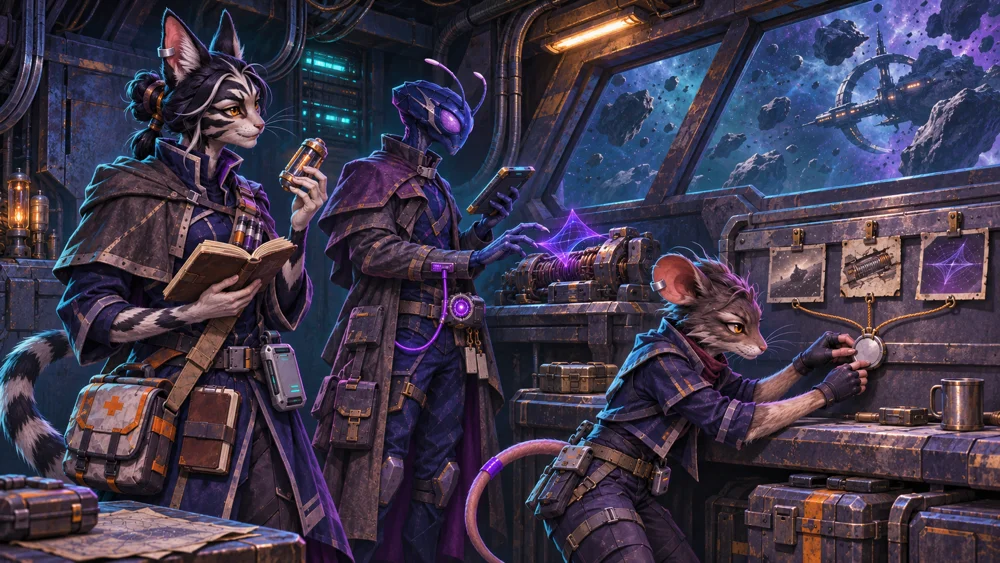
Starfinder Second Edition is a game about capable people making choices in a strange, dangerous galaxy. One player is the Game Master, who presents places, people, threats, and consequences. Everyone else plays a character who can bring a specialty to the group, whether that means talking through a tense situation, navigating a hostile world, treating a wound, decoding a problem, or taking the shot when there is no quieter option.
Start with Starfinder Second Edition Player Core. It teaches the game, walks through character creation, and keeps the rules you will use most often close to the chapters that explain them. This library is building from that one book at a time. It will help you decide which choices matter before you dig into the exact rules, values, and full option text in the book.
Hot take
Do not approach the Player Core as a book you need to finish before the first session. Build a group with a reason to travel together, learn the procedure that the first problem needs, and let the next question tell you which chapter to open.
That approach keeps the useful parts of preparation intact. A player who knows their character's strengths, gear, and role in the group can make a good decision without memorizing every feat or spell. A GM who states the risk clearly gives the group room to plan before the dice decide anything. The rules become easier to learn because they arrive attached to a real situation.
The table loop
Starfinder begins with a conversation. Players say what their characters want to do. The GM describes the situation and calls for a check when success and failure would both change what happens next. Most checks use a d20 plus the relevant modifiers against a Difficulty Class.
The Player Core divides that play into three modes:
| Mode | What it handles | A useful player habit |
|---|---|---|
| Exploration | Travel, investigation, conversations, and problem-solving outside a tight turn order | State the goal and the approach before reaching for a skill. |
| Encounters | Combat and other time-sensitive scenes | Spend actions toward the objective, not only toward damage. |
| Downtime | Recovery, training, crafting, work, research, and longer projects | Name the long-term problem your character is trying to solve. |
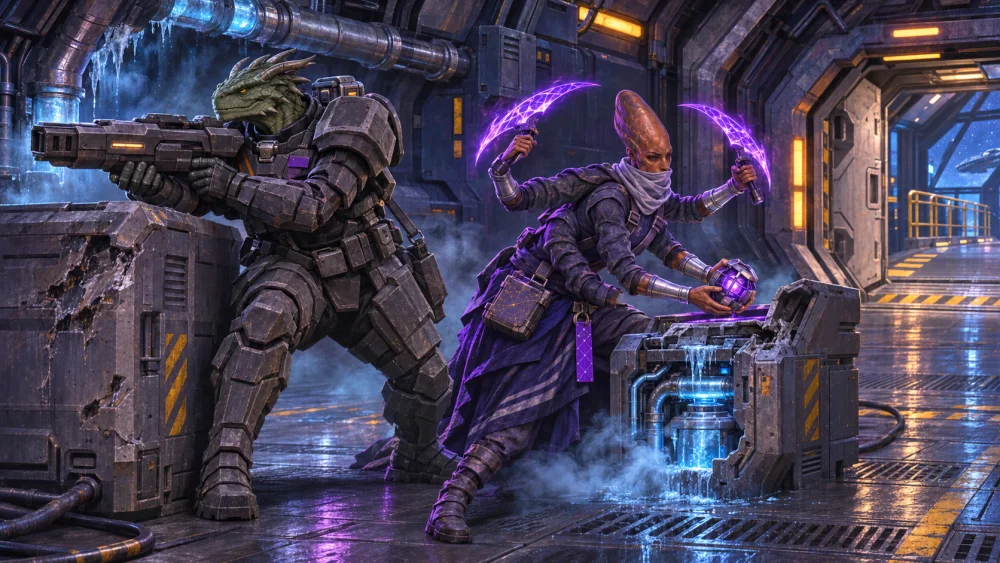
In an encounter, a turn can use up to three actions. Free actions and reactions follow their own rules. That structure matters because drawing a weapon, moving, helping an ally, taking cover, casting a spell, and making a Strike all compete for the same turn. The strongest opening is usually the one that gives the group a better position or clearer information, not simply the first attack available.
Play Starfinder 2e, Not Just Read About It
You are already doing the reading. These Starfinder 2e tables are looking for players right now.
See Who's Running Starfinder 2eStart with a character who has a job
The Player Core's character-creation chapter begins with a concept. It can be broad, such as a starship pilot, or specific enough to include ancestry, history, faith, and a reason to adventure. Then choose the mechanical pieces that make the concept playable: ancestry, background, class, attributes, equipment, and the details that appear on the character sheet.
The order is a guide rather than a trap. If you know you want to play a quick-moving scout, a patient healer, a public-facing negotiator, or a heavily armored defender, begin there and let the other choices support that job. Talk with the rest of the group while you build. A shared reason to travel together will do more for the first session than a perfectly isolated character sheet.
The Player Core map
| If you are deciding... | Start in Player Core... | What this library will add as it publishes |
|---|---|---|
| Who the character is | Character creation, ancestries, backgrounds, and classes | Character-creation, ancestry, background, and class guides |
| What the character can do reliably | Skills, feats, and archetypes | Skills guide for training and party coverage; Skill Feats guide for timing, prerequisites, and recurring crew jobs; General Feats guide for non-skill capability choices; Archetypes guide for cross-class and Starfinder Society commitments; class-feat guidance follows as each route publishes |
| What to carry or buy | Equipment | Armor guide for defense, mobility, environmental protection, shields, and upgrade slots; Augmentations guide for implant capacity, families, activation, surgery, and replacement; Equipment guide for starting purchases, accessible tools, Bulk, and later grade upgrades; Weapons guide for combat profile, range, reload, hands, traits, and upgrades |
| Which magic fits the plan | Spells | Spells guide for slots, cantrips, focus spells, innate spells, and rituals |
| What happens at the table | Playing the Game | Rules Guide for modes of play, checks, three-action turns, recovery, effects, and detection |
The book includes more than a combat engine. Its equipment chapter covers armor, weapons, gear, services, cost of living, and transportation. Its spell chapter explains casting and then organizes spell lists, spell descriptions, focus spells, and rituals. Its playing-the-game chapter provides the universal procedures that connect those character choices to an actual session.
What is live now
The guide landing page is the live collection index, and this hub gains direct category links as those articles publish. Use the Player Core chapter map above and return here rather than following a link to a guide that does not exist yet.
- Starfinder 2e guide landing page: the current public index for this collection.
- Starfinder 2e Beginner's Guide: set expectations, build a connected crew, and learn the first procedures at the table.
- Starfinder 2e Character Creation Guide: build from a concept through ancestry, background, class, attributes, equipment, and final sheet checks.
- Starfinder 2e Classes Guide: compare the six Player Core classes by crew job, turn-to-turn play, and their first defining choice.
- Starfinder 2e Armor Guide: choose defense by proficiency, mobility, environmental protection, shields, and upgrade slots.
- Starfinder 2e Augmentations Guide: plan four implant spaces around family rules, activation cadence, surgery, and replacement.
- Starfinder 2e Equipment Guide: build a starting loadout around crew jobs, item access, Bulk, and durable upgrades.
- Starfinder 2e Weapons Guide: select a weapon by training, range, reload, hands, traits, and upgrade path.
- Starfinder 2e Spells Guide: separate spell slots and repertoires from cantrips, focus spells, innate spells, and rituals.
- Starfinder 2e Backgrounds Guide: compare the Player Core background packages by the skill work, boosts, Lore, and skill feat they provide.
- Starfinder 2e General Feats Guide: choose a non-skill General feat by recurring pressure, prerequisite, and practical commitment.
- Starfinder 2e Archetypes Guide: decide whether a multiclass or Starfinder Field Agent commitment supports a recurring crew job.
- Starfinder 2e Skills Guide: plan training, proficiency, and the skills your crew will use in the campaign.
- Starfinder 2e Skill Feats Guide: choose Player Core skill feats by crew job, level, and proficiency gate.
- Starfinder 2e Pact Worlds Guide: choose a useful home, faith, culture, or travel connection without needing to memorize the galaxy.
- Starfinder 2e Rules Guide: identify the mode, resolve checks, spend actions, and handle recovery, effects, and detection.
- Starfinder 2e GM Guides: find GM Core support for planning sessions, making fair rulings, and pacing a crew's decisions.
- Starfinder 2e Campaign Guide: set a flexible campaign frame, connect adventures, and prepare player-responsive situations.
- Starfinder 2e Cinematic Starship Scenes Guide: frame a predetermined ship's immediate mission around goals, rotating crew roles, threats, and aftermath.
- Starfinder 2e Encounter Building Guide: set an objective, choose a fair threat budget, and make terrain and enemy motives matter.
- Starfinder 2e Gamemaster Guide: begin with Session Zero, session preparation, exploration, downtime, DC choices, and rewards.
- Starfinder 2e Hacking Guide: choose a fast check or a group breach when secure computer access is the scene's primary obstacle.
- Starfinder 2e Hazards Guide: use afflictions, environments, and hazards to create visible danger, fair responses, and a useful pace.
- Starfinder 2e Subsystems Guide: choose Victory Points, Influence, Research, Chases, Infiltration, or vehicle rules by the pressure a noncombat scene needs to make visible.
Space travel without invented rules
Starfinder belongs in space, and Player Core includes player-facing examples of Piloting, navigation, travel, and hazards. Those examples are enough to support a future, source-checked guide to the decisions characters make while moving through the galaxy.
They are not a reason to import remembered first-edition starship rules or to pretend this book contains a complete space-combat subsystem. The Cinematic Starship Scenes Guide now covers a predetermined ship's immediate goals, crew roles, threats, pacing, and aftermath without using a tactical map. The upgradeable party ship and extensive tactical combat belong to later Starfinder Tech Core material, so they remain outside this collection. When an exact travel procedure matters, use the Player Core text at the table.
Your first session
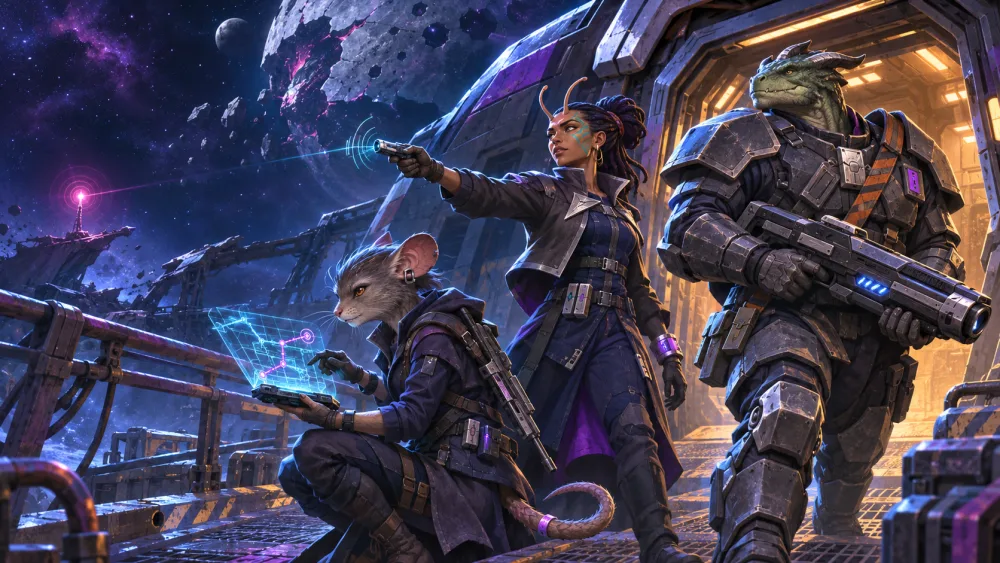
For a first game, keep the objective physical and understandable. Get through a dangerous location, find someone, protect a delivery, negotiate access, investigate a signal, or chart a route that has a cost if it goes wrong. Give the group a reason to care about the outcome and at least two ways to proceed.
Then learn only the parts of the rules that the situation will actually use. A group entering a tense negotiation needs its character concepts, the social situation, and the check procedure. A group crossing dangerous terrain may need Piloting or another relevant skill, a clear risk, and the exploration rules. A group heading into a fight should understand initiative, actions, movement, and the goal beyond defeating every enemy in sight.
That is enough to start. The Player Core remains the authority for full rules text, exact values, options, and edge cases. This guide library will keep adding source-checked decision support as each Player Core section earns a durable article.
GM Core guides
GM-facing session support now lives in the Starfinder 2e GM Guides. Every published route below is checked against GM Core; this hub remains the Player Core index.
- Campaign Guide: connect flexible adventures through people, consequences, and player decisions.
- Cinematic Starship Scenes Guide: run a focused ship mission with rotating crew roles, visible threats, and an aftermath.
- Encounter Building Guide: set scene stakes and fair opposition.
- Gamemaster Guide: begin with Session Zero, preparation, fair rulings, exploration, downtime, DCs, and rewards.
- Hacking Guide: choose a quick check or a group breach with access points, vulnerabilities, and countermeasures.
- Hazards Guide: use afflictions, environments, detection, and threat pacing.
- Subsystems Guide: select a procedure that makes a noncombat scene's relevant pressure visible.
Source scope
This hub is checked against Starfinder Second Edition Player Core, especially its Introduction, Character Creation, Using this Book, and Playing the Game sections. Its GM Core links lead to separately source-checked guides; this page itself does not claim GM Core coverage. It also does not claim coverage from Alien Core, earlier Starfinder editions, or unsupplied supplements. See the Starfinder 2e guide landing page for the live collection index.