Choose a Starfinder 2e weapon for the turn you want to keep taking after the first shot. Confirm training first, then compare engagement distance, reload, active hands, and the resource the weapon needs. Damage matters, but a weapon that disrupts your normal routine can be the more expensive choice in play.
The Equipment Guide covers starting credits, access, Bulk, and the rest of a first loadout. This guide narrows the combat decision without reproducing Player Core weapon tables, prices, or item entries.
Confirm training, then name the job
Your class determines much of your weapon training. A feat or ancestry option can change that answer, so check the character sheet before comparing categories. The Classes Guide is the starting point for a class's combat role; a class guide can clarify its specific routine.
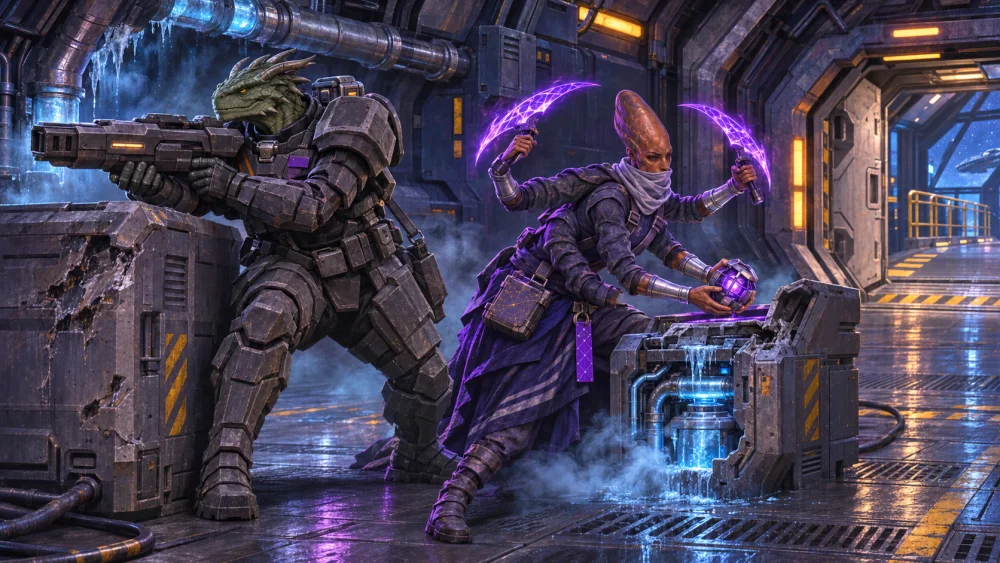
Then name the job the weapon must do. A defender holding a lane, a scout taking careful shots, and a character who expects close-quarters trouble can all want different profiles even when they can use the same category. A useful first pass is short:
| Ask first | What it decides |
|---|---|
| Where will I usually be when I Strike? | A useful range increment and whether close-use drawbacks matter. |
| What does my first turn already need? | Whether reloading or changing grip competes with movement, a shield, a tool, or another action. |
| What must I carry after the weapon is chosen? | A credible backup and the ammunition, battery, chemical, or magazine routine it needs. |
| What does the class actually reward? | Whether a weapon group, trait, or critical specialization is relevant to the build. |
There is no universal best weapon in that list. A long-range profile can be wasted in cramped missions, while a powerful two-handed option can be the wrong fit for someone who must often hold a shield, scanner, or objective.
Test range, reload, and hands as one routine
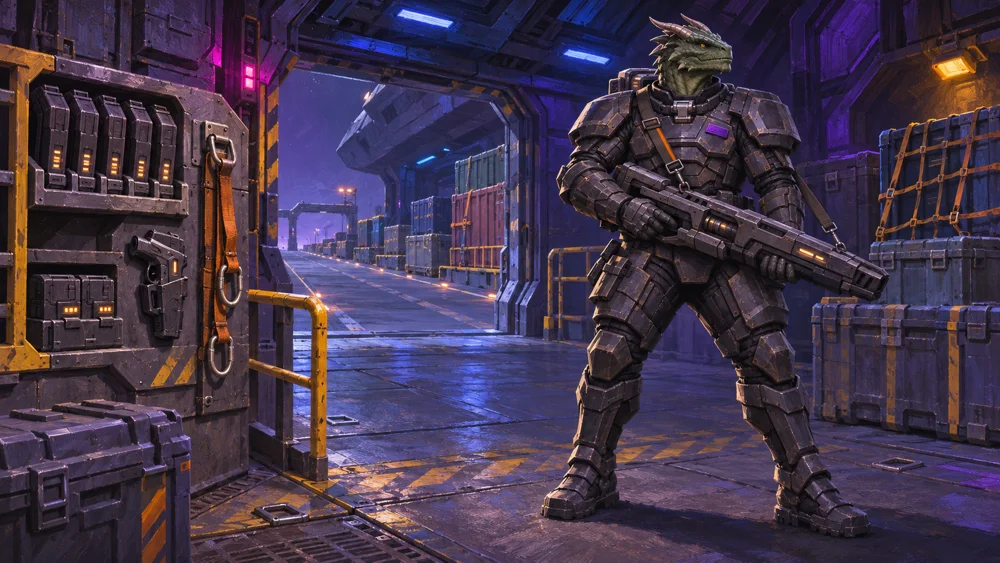
A ranged or thrown weapon works normally in its first range increment. Attacks farther away take increasing penalties, and a target beyond the sixth increment is out of reach. That makes range a question about the map and the crew's plan, not a simple measure of quality.
Reload is equally practical. Its entry tells you how many Interact actions it takes, while magazines, batteries, chemicals, and projectile ammunition create different readiness and resupply work. Reloading a ranged weapon and drawing a thrown weapon each require a free hand. Put that rule next to the actions you take most often before you commit to a weapon.
Hot Take: A bigger damage die is not an upgrade if reloading costs the action your plan needed. The combat routine is the purchase; the damage number is only one part of it.
Two-handed weapons generally trade hand flexibility for more damage. Some one-handed weapons get a larger damage die when used with two hands, which can make the choice flexible from one turn to the next. Treat a shield, medical kit, scanner, climbing line, or carried object as part of the same decision. The weapon is not really one-handed if the rest of the plan needs that hand every round.
Play Starfinder 2e, Not Just Read About It
You are already doing the reading. These Starfinder 2e tables are looking for players right now.
See Who's Running Starfinder 2eMulti-armed characters still choose an active pair
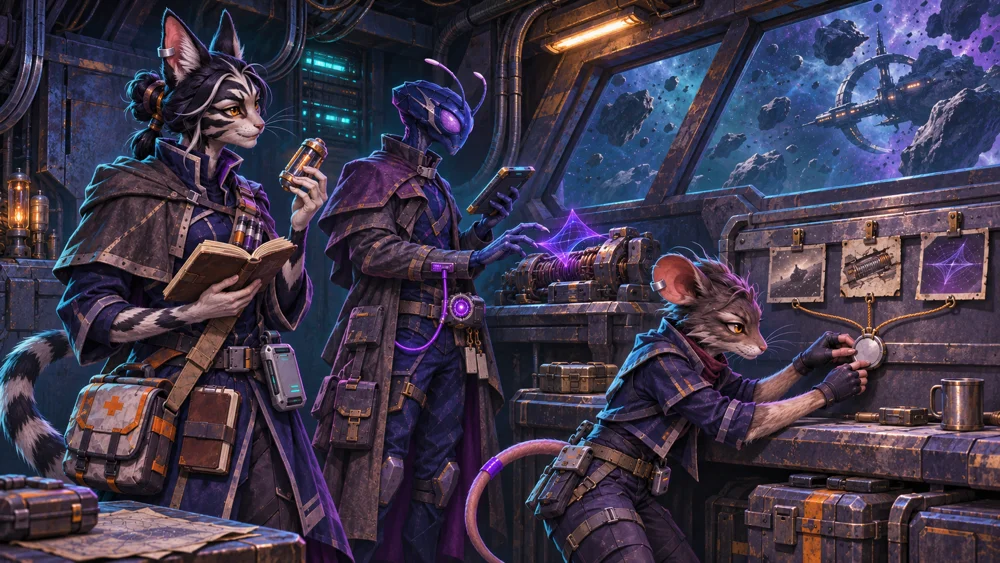
Extra arms broaden what a character can carry, but they do not make several weapon pairs active at once. A multi-armed character designates one active hand pair, attacks only with weapons in that pair, and uses the Switch Hands action to change the designation. That is especially important for a Kasatha or Skittermander character who is tempted to solve every combat problem by holding more gear.
Use the relevant Ancestries Guide route when an ancestry changes proficiency or your active-hand plan. Keep the weapon routine readable enough that everyone at the table knows which pair is currently doing the fighting.
Use groups and traits as tie-breakers
Weapon statistics describe more than damage. Hands, Bulk, range, reload, magazine or charge use, upgrade capacity, group, and traits can all decide between otherwise similar choices. Once a profile supports the job and routine, inspect the few remaining entries that actually affect it.
Weapon group is often a conditional factor. A group supplies its critical specialization only when a class feature, feat, weapon fusion, or another effect grants that benefit. If your build has no such effect, do not let a possible future critical specialization outweigh the parts of the weapon you use every encounter.
Traits work the same way. Some alter damage type, create a problem at close range, or change how repeated Strikes behave. Read the traits on your finalists, then ask whether the condition appears in your normal play. This is more reliable than trying to memorize the whole trait list before you know which weapon you want.
Grenades can supply an area answer when a firing lane is blocked, but they remain a consumable-readiness choice. Keep their purchase and carrying plan with the Equipment Guide rather than treating every character as a grenade specialist.
Invest in a platform that has earned it
Most weapons have grades: commercial, tactical, advanced, superior, elite, ultimate, and paragon. A higher grade improves the weapon's damage dice, adds the tracking trait's item bonus to attack rolls, and adds upgrade slots. You can buy a higher-grade version or improve eligible equipment with Crafting, the original item, and UPBs.
That makes a grade an investment in a weapon that already supports the character's job. It is usually better to keep a useful platform and improve it than to chase a category because it looks more impressive on a list.
Weapon upgrades are either technological modifications or magical fusions. Each uses one listed upgrade slot, takes 10 minutes to install, and works only while the weapon is wielded. Some require activation or have a daily limit, and a specifically designated part, such as a sight, can have only one upgrade. Check compatibility, action cost, and real use before spending the slot.
Solarian crystals are not a generic weapon-upgrade decision. They improve a solarian's own weapon or flare, so keep their attachment and capacity rules with the Solarian Guide.
A quick weapon choice check
Before finalizing the entry on a character sheet, ask:
- Is the character trained to use it through class, feat, or ancestry?
- Does its first range increment fit the distance the crew expects to fight from?
- Can the character reload, draw it, and manage its resource with their usual hands free?
- Does a class feature or feat make its group or traits materially useful?
- Is there a reachable backup plan for close range, an empty magazine, or a blocked lane?
- If it becomes a favorite, does its grade and upgrade path support the same job?
Answer those questions, then open the Player Core for exact statistics, prices, traits, and item text. Return to the Starfinder 2e Player Core hub to connect this decision to the rest of the growing guide library.
Player Core source boundary
This guide is checked only against Starfinder Second Edition Player Core, especially the Weapons, Weapon Upgrades, and Improving Equipment material in Chapter 6, plus the class and ancestry entries that set training or exceptions. It does not import options from Starfinder First Edition, GM Core, Alien Core, Tech Core, Pathfinder, web summaries, or unsupplied books. Use the Player Core for exact item statistics, prices, full traits, and edge cases.