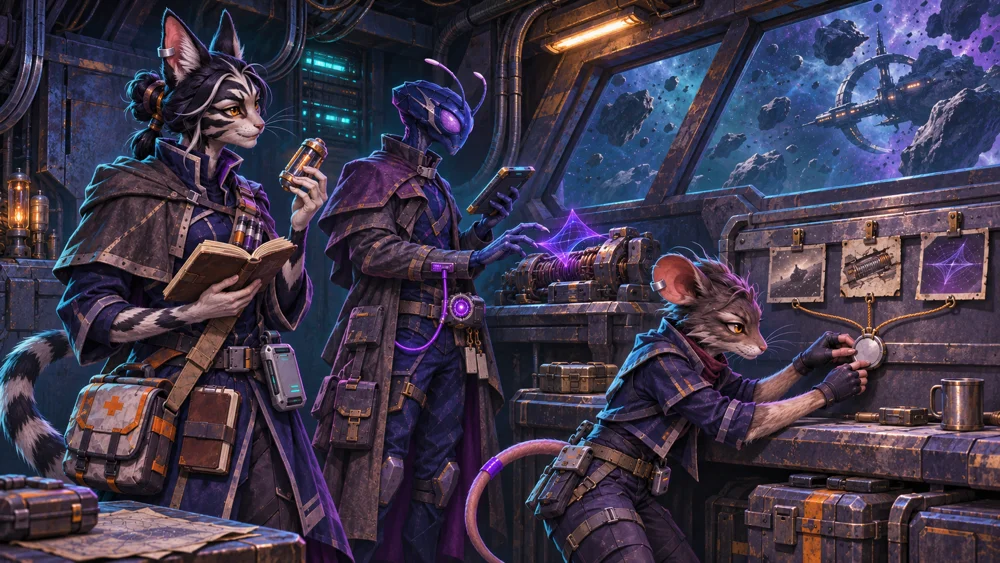
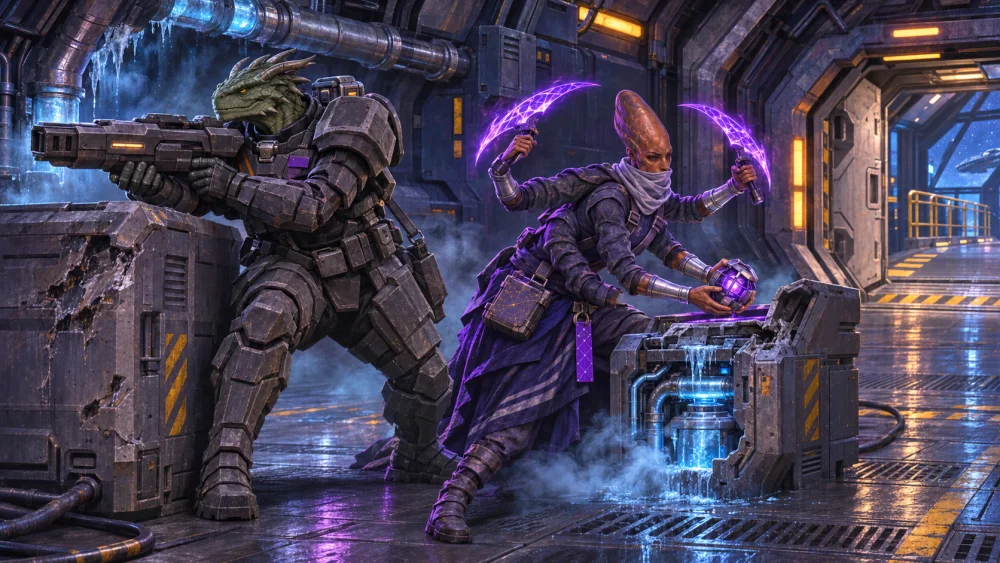
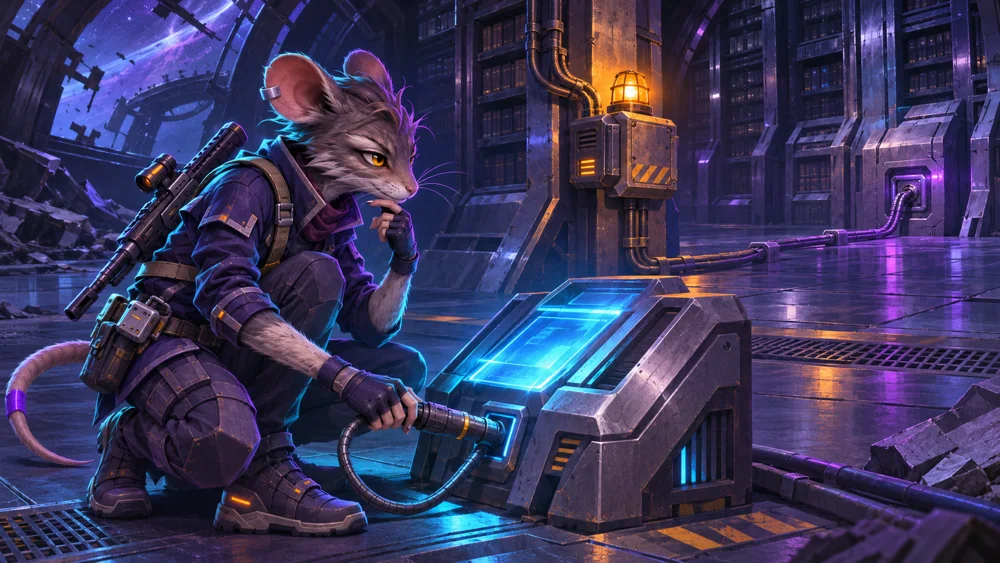
A cinematic starship scene works when the crew can name what must happen before the danger closes in. Give them a ship with a job, a threat they can see, and a reason that their next role choice matters. The goal might be to get a shuttle clear of a gravity shear, scan a planet before the window closes, survive a dogfight, or escape an enemy boarder.
GM Core treats this as an encounter, not as a second character sheet for the ship. The PCs still take individual turns and make the decisions; the scene supplies the starship, threat routines, available roles, and conditions for success. If the pressure instead calls for a different structured challenge, start with the Starfinder 2e Subsystems Guide, then return to the GM Guides hub for the rest of the published GM Core routes.

Begin with the outcome, not the bridge layout
Before initiative, write one sentence that says what the crew needs to accomplish and what makes delay costly. A good scene premise gives the GM a finish line that is more useful than a generic enemy ship appearing on a viewscreen.
| Scene question | Useful prep answer |
|---|---|
| What must the crew accomplish? | Get the civilian shuttle out before the gravity shear pulls it apart. |
| What makes the situation urgent? | The safe route is closing as asteroid fragments drift into the corridor. |
| What threatens the ship? | A gravity well, dangerous terrain, a creature, or an enemy starship with a clear routine. |
| What changes after the scene? | The rescued crew offers a lead, the ship is damaged, or the enemy learns where the PCs are headed. |
GM Core's cinematic scenes can cover a chase, skirmish, dogfight, boarding action, unusual scan, or magical complication. The point is not that every voyage needs an encounter. Use one when the journey presents a problem that deserves several connected choices from the whole table.
Hot Take: "Destroy the enemy ship" is rarely enough prep by itself. A scene gets sharper when success means reaching a place, protecting someone, learning something, or getting out before a visible threat makes that impossible.
Put the available roles where everyone can see them
At the start of a scene, each player selects a starship role. That role helps determine the skill used for initiative. At the beginning of every round, the scene makes roles available again; at the start of a turn, a PC chooses an open role and holds it until the next round. A later round can change the job, and some scenes allow more than one gunner or science officer.
Do not hide those jobs behind the GM screen. Put the roles, their capacity, and the current threat in front of the players. GM Core's examples show why the role should matter to the fiction: a pilot can attempt an escape maneuver, a science officer can counterhack, a magic officer can work a ritual that closes a rift, and a gunner can fire the ship's laser. The scene stat block gives the exact special actions; describe their immediate purpose before asking the crew to choose.
Most starship actions take two actions, so a character often has one action left for something personal and useful. That can be Aiding an ally, casting a suitable enhancement spell, or responding to an enemy boarder. Keep that remaining action connected to the scene rather than treating the bridge as a place where normal character decisions disappear.
Make every threat force a different decision
Threats in a cinematic scene can include enemy starships, hazardous terrain, dangerous creatures, gravity wells, and other dangers. The GM runs those threats with preset routines rather than giving an opposing ship a full off-screen crew turn. That keeps the camera on the PCs and makes the routine a tool for signaling what will get worse if nobody answers it.
Choose threats that pull at different crew jobs. A gravity shear can push the pilot toward a safer route while the science officer identifies the opening. A pursuing ship can make the gunner's pressure matter while a boarder gives another PC a reason to save an action. A magical rift can make a ritual more urgent than a shot. You do not need all of these at once. Two competing needs are usually enough to make a role change meaningful.
Play Starfinder 2e, Not Just Read About It
You are already doing the reading. These Starfinder 2e tables are looking for players right now.
See Who's Running Starfinder 2ePace the round around the role choice
Run the scene like an encounter: individual initiative, individual turns, and three actions per PC. The special starship actions come from the role chosen for that turn. Tell the table what changes when a new round begins, which roles open up, and which threat routine is about to matter. That small recap makes the next role selection an answer to the fiction instead of a menu choice.
The scene can support sensible character abilities when they fit. GM Core leaves feats and spells to the GM's judgment and encourages a permissive answer when the fiction supports it. It also warns against assuming that a core combat action automatically belongs in a starship scene. Let a clever spell, aid, or personal action solve a real problem, but use the scene's provided actions and threat routine as the default structure.
For a crew larger than four PCs, extra people should create more choices and better support, not simply inflate the ship's damage. Check the scene's available roles and victory requirements before adding pressure. The extra player needs a job that changes the decision, not a duplicate button to press.
Write the ending separately from the win condition
GM Core gives scenes victory conditions such as reducing a threat to 0 Hit Points, reaching a Victory Point threshold, or lasting until a stated time. A scene can offer more than one path to victory. Additional objectives can produce story rewards, information, or another advantage, but they do not count toward victory conditions or end the encounter.
Then prepare the ending. It is a separate line in the scene because the encounter might end before the crew completes its victory condition, or it might end while they are only partway there. Decide what the crew sees, loses, learns, or carries forward when the chase stops, the ship is disabled, or the escape route closes. That consequence is what makes a fast starship encounter matter after the initiative tracker disappears.
Keep cinematic scenes cinematic
Cinematic Starship Scenes are for a crew aboard a predetermined ship in an immediate situation. GM Core deliberately omits starship weapon range increments and does not require a tactical map. Establish distance when a character action needs it, but do not invent a grid procedure merely because the enemy is in space.
The upgradeable party ship and more extensive tactical starship combat are later Starfinder Tech Core material, not a missing section of this guide. Use this procedure when you want the crew's existing characters to take an active role in a mission-sized emergency. Return to the Starfinder 2e guide hub for the player-facing library and published GM Core routes.
Frequently asked questions
What is a cinematic starship scene in Starfinder 2e?
It is a GM Core encounter built around a predetermined PC starship, available crew roles, threats, victory conditions, and an ending. The PCs take individual turns, while the scene gives their ship and the threats the information needed for that encounter.
Do cinematic starship scenes use a tactical map?
No. GM Core does not use starship weapon range increments or require a tactical map for these scenes. The GM can still establish fictional distance when a character action needs it.
Can a character change starship roles during a scene?
Yes. At the beginning of each round, the scene makes roles available. At the start of a turn, a PC chooses an open role and can choose a different available role in the following round.
Are cinematic starship scenes the full Starfinder 2e ship-combat rules?
No. They put characters aboard a predetermined ship for an immediate encounter. GM Core points to Starfinder Tech Core for an upgradeable party ship and more extensive tactical starship combat.
Source scope
This guide summarizes the Cinematic Starship Scenes section of Starfinder Second Edition GM Core. It does not reproduce complete scene stat blocks, starship statistics, threat routines, action text, DCs, XP tables, or sample scenes. It also does not cover the upgradeable party ship or extensive tactical starship-combat material in Starfinder Tech Core. Check the current GM Core for exact scene details and edge cases.