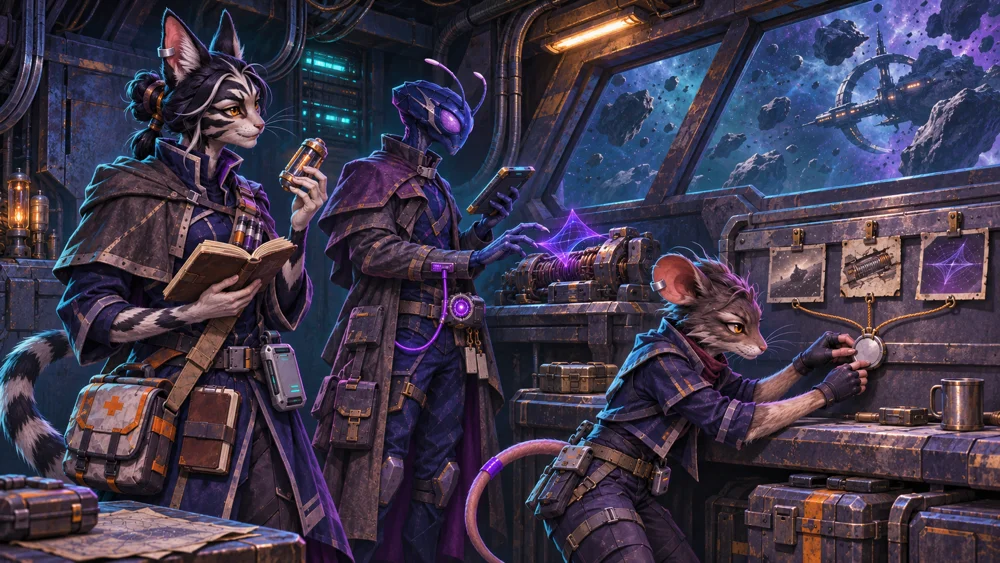
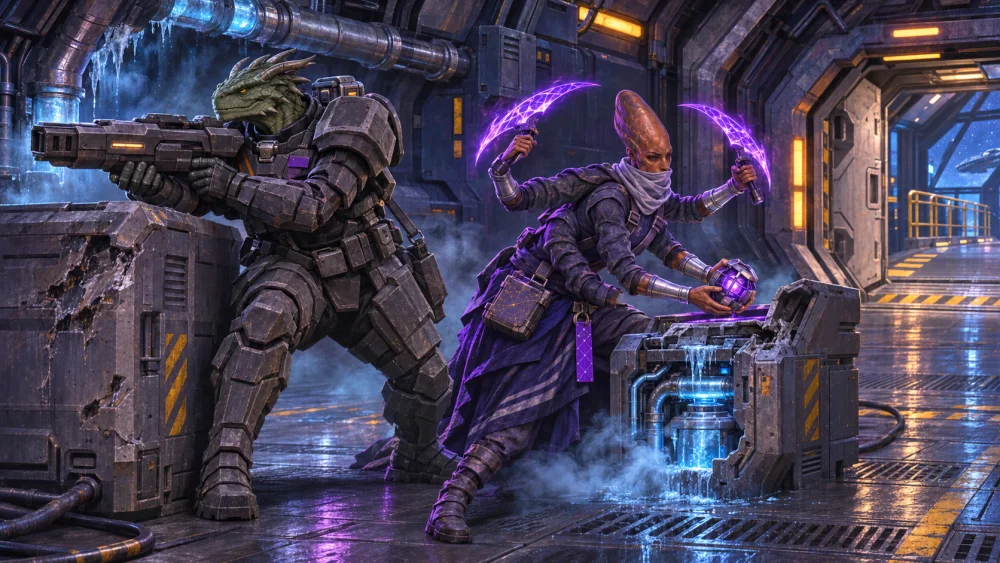
A hacking scene needs the full procedure only when getting access is the scene's real obstacle. If the crew only needs an uncertain command from one terminal, resolve the moment quickly. If they must choose a route into a protected system while security reacts, give the problem enough structure for the whole crew to matter.
Start with the outcome that changes the adventure: a locked safety door, a record that identifies the next lead, an alarm network, or controls that can keep people safe. Then decide whether the computer deserves a short check or a multi-round breach. For the larger question of what kind of structured scene belongs at the table, see the Starfinder 2e Subsystems Guide, and return to the GM Guides hub when preparing the session.

Decide whether access is a moment or an obstacle
Use a simple hack when the computer exists to complicate a larger scene, not replace it. A sealed door, a security panel, or a damaged maintenance console can ask for one focused effort and then let play move back to the chase, negotiation, or encounter already in progress. GM Core gives a simple computer one access point and no vulnerabilities. Hacking it or disabling its countermeasure is a two-action activity.
Use a complex breach when the crew's route through security is what the scene is about. It runs over multiple rounds, and the group must decide where to start, what to exploit, and when to push for access before the system's defenses become the larger problem. Do not build a full computer stat block merely because a terminal appears in the fiction. GM Core calls for one when hacking is the primary obstacle.
| Ask this at the table | Use | Prepare |
|---|---|---|
| Does one uncertain command decide the moment? | A simple hack or an ordinary check | The immediate consequence and what success operates. |
| Does access need several crew choices under pressure? | A complex breach | Access points, vulnerabilities, countermeasures, and a goal worth the time. |
| Does the group only need a short, collaborative push? | Simplified quick hacking | One main hacker and credible support checks from the rest of the crew. |
Hot Take: If the only interesting action is asking the best Computers user to roll again, keep it short. A complex breach should create jobs that change the next choice.
Build the computer from its purpose
Before assigning a number, name what the computer protects and what gaining control actually changes. Is it technological, magical, or hybrid? Does the crew need to stand beside it, reach it remotely, or find a way to do either? Is it a machine, an intelligence, or something stranger that still functions as a computer for the procedure? Those answers shape the jobs in the scene.
Then choose the access points. A physical access point puts a character next to the relevant hardware. A remote access point can be reached from elsewhere. Each one needs its own success requirement, suitable skills, and any proficiency gate. More than one access point should mean more than a cosmetic choice: one route might be direct but exposed, while another takes a detour through records, a maintenance trunk, or a magical component.
Treat skills as routes, not permissions. A technological computer commonly gives Computers, Crafting, or Thievery a way in. A magical one can invite Arcana, Nature, Occultism, or Religion. A hybrid system can offer both kinds of access. GM Core also leaves room for a creative solution that fits the fiction, using the listed values as guidance rather than declaring every unlisted idea impossible.
Give each access point a cost and a helper
Vulnerabilities give the crew work to do before the main Hack attempt. A useful vulnerability is concrete: find the service cable, win a password reset through a believable conversation, locate a forgotten backup, or solve the magical half of a hybrid lock. A successful vulnerability lowers the Hack DC for its associated access point, so it should be tempting even when it takes time.
Countermeasures make delay matter. They can lock an account, alert a guard, damage equipment, corrupt a lead, or force the crew to change position. Set a threshold of failures that triggers the response, then give the group a way to notice and disable it. GM Core makes the notice DC usually lower than the Disable DC, which lets alert players spot a problem before the specialist has to solve it.
Failure should change the scene rather than erase it. A persistent countermeasure can keep returning at the end of later rounds after it triggers. The crew can still disable it, but that does not undo what already happened. This makes a bad result a reason to choose between speed, safety, and a new route instead of a reason to end the scene.
Play Starfinder 2e, Not Just Read About It
You are already doing the reading. These Starfinder 2e tables are looking for players right now.
See Who's Running Starfinder 2eRun the breach as a crew procedure
Let the players act in the order that suits their plan. The character making the Hack attempt often goes last, after others have found a vulnerability or disabled a countermeasure. That timing makes the specialist's final roll a payoff for the rest of the table rather than a solo performance.
Do not make unlimited probing free. In a complex breach, a round spent exploiting vulnerabilities without anyone attempting to Hack an access point or disable a countermeasure adds a failure to an associated access point. Say that pressure aloud before the crew begins. They should know that a careful plan has a cost, then decide whether the lower DC is worth it.
When the scene only needs a quick group moment, use simplified quick hacking. Ask every player for a credible supporting check. A success lowers the main Hack DC by 1, a critical success lowers it by 2, and a critical failure raises it by 1. The support can be technical, magical, social, or physical as long as the fiction explains the connection.
When a secured computer is the main obstacle, the Starfinder 2e Operative Guide helps place a technology-focused Operative in the crew without making that character responsible for every part of the breach. Let other characters create the opening, absorb the danger, recognize the magical route, or turn the system's response into the next decision.
Use the book for statistics and rewards
GM Core supplies the exact DC guidance, failure thresholds, sample computers, access-point details, and additional reward options. Use those pages when preparing a computer that will be the focus of a session. This guide is the prep lens: decide what access controls, whether the breach is simple or complex, and which choices will keep the system tied to the adventure.
Success should grant the function the crew came for. A stronger result can produce more access when the group outperforms the requirement or hacks more than one access point. The information, control, or risk uncovered by the breach can also become a future lead. Keep that reward connected to the computer's purpose rather than turning every terminal into a generic loot container.
Return to the Starfinder 2e guide hub for the published Player Core and GM Core routes, or the GM Guides hub for more session-preparation support.
Frequently asked questions
When should a Starfinder 2e hack be simple?
Use a simple hack when the computer is a short obstacle with one access point, not the scene the session is about. GM Core treats hacking the simple computer or disabling its countermeasure as a two-action activity.
What makes a Starfinder 2e hacking scene complex?
Use a complex breach when secure access needs several rounds of choices. Give the computer access points with their own vulnerabilities and countermeasures, then let the crew choose how to lower a Hack DC, prevent a consequence, or reach the goal.
Can characters without Computers help with a hacking scene?
Yes. GM Core presents hacking as a party procedure: magic, social skills, physical access, and other credible approaches can create routes or support the attempt. Use the computer statistics as guidance for a creative solution that fits the fiction.
How does simplified quick hacking work?
Ask each player for an appropriate supporting check before the main hacking check. A success lowers that check's DC by 1, a critical success lowers it by 2, and a critical failure raises it by 1.
Source scope
This guide summarizes the Hacking and Building a Computer material in Starfinder Second Edition GM Core. It does not reproduce the book's complete computer stat blocks, DC tables, or sample vulnerability and countermeasure lists. Check GM Core for exact statistics, thresholds, action details, and complete examples.