Introduction
Strixhaven: A Curriculum of Chaos hands D&D 5e 2014 players and DMs a magical-university setting built on a single premise: your characters are students first, adventurers second. Strixhaven University draws students from across the world and the wider multiverse to study magic applied to every field of knowledge, history, art, mathematics, rhetoric, and the life sciences, organized into five colleges built around opposing philosophical principles.
Strixhaven asks something most 2014 settings don't: what does a session between adventures look like when your characters have homework? The book's own student-life subsystem, Extracurriculars, Jobs, and Exams, gives that question real mechanical weight instead of leaving it as pure roleplay. A player building a character usually starts with the Owlin race or one of the five college backgrounds, since those are the setting's most distinctive additions. A DM starts from the opposite direction: pick a campus location or a college rivalry, then let the year's academic calendar shape the adventure. This guide covers both directions in one place: character options, the colleges, the campus and its world, the student-life rules, and how to actually run a campus campaign.

Character Options
Strixhaven's character-creation material is compact but useful: one new playable race, five backgrounds that double as a free feat, two feats, and five spells. Nothing here is required to play a Strixhaven character. You can bring any published race and any published background to the university and still be a student; these are options, not entry requirements.
Race: Owlin
Owlin is Strixhaven's one new playable race: a floating ability score increase, 120-foot Darkvision (double the standard range), Stealth proficiency, and a flying speed equal to your walking speed available from level 1 with no daily limit, disabled only while wearing medium or heavy armor. It's the strongest level-1 mobility trait in the 2014 catalog for the classes that can use it without losing anything, and many tables restrict or house-rule it for exactly that reason.
That armor clause is the whole balance argument. A Monk, a Rogue, or an unarmored caster gives up nothing to fly from first level. A Paladin in plate gives up the entire racial identity. See the full Owlin race guide for the complete breakdown, including which classes get full value.
The Five College Backgrounds
Every college has a matching background, Lorehold Student, Prismari Student, Quandrix Student, Silverquill Student, and Witherbloom Student, and every one of them grants the Strixhaven Initiate feat automatically, locked to that background's college. That's on top of the normal skill, tool, and equipment package every 2014 background grants, which makes these five backgrounds mechanically stronger than most of the 13 core PHB options.
| Background | Skills | Granted Spell List (choose 1) |
|---|---|---|
| Lorehold Student | History, Religion | Cleric or Wizard |
| Prismari Student | Acrobatics, Performance | Bard or Sorcerer |
| Quandrix Student | Arcana, Nature | Druid or Wizard |
| Silverquill Student | Intimidation, Persuasion | Bard or Cleric |
| Witherbloom Student | Nature, Survival | Druid or Wizard |
Full skill, tool, equipment, and feature detail live on the D&D 5e Backgrounds Guide's dedicated Strixhaven section, alongside every other 2014 sourcebook background this site tracks.
Build Your Dungeons & Dragons (5e, 2014) Character
The Dungeons & Dragons (5e, 2014) character builder is live - build a Beastkin, a Kobold, or whatever your table is missing, free, right now.
Start BuildingTwo New Feats
Strixhaven Initiate: choose a college, learn two cantrips and one 1st-level spell from that college's list, and pick Intelligence, Wisdom, or Charisma as your casting stat, a free choice no other Initiate-family feat in the 2014 catalog offers. Every college background already grants this feat for free, so check your background before spending a feat slot on it again.
Strixhaven Mascot: requires 4th level and Strixhaven Initiate already taken. Grants a ritual-cast familiar in your college's mascot form, an option to let it attack with its reaction when you forgo one of your own, and a once-per-long-rest teleport swap within 60 feet. A real feat for a non-caster with no other route to a familiar, though a single level of Wizard or a Pact of the Chain Warlock gets a comparable familiar for free.
Five New Spells
Strixhaven's four non-Silvery-Barbs spells don't get standalone pages on this site; they're folded into the existing per-class Best Spells guides where each one is rated against a reader's other 2nd-level options.
| Spell | Level / School | Classes | Rated in |
|---|---|---|---|
| Borrowed Knowledge | 2nd, Divination | Bard, Cleric, Warlock, Wizard | Best Bard Spells, Best Cleric Spells, Best Warlock Spells, Best Wizard Spells |
| Kinetic Jaunt | 2nd, Transmutation | Artificer, Bard, Sorcerer, Wizard | Best Artificer Spells, Best Bard Spells, Best Sorcerer Spells, Best Wizard Spells |
| Vortex Warp | 2nd, Conjuration | Artificer, Sorcerer, Wizard | Best Artificer Spells, Best Sorcerer Spells, Best Wizard Spells |
| Wither and Bloom | 2nd, Necromancy | Druid, Sorcerer, Wizard | Best Druid Spells, Best Sorcerer Spells, Best Wizard Spells |
Silvery Barbs is also from this book, not Tasha's Cauldron of Everything, despite years of the two being conflated. It gets its own dedicated page, since it's this book's most discussed and most-argued-about spell: a 1st-level reaction that forces a creature to reroll a success and grants advantage to a different creature of your choice, no save of its own, no concentration.
Neither Strixhaven feat requires an outside book. The Kinetic Jaunt and Vortex Warp spells reference the artificer class in a footnote, since artificer appears on their class lists, but the artificer class itself comes from Tasha's Cauldron of Everything or Eberron. You don't need either to use the rest of this material.
Build Order: Class, Then Race, Then College
The book suggests three ways to pick a college, covered below, but the mechanical build order is worth spelling out separately:
- Pick your class first. Strixhaven explicitly welcomes every class, so start from whatever character concept you already have, not from a college.
- Decide whether Owlin fits. If your build can stay unarmored or in light armor, Owlin is one of the strongest race picks in the 2014 catalog. If your build needs medium or heavy armor, pick any other race and lean into the setting through your background and feats instead.
- Check the college spell-list table against your class. If one or more colleges' granted spell lists include your class, a Strixhaven background is a real mechanical upgrade over a standard PHB background. If none do, you can still take one for its skills and flavor, just without expecting the granted spells to matter much.
- Pick your college for flavor and philosophy once the mechanical question is settled.
- Decide whether Strixhaven Mascot is worth a second feat later. This only matters at 4th level and beyond, so it's a mid-campaign decision, not a session-one one.
Read from the other direction, if you already know your class and want the fastest path to a matching college:
- Bard: Prismari or Silverquill both grant bard-list access; Silverquill is the more efficient route to Silvery Barbs specifically.
- Cleric: Lorehold or Silverquill.
- Druid: Quandrix or Witherbloom.
- Sorcerer: Prismari is the only college granting sorcerer-list access.
- Warlock: Silverquill grants warlock-list access via Borrowed Knowledge specifically, the only Strixhaven spell on the warlock list; no college covers the broader warlock spell list.
- Wizard: Lorehold, Quandrix, and Witherbloom all grant wizard-list access, the widest college choice of any class.
- Artificer: No college's granted spell list includes the artificer list, though Kinetic Jaunt and Vortex Warp are both on the artificer list generally and available through the Best Artificer Spells guide regardless of college.
- Non-casters (Fighter, Barbarian, Rogue, Monk): any college works equally well, since Strixhaven Initiate lets you cast off a free choice of Intelligence, Wisdom, or Charisma regardless of your class's normal spellcasting or lack of it.
Studying at Strixhaven isn't about becoming a wizard. It's about becoming a historian, artist, orator, scientist, or any other kind of professional, using magic as the tool that enhances that study. The book states outright that any class can attend, and calls out a Path of the Ancestral Guardian Barbarian fitting Lorehold's history-and-spirits theme as a specific example.
The Five Colleges
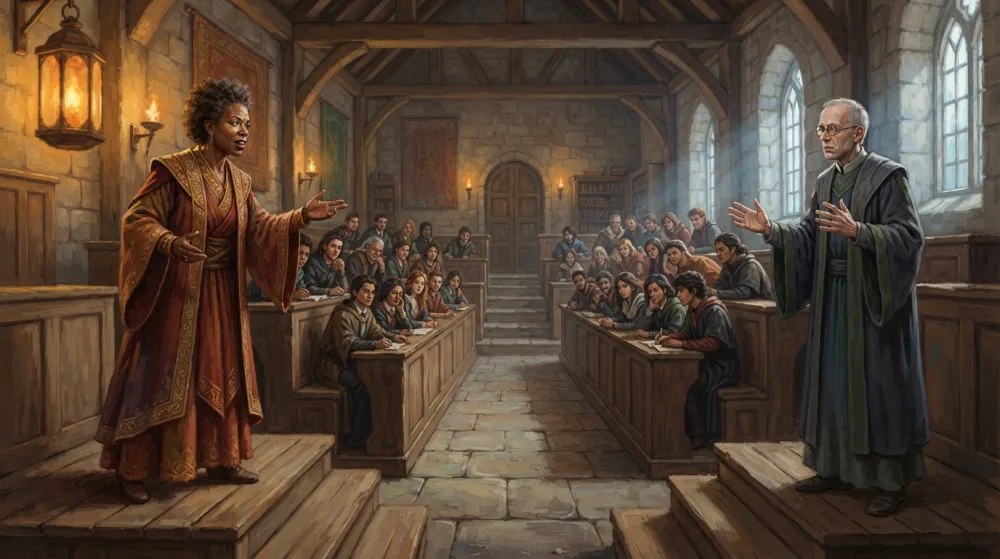
Every Strixhaven college is built the same way: two deans, two opposed philosophical principles, and a student body that spends its whole education arguing the tension between them. Lorehold's Dean of Order and Dean of Chaos disagree about whether history bends toward pattern or chance. Prismari's Dean of Perfection and Dean of Expression disagree about whether art exists to be mastered or felt. That structure repeats across all five, and it's the single most useful lens for picking one: don't just ask which subject appeals to you, ask which side of that college's central argument your character would actually take.
| College | Opposed Principles | Founder Dragon | Mascot | Granted Spell List (choose 1) |
|---|---|---|---|---|
| Lorehold | Order vs. Chaos | Velomachus Lorehold | Spirit Statue | Cleric or Wizard |
| Prismari | Perfection vs. Expression | Galazeth Prismari | Art Elemental | Bard or Sorcerer |
| Quandrix | Substance vs. Theory | Tanazir Quandrix | Fractal | Druid or Wizard |
| Silverquill | Radiance vs. Shadow | Shadrix Silverquill | Inkling | Bard or Cleric |
| Witherbloom | Growth vs. Decay | Beledros Witherbloom | Pest | Druid or Wizard |
Lorehold: The College of History
Opposed principles: Order vs. Chaos. Lorehold studies history broadly, military and social history, archaeology, anthropology, psychology, religion, economics, using magic to unearth secrets and share illumination, often by literally conjuring the spirits of the past to teach a lesson. The Dean of Order argues that history bends toward pattern: structures like law, religion, and social class drive events, and the goal of study is to find that order. The Dean of Chaos argues the opposite: individual actions, personal bonds, and disruptive lone actors are what actually shape history, and the essence of the past is found in the messy specifics rather than the tidy generalities.
Lorehold's campus sits in a region of rugged mesas and excavated ruins northwest of central campus, its buildings carved directly out of cliffside chasms. The college's mascot is the spirit statue.
Class fit: Bards thrive at Lorehold, and Wizards, particularly the School of Divination, are common among its students, alongside Clerics who lean toward Knowledge or Light. The book itself notes an unusual crossover pick: a Barbarian following the Path of the Ancestral Guardian fits Lorehold's spirit-and-history theme just as well as any full caster. A Paladin with the Oath of the Ancients works for the same reason: both draw explicitly on a bond with the past.
Playing an Order-leaning student means treating the past as a body of evidence to be organized, valuing structure, citation, and institutional authority even when arguing with a professor. Playing a Chaos-leaning student means treating the past as something lived rather than catalogued, and would rather interview a ghost than read a transcript of what the ghost once said.
Prismari: The College of Elemental Arts
Opposed principles: Perfection vs. Expression. Prismari studies visual and performing arts, architecture, painting, sculpture, dance, music, theater, fused with elemental magic. The Dean of Perfection values technique, analysis, and mastery, and its mages tend toward cold, water, and wind. The Dean of Expression values raw emotional truth, improvisation, and rule-breaking, and its mages lean toward fire, lightning, and earth.
Prismari's campus is unspecified in the source material beyond its association with elemental spectacle and showmanship. The college's mascot is the art elemental.
Class fit: Druids and Sorcerers are common at Prismari, and Wizards who study Evocation or Transmutation are well represented. Beyond spellcasters, acrobatic Rogues and Fighters, including Eldritch Knights, fit the physical-performance side of the curriculum just as naturally as its elemental-magic side.
Playing a Perfection-leaning student means chasing mastery, revising a piece a dozen times before showing it to anyone. Playing an Expression-leaning student means chasing raw emotional truth, and would rather perform an imperfect piece live than a flawless one alone in a studio.
Quandrix: The College of Numeromancy
Opposed principles: Substance vs. Theory. Quandrix studies mathematics, physics, logic, statistics, metaphysics, and theoretical magic, using spells to summon fractal creatures or turn abstract equations into towering physical patterns. The Dean of Substance argues that mathematics is a natural force embodied in physical reality, waiting to be discovered. The Dean of Theory argues the opposite: math is an abstract framework the mind imposes on the cosmos, and its scholars lean toward illusion and reality-manipulating magic instead.
Quandrix's campus sits in a coastal area northeast of central campus, surrounded by woodland and rivers, its architecture built around living geometric structures of shaped water. The college's mascot is the fractal.
Class fit: The curriculum overlaps significantly with Witherbloom's study of natural science, and its numbers-and-illusion identity fits Wizards (especially Divination or Illusion) and Druids who want a more mathematical, pattern-focused flavor to their nature magic than Witherbloom's biology-first approach offers.
Playing a Substance-leaning student wants their equations to change the physical world, growing a plant or reshaping stone through calculated formula. Playing a Theory-leaning student is more interested in what could be mathematically true than what is physically demonstrable, and is comfortable spending years chasing an unsolved equation for its own sake.
Silverquill: The College of Eloquence
Opposed principles: Radiance vs. Shadow. Silverquill studies literature, languages, linguistics, oratory, rhetoric, and dramatic performance, wielding magic literally made of words: brilliant light or inky darkness manifested from spoken or written language. The Dean of Radiance sees language as a light that uplifts, empowers, and exposes injustice. The Dean of Shadow sees language as a blade that stings, exposes secrets, and serves personal ambition over collective good.
Silverquill's campus sits due north of central campus and is the most urban of the five, built around Grandloft Hall's stately performance spaces and the Rose Stage, a rotating platform where students spar and perform. The college's mascot is the inkling.
Class fit: Silverquill is the natural home for Bards, whose entire class identity runs on words-as-magic, and its granted spell list reinforces that directly. The book also calls out both Paladins and Rogues as common Silverquill students, showing that the college's rhetoric-and-persuasion identity supports face-of-the-party builds regardless of class. Silvery Barbs is on Silverquill's granted bard list, making this the most direct college route to that spell.
Playing a Radiance-leaning student believes, without irony, in the persuasive power of a well-chosen truth. Playing a Shadow-leaning student would rather win the argument than be liked for winning it.
Witherbloom: The College of Essence Studies
Opposed principles: Growth vs. Decay. Witherbloom studies the life sciences, biology, ecology, botany, chemistry, drawing on the opposing magical energies of life and death to heal or harm the living, or to raise and commune with the dead. The Dean of the Root (growth) champions life's drive to survive, adapt, and thrive, and its mages practice healing magic with positive energy. The Dean of the Vein (decay) sees life energy as a resource to be consumed, and its mages practice necromancy with negative energy, a philosophy the book explicitly ties to the college's long association with vampires.
Witherbloom's campus is tucked into a wide bayou southeast of central campus, its buildings grown organically out of the swamp itself. The college's mascot is the pest.
Class fit: Druids are the most obvious fit, and Clerics leaning toward Life or Grave Domain both find a natural home here. The Necromancer-focused Wizard and any Warlock leaning into necrotic or life-drain themes fit the decay side directly.
Playing a Growth-leaning student is at home tending a wound or a garden with equal focus. Playing a Decay-leaning student takes a colder, more transactional view of the living things around them, comfortable working in the space most colleges treat as taboo.
Choosing a College
The book suggests three ways to decide, and none of them require picking a side in the college's core philosophical argument first:
- Read the college descriptions and pick the one that appeals to you. Lorehold if you like history, Prismari if you like art, and so on.
- Let a specific mechanical pick drive the choice. If Silvery Barbs is the spell you want, that alone should point you toward Silverquill.
- Build a character concept first, then find the college that fits. A Barbarian who follows an ancestral spirit doesn't need to force a Lorehold-flavored class pick; Lorehold's own material already calls out that exact combination.
You also don't have to choose at character creation. The book's framing has first-year students make college-adjacent decisions before formally choosing a college at the start of their second year, so a DM running a full campus campaign can have a character start undeclared and choose partway through play. Some students split their studies across two overlapping colleges, but the character-creation mechanics only apply to the one college you formally choose.
Hot Take: don't overthink the order-versus-chaos-style philosophical split as a binary your character must resolve. The book itself frames every dean's position as one extreme of a spectrum, and most Strixhaven students, like most real people with strong opinions, land somewhere in the middle. Play the tension, not the resolution.
The Campus and Arcavios
Strixhaven University sits at the center of a world built around one central mystery: magic itself behaves strangely here, knotted into snarls and marked by impossible floating arches, and nobody fully understands why.
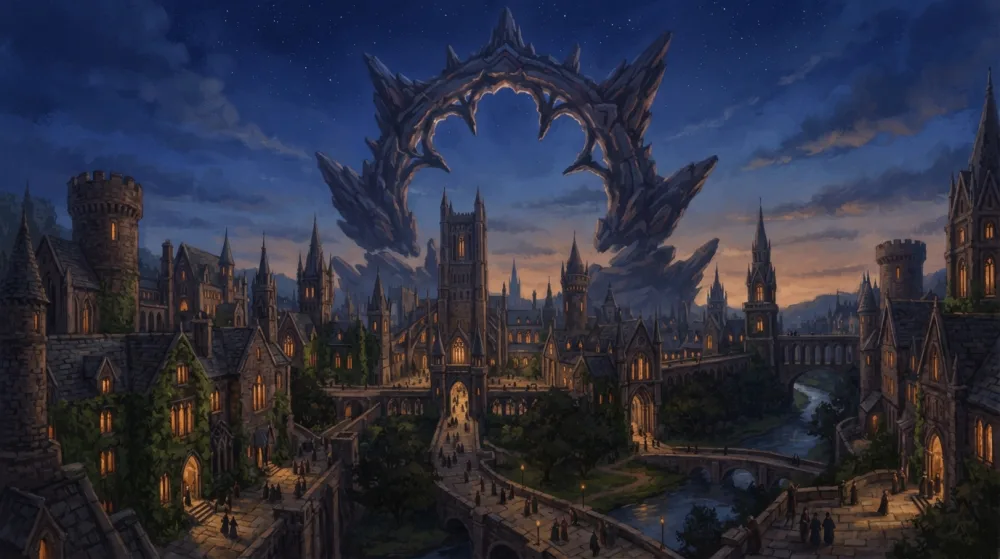
Strixhaven calls itself "the premier institution of magical learning in the world," and by default that world is Arcavios, part of the wider Magic: The Gathering multiverse. According to the setting's own legend, Arcavios formed from the collision or merging of two other worlds. The university sits in the northeastern portion of a continent called Orrithia, more commonly known as the Vastlands, a region populated by an unusually wide variety of peoples and cultures. The student body reflects that: humans, elves, dwarves, Owlin, orcs, trolls, and vampires study alongside pixies, dryads, giants, and treants.
You don't have to use Arcavios at all. The book explicitly supports placing Strixhaven in a homebrew world, an existing published setting like the Forgotten Realms or Eberron, the planar cosmopolis of Sigil, or an interplanar nexus of your own invention. Strixhaven's cosmopolitan framing supports any of these, since the university already draws students and faculty from countless origins.
Snarls and Star Arches
Two recurring magical phenomena define Arcavios's strangeness, and both concentrate at Strixhaven itself.
Snarls are places where the underlying fabric of magic, what the Forgotten Realms calls the Weave, becomes knotted and tangled, amplifying or distorting spells cast nearby in unpredictable ways. A luminous snarl sits at the exact heart of Strixhaven's campus, inside the Hall of Oracles in the university's grand library, the Biblioplex.
Star arches are gravity-defying rock formations shaped like an arch, made of spokes of natural material that hold their shape without visible support. They vary wildly in size, from small and broken to enormous and pristine, and they tower conspicuously over the Biblioplex in particular. Some scholars believe each arch marks a site of major magical significance; others connect them to the archaics, ancient beings tied to the Oracle housed within the Biblioplex. Many students report an arch appearing to them at a critical life moment, offering insight or answering a burning question, though the phenomenon is inconsistent enough that no scholar has fully explained it.
Both are open-ended mystery hooks rather than mechanical hazards. Neither has a stat block. Use them to explain magical oddities on campus, or let your players spend a whole subplot investigating one without needing a combat resolution.
The Biblioplex and the Hall of Oracles
Strixhaven's central library, the Biblioplex, is the physical heart of the university and the site of the snarl described above. It houses the Hall of Oracles, where that snarl's magical energy concentrates most intensely, and its archives hold research spanning every field the five colleges study, not just one. Star arches cluster conspicuously around the building's exterior, reinforcing the sense that this one building sits at the literal center of Arcavios's strangest magical geography.
The archaics are ancient beings tied to the Oracle housed within, connected in scholarly theory to the star arches scattered across Arcavios. Their exact nature is left deliberately mysterious, an open thread a DM can develop however a campaign needs: a slumbering intelligence, a council of ageless advisors, or a phenomenon nobody fully understands, including the Oracle's own attendants. Use the Biblioplex as the default setting for any research-heavy scene, and treat the archaics as a long-term mystery a campaign can gesture toward for years without resolving.
The Founder Dragons
Strixhaven traces its founding to five ancient dragons, said to have hatched from the magical energy of Arcavios itself. Each dragon mastered a different form of magic and established one of the five colleges around that mastery. To this day, the Founder Dragons still roam the world, but they no longer associate directly with the university, letting the deans of their respective colleges speak in their stead. Their knowledge is vast and their tempers famously short; a mage who seeks one out directly is chasing an answer no lesser source can provide, and should expect the encounter to matter.
| Founder Dragon | College | Magic Mastered |
|---|---|---|
| Velomachus Lorehold | Lorehold | History and spirit magic |
| Galazeth Prismari | Prismari | Elemental art magic |
| Tanazir Quandrix | Quandrix | Numeromancy and pattern magic |
| Shadrix Silverquill | Silverquill | Word and rhetoric magic |
| Beledros Witherbloom | Witherbloom | Life-and-death essence magic |
Each dragon's specialty maps directly onto their college's central philosophy, which is a useful shorthand for a DM improvising a Founder Dragon scene: whatever that college's opposed principles argue about, the dragon who founded it mastered the underlying magic those principles are fighting over. Their stat blocks appear in the book's bestiary chapter, but narratively they work best as distant mythic figures rather than routine NPCs or standard combat threats. For general ancient-dragon running advice, see the D&D 5e dragon types guide and running dragons guide.
What You Can Buy On Campus
Strixhaven students can purchase a small catalog of campus-flavored magic items, plus two reprinted Dungeon Master's Guide staples, at prices the book sets directly rather than leaving to a DM's discretion.
| Item | Rarity | Cost |
|---|---|---|
| Bottle of Boundless Coffee | Common | 100 gp |
| Cuddly Strixhaven Mascot | Common | 100 gp |
| Lorehold Primer | Uncommon (attunement, spellcaster) | 300 gp |
| Prismari Primer | Uncommon (attunement, spellcaster) | 300 gp |
| Quandrix Primer | Uncommon (attunement, spellcaster) | 300 gp |
| Silverquill Primer | Uncommon (attunement, spellcaster) | 300 gp |
| Spell Scroll (1st-Level Spell) | Common | 50 gp |
| Strixhaven Pennant | Common | 100 gp |
| Weapon, +1 | Uncommon | 300 gp |
| Witherbloom Primer | Uncommon (attunement, spellcaster) | 300 gp |
Bottle of Boundless Coffee dispenses warm coffee on command, with a 1-in-20 chance per use that it refuses to dispense for the next hour. Pure flavor, no combat use.
Cuddly Strixhaven Mascot is a plush toy representing one of the five college mascots. Pressed to your skin as an action, it grants advantage on a saving throw against the frightened condition once per long rest, a small but real defensive backup for a character without another fear counter.
The five college Primers are the only real build-relevant items on this list. Each is a magic textbook, tied to its college, with 3 charges that regain 1d3 daily. Spend a charge to add a 1d4 bonus to one of two specific ability checks (History or Religion for Lorehold, Acrobatics or Performance for Prismari, Arcana or Nature for Quandrix, Intimidation or Persuasion for Silverquill, Nature or Survival for Witherbloom, matching that college's background skills exactly). Studying the Primer at the end of a long rest also lets its owner choose a 1st-level spell from that college's associated class list and cast it once, free, before the next long rest. All five require attunement by a spellcaster.
Strixhaven Pennant sheds bright and dim light in a small radius when waved, useful as a cheap, replaceable light source with a bit of school spirit attached.
Spell Scroll (1st-Level Spell) and Weapon, +1 are ordinary Dungeon Master's Guide items, reprinted here at fixed campus prices rather than the DMG's usual DM-discretion approach; see the D&D 5e magic items guide for their general mechanics.
Treat this table as a starting-gold sink for a first-year student, not a source of free magic items. A 300 gp Primer is a real purchasing decision at low levels.
Campus Geography and the First Year
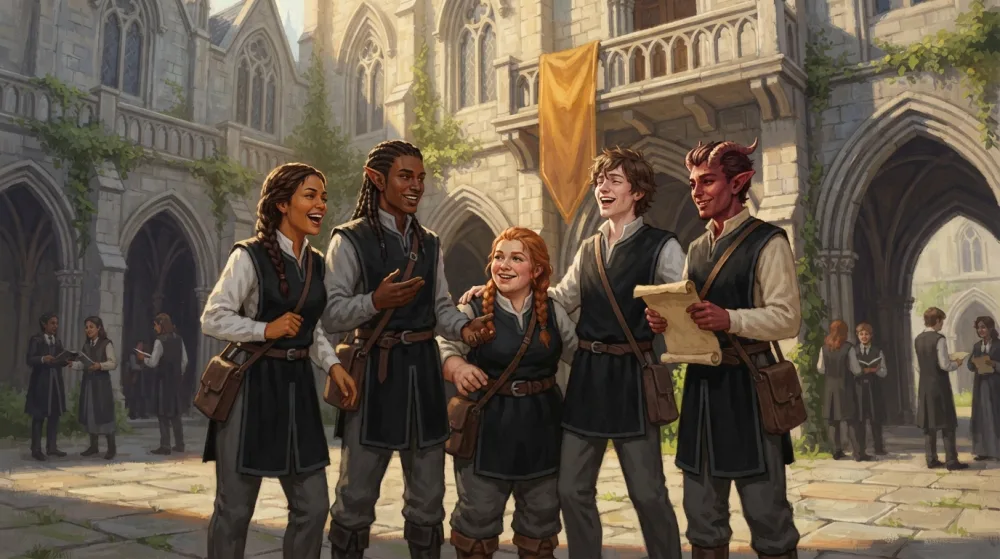
First-year students complete a general course of study before choosing a college at the start of their second year, wearing a shared uniform of black, white, and gray that marks them as undeclared. They live together in central-campus dormitories, and the friendships formed there often outlast the eventual split into five different college campuses; a few students even remain on central campus afterward, either pursuing coursework across multiple colleges or serving as resident advisers.
This matters for character creation before your college choice locks in: a first-year's early relationships cross whatever colleges those classmates eventually choose, which hands a DM a built-in reason for a party to include characters from different colleges without inventing an artificial excuse for why they know each other.
Central campus, home to the Biblioplex, sits at the geographic and thematic center of the university, with each college's own campus arranged around it: Lorehold to the northwest among mesas and excavated ruins, Quandrix to the northeast along a wooded coastline, Silverquill directly north in an urban extension of central campus itself, and Witherbloom to the southeast in a wide bayou. Prismari's campus isn't pinned to a compass direction in the same way, but its identity as a display of elemental artistry sets it apart visually regardless of where a DM places it. That spread is useful for pacing: a scene that starts in the Biblioplex and needs to reach Witherbloom's bayou is a meaningfully different journey than one reaching Silverquill's urban extension just north of central campus.
Student Life
Most D&D settings treat the time between adventures as a narrative fade-to-black. Strixhaven doesn't. Its own rules give that time real mechanical weight: Student Dice you earn from clubs, jobs, and passed exams; Relationship Points that track your standing with recurring classmates; and a real cost for failing a test, tutoring that locks you out of everything else until you pass.

None of this requires the book's own adventures. A DM running any campus-based, guild-based, or institution-based campaign can reskin the whole subsystem, since nothing in it is Strixhaven-specific beyond the flavor text.
Student Dice
A Student Die is a d4 you can roll and add to a relevant ability check. You gain one for each Extracurricular you participate in, and Exams can grant them too. To use one, you roll it after making the d20 roll for a qualifying check but before the DM tells you whether you succeeded or failed, and you can only apply one Student Die per check. Once used, it's spent until you finish a long rest.
Dice from Exams work slightly differently: they're tied to the two specific skills featured in that Exam encounter rather than a broader Extracurricular's skill list, and they're lost entirely at the end of each academic year. Dice from an active Extracurricular persist as long as you stay in it. Spend them deliberately, on a check where the extra d4 could plausibly flip the result, not on a roll you would have passed anyway.
Extracurriculars
Extracurriculars are Strixhaven's campus clubs and societies. Joining one grants a Student Die tied to the skills that club covers, plus a Relationship Point (positive or negative, player's choice) with one student NPC also in that club. A character can only participate in one Extracurricular at a time, and cannot hold a Job while participating in one.
You can quit at any time and lose the benefits immediately. Quitting mid-adventure is a natural roleplay beat, since NPCs in that club are likely to have opinions about why you're leaving.
Picking one by concept. The book's own options tie specific skill pairs to specific clubs, so match the club to whatever two skills your character wants a Student Die for, then let the flavor follow. A martial character who wants Athletics and Intimidation might join a dueling society; a caster who wants Arcana and History might join a research circle. If your table wants to invent Extracurriculars beyond the printed list, keep the two-skills-plus-one-NPC shape and reskin freely: a debate club (Persuasion, Insight), a gardening society (Nature, Medicine), or a dramatic troupe (Performance, Deception) all fit the same template.
Jobs
A Job is the alternative to an Extracurricular: paid campus work instead of a club membership. A character can hold one Job at a time and cannot participate in an Extracurricular while employed.
A student earns 5 gp at the start of each week they hold the Job, prorated to the end of the week if they quit partway through. That's a modest, thematic income source, not a way to fund equipment purchases. While employed, you gain a positive or negative Relationship Point with one coworker NPC, exactly as with an Extracurricular. You can switch Jobs whenever you like, even mid-year, as long as you never hold more than one at a time.
Exams
Every one of the book's own adventures includes Exam encounters, representing the academic side of student life that mostly happens off-screen otherwise. Each Exam has two phases: Studying, then Testing.
Studying phase. Each character makes one ability check of their choice against a DC set by the specific Exam encounter, using any ability and skill they want, once only. Two students studying together both gain advantage on this check. A success grants one reroll to use during the following Testing phase.
Pulling an all-nighter. Instead of the standard Studying check, a character can pull an all-nighter for two rerolls on a success instead of one. The cost is real: 1 level of exhaustion, effective at the start of the Exam day, which cannot be removed until after the Exam concludes. Only take this trade when the Exam genuinely matters to your character or the plot.
Testing phase. This requires ability checks using specific skills set by the Exam encounter itself, and any rerolls earned during Studying apply here.
Failure. If a character fails, Strixhaven's own bylaws require them to attend tutoring with a junior faculty member until they pass a different Exam encounter. While in tutoring, the character cannot participate in any Extracurricular or Job, and loses whatever benefits either was providing. This is the subsystem's real teeth: an Exam failure isn't a narrative setback, it's an ongoing mechanical cost until reversed.
A worked example. Say a DM runs an Exam with a Studying DC of 14 and a Testing phase built around History and Arcana checks. A Wizard chooses to study by making an Intelligence (History) check, rolls a 16, and earns one reroll for Testing. During Testing, the same player rolls a 9 on an Arcana check and spends the earned reroll to try again, rolling a 15 instead, turning a probable failure into a clean pass. A second player who pulled an all-nighter rolled two Studying successes and banked two rerolls for the same Testing phase, a stronger safety net at the cost of a worse combat performance if the Exam day includes any other encounter.
Relationships
While a character participates in an Extracurricular or holds a Job, they accrue Relationship Points, positive or negative, with student NPCs they interact with regularly. These rules only apply to student NPCs; professors, administrators, and other adults sit outside the system entirely.
The book frames these as an optional layer on top of ordinary roleplay, meant to give social interactions with recurring classmates mechanical weight rather than leaving them purely narrative. It's explicitly not required: running it only for the characters who opt in doesn't unbalance the game, and a table uncomfortable with the roleplaying encounters these rules imply should skip them. The book recommends discussing them with your players before adopting them. See the Running the Game guide's Session Zero section for general framing that applies just as well here.
Pacing and Tracking
This subsystem works best as connective tissue between adventures rather than something you resolve every session. A DM running a full school-year campaign might handle one Extracurricular meeting, one Job shift, and one Exam per in-game month, using each as a light scene rather than a full combat-length encounter.
The book provides its own tracking sheet as a printable player aid. Whatever format you use, the fields worth tracking are: current Extracurricular or Job (never both), banked Student Dice and which skills they apply to, Relationship Points per NPC, and current Exam or tutoring status. Check it at natural breakpoints, the start of a new month or the aftermath of an Exam, rather than moment-to-moment during unrelated scenes.
Compared to the core 2014 downtime rules, the difference is specific: standard downtime activities are individual, player-initiated, and largely disconnected from a shared social structure, while Extracurriculars and Jobs both tie your character to a persistent group and give that group mechanical texture through Relationship Points. A DM can freely mix the two: run standard downtime for solo player-driven goals, and reserve Extracurriculars, Jobs, and Exams for the shared, recurring campus-life beats a normal downtime system doesn't cover.
Running a Strixhaven Campaign
Running Strixhaven well means treating the university itself as a character: a place with its own rhythms, factions, and slow-burn mysteries, not just a backdrop for combat encounters.
The Shape of a Campus Campaign
The book's own four adventures each cover roughly one academic year and one tier of character advancement, running from 1st level up through around 10th across the full set. That structure is a useful default even if you're not running them directly: treat each school year as one major plot arc, ending with a clear advancement milestone, and use the student-life subsystem to fill the space between arcs rather than skipping straight from one crisis to the next.
This pacing does something most 2014 campaigns don't: it gives your players a stable home base and a recurring cast of classmates, professors, and rivals who persist across the entire campaign, rather than the transient NPCs a typical dungeon-crawling campaign accumulates. Lean into that. A rival from a different college who shows up in the background of three separate school years does more for your campaign's texture than three one-off NPCs ever could.
The Oriq: A Slow-Burn Antagonist Framework
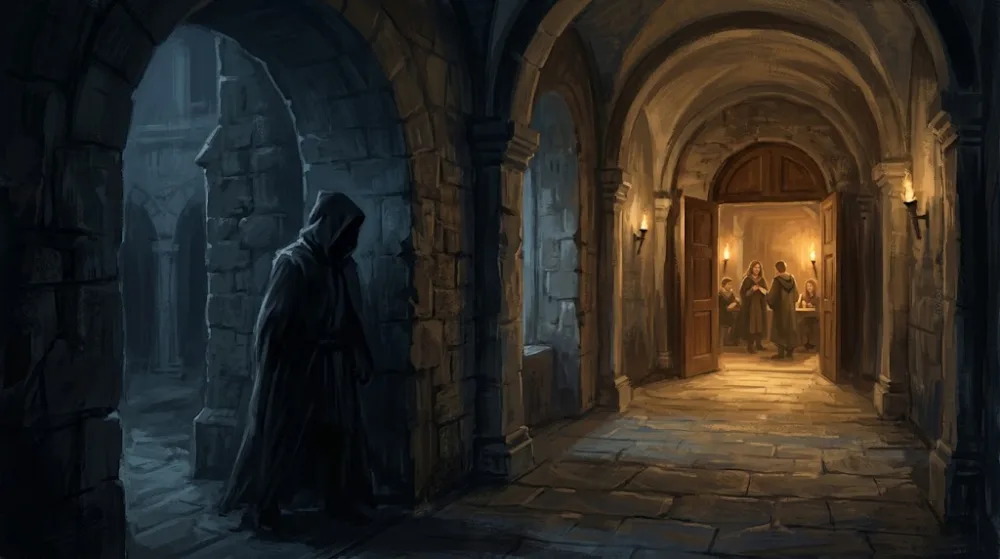
The book's own recurring threat is a secretive order that operates inside Strixhaven's walls rather than outside them. Its recruiters are patient, subtle infiltrators who specifically target students who feel overlooked, underperforming, or otherwise fallen through the cracks of a demanding institution, offering them belonging, resources, or a shortcut to power in exchange for loyalty. Its more overt agents include trackers who can sense magic and hunt down mages who cross the order, and masked operatives who protect their true identities from magical scrying.
This is a reusable antagonist template independent of the specific stat blocks or named villains in the printed adventures: an enemy faction that recruits from within your own institution's failures rather than attacking it from outside. Introduce it gradually. A single missing student here, an NPC who behaves oddly there, a professor's offhand comment about a colleague who left under strange circumstances: let your players piece the threat together across a full school year rather than naming the faction in session one. The reveal lands harder when the party realizes the enemy has been sitting in their own classes the whole time.
Recurring NPCs: Using the Deans
Every college's two deans are a built-in recurring-cast engine that most 2014 settings don't hand a DM for free. Each pair is already written to disagree productively, which means you can drop either dean into a scene and immediately know how they'd react to whatever the party just did, without inventing a new NPC voice from scratch. Use one dean as a mentor figure who consistently supports the party's instincts, and the other as a source of friction who consistently challenges them.
This works especially well for a mixed-college party: if your players span two or three colleges, each character already has a built-in reason to interact with a different pair of deans, giving you four to six recurring authority figures without inventing any of them.
Placing Strixhaven in Your World
You have four broad options, and the university's cosmopolitan framing supports all of them equally:
- A homebrew world. The simplest option if you're already running one; Strixhaven slots in as a magical academy with no baggage from an existing setting.
- An existing published D&D setting, such as the Forgotten Realms or Eberron. Both already support a wide variety of magical institutions, and Strixhaven can sit alongside them or replace a setting's existing school of magic outright.
- Sigil, the planar cosmopolis, which fits Strixhaven's multiverse-drawing student body especially well and lets your campaign pull in players and threats from any plane at once.
- An interplanar nexus of your own invention, similar to Sigil but built around Strixhaven's own snarls and star arches as the mechanism that draws students in.
Make this decision before session one. It determines what races, factions, and outside political pressures can plausibly reach your campus. For general world-building and campaign-structure advice that applies regardless of which option you pick, see the D&D 5e Creating Campaigns guide.
Building Your Own Adventures
If you're not running the printed four, the D&D 5e Creating Adventures guide covers general adventure design that applies just as well to a campus setting. The one Strixhaven-specific addition worth building into any original adventure: weave an Exam, an Extracurricular beat, or a Job shift into the middle of the plot rather than treating academic life and adventure as two separate tracks. A mystery that unfolds partly through research for a Lorehold thesis, or a rival who shows up both in your Silverquill Extracurricular and in the adventure's climax, ties the setting's two halves together in a way a purely external threat never quite manages.
The book's own adventures each open with a campus-specific inciting incident rather than an external threat arriving from outside, and that pattern is worth keeping: a professor's research going wrong, a rivalry between colleges escalating past a friendly competition, an artifact surfacing during a dig. The setting is strongest when the adventure and the school are the same thing, not when the school is just where characters sleep between separate adventures somewhere else.
Session Zero for a Campus Campaign
A campus campaign benefits from a slightly different session-zero conversation than a typical dungeon-crawling one, because the setting assumes ongoing, repeated contact with the same cast rather than transient NPCs met once and left behind. Cover three things specifically:
- How much of the student-life subsystem your table wants. Extracurriculars, Jobs, and Exams are all straightforward mechanically; the Relationship rules carry more social weight and are explicitly opt-in. Ask directly whether each player wants that layer.
- How isolated or connected your Strixhaven is. If you've placed the university in an existing setting, decide together how much of the outside world's politics and threats can reach campus.
- What kind of danger the table wants from the Oriq-style antagonist thread. A slow-burn infiltration mystery plays very differently at a table that wants high body-count danger versus one that wants a puzzle-box mystery with lower stakes.
Running a Mixed-College Party
Most Strixhaven parties won't share a single college, and that's a strength rather than a coordination problem. A mixed-college party gives you built-in reasons for in-party tension (a Lorehold Order-leaner and a Prismari Expression-leaner will naturally clash over how to approach a research problem), built-in reasons to travel across campus, and built-in stakes when one character's college rivalry spills into a shared adventure. Don't force the party to reconcile their colleges' philosophical differences; let the tension sit unresolved the way it does for the deans themselves.
A single-college party works too, for a tighter thematic focus, and it simplifies NPC and location tracking considerably. Neither structure is more correct; pick based on what your table wants.
Common Mistakes
- Picking a college before picking a class. The granted spell list only matters if your class is on it. A Warlock gets almost nothing from any college's list. Class first, college last.
- Taking Strixhaven Initiate as a feat when your background already grants it. Every college background hands it over for free. Check before you spend an Ability Score Improvement.
- Playing Owlin in medium or heavy armor. Flight shuts off entirely. If your build needs plate, pick a different race and get your Strixhaven identity from a background instead.
- Treating snarls and star arches as encounters. Neither has a stat block, and neither is meant to have one. They're mystery hooks.
- Introducing the Oriq in session one. The faction works as a slow reveal built across a school year. Naming them early trades the best structural surprise in the book for nothing.
- Skipping the student-life subsystem between adventures. It's the only thing that makes a campus campaign play differently from any other campaign. One Exam per in-game month is enough to keep the school present.
- Letting a character hold both an Extracurricular and a Job. The rules allow one or the other, never both at once.
- Rolling a Student Die after the DM announces the result. You have to roll it before you know whether you succeeded, which is what makes the resource decision interesting.
- Forgetting that Exam failure locks out clubs and jobs. Tutoring isn't flavor. It removes the character's Student Die source until they pass a different Exam.
- Deciding where Strixhaven sits in your world after session one. That choice determines which races, factions, and outside threats can reach campus, so it needs to be settled before characters are built.