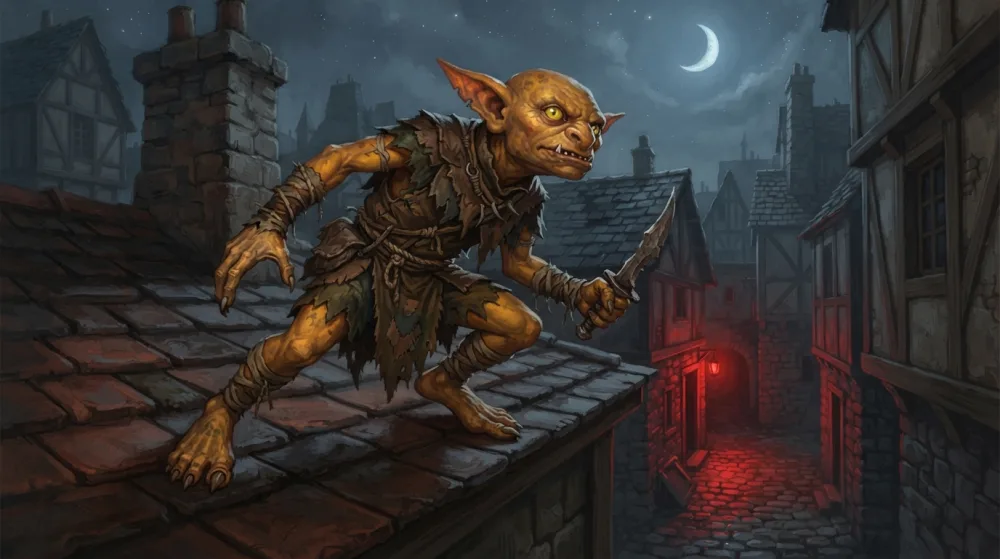
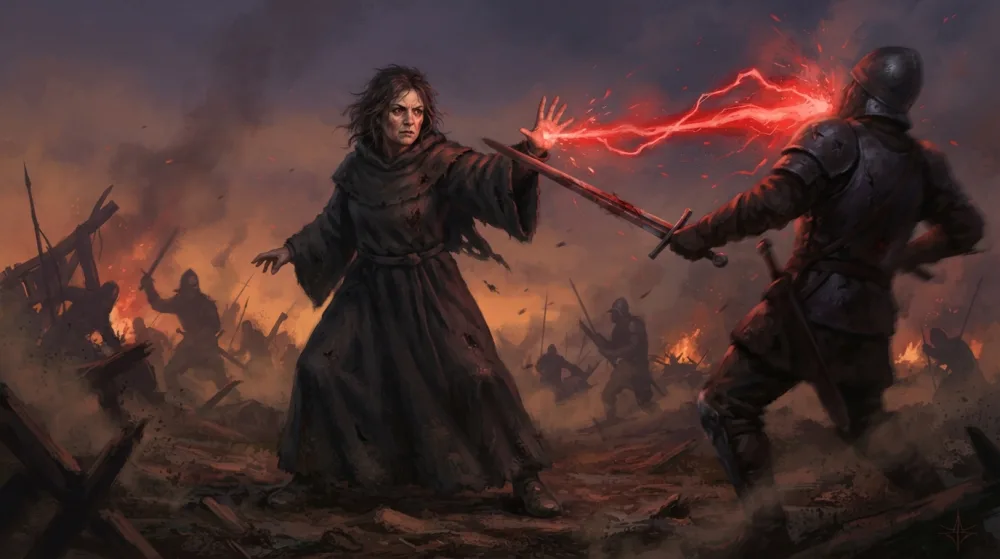
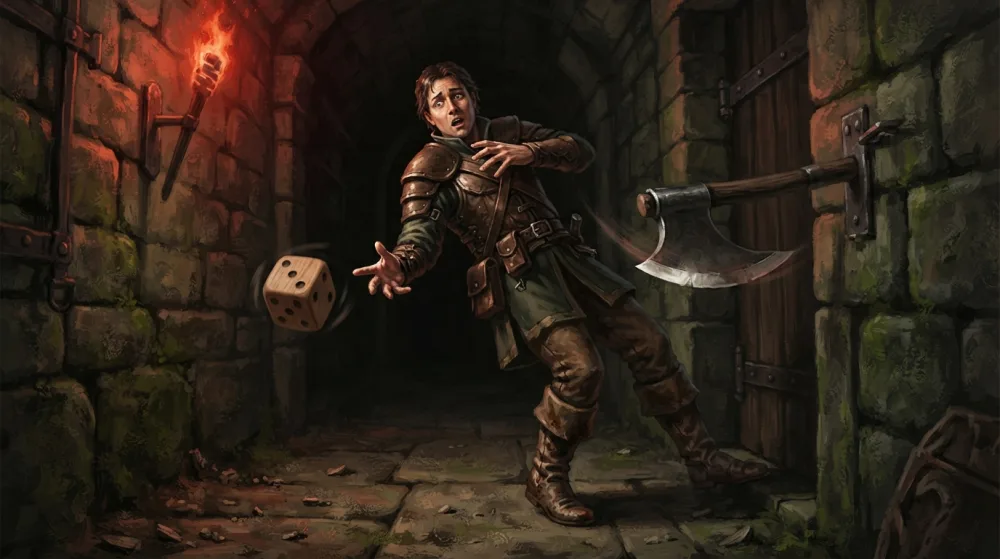
Return to the Dungeon Master Guides hub for the full 2014 DM chapter map, including how downtime fits alongside session mechanics and adventure design.
Introduction
Adventuring is not a character's whole life, even in a game built around it. Between the dungeon that nearly killed the party and the one waiting next session, the 2014 Dungeon Master's Guide gives characters a stretch of downtime to spend however they like: propping up a business, throwing money at a party that gets out of hand, or quietly training toward the next level. Chapter 6, "Between Adventures," covers two connected pieces of that gap - the recurring costs that come with owning property, and nine named downtime activities a character can pursue while the adventure clock is paused.
This guide covers that chapter in full: Recurring Expenses (property maintenance, businesses, and garrisons), all nine Downtime Activities, and the DM-side guidance for inventing a tenth. It also covers a separate but related piece of Chapter 7: Strongholds awarded to a character as a reward, which work under different rules than the stronghold a character builds themselves.
Recurring Expenses
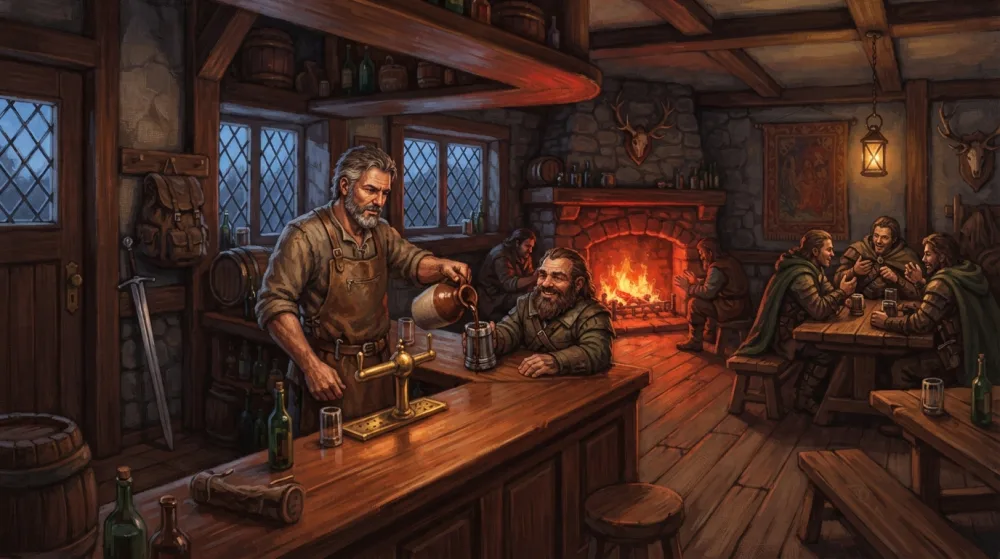
Owning property changes a character's relationship with money. Beyond the day-to-day cost of a lifestyle - covered by the Player's Handbook's Lifestyle Expenses rules, which the D&D 5e 2014 Gear Guide already walks through - a character who comes to own a castle, a tavern, or any other piece of property takes on a second, separate set of costs tied to keeping that specific place running.
Property maintenance. It is not unusual for adventurers, especially past 10th level, to end up owning a keep, a guildhall, or some other piece of real estate - bought outright, seized by force, won from a deck of many things, or granted as a reward. Every such property has a daily maintenance cost that covers everything needed to keep it running smoothly: repairs, supplies, and the wages of the hirelings who staff it. If the property earns its own income - rent, tithes, trade fees - that income is already netted into the daily figure, so the number a DM quotes is the actual gap a character has to cover out of pocket. A modest keep might run a character a handful of gold pieces a day; a palace or large castle can run into the hundreds. Maintenance is due every 30 days, and because adventurers spend so much of their time away from home, most properties employ a steward who can make those payments even when the owner is off in a dungeon.
Businesses. A well-run business can usually cover its own maintenance costs without the owner subsidizing it, but "well-run" is doing a lot of work in that sentence - someone still has to check in periodically to keep things from sliding. That check-in is exactly what the Running a Business downtime activity below represents.
Garrisons. Castles and keeps employ soldiers to defend them, statted as veterans and guards from the Monster Manual. Less fortified properties - roadside inns, outposts, forts, palaces, and temples - lean on guards alone. These armed defenders make up the bulk of a property's skilled hirelings, and a DM adjudicating an attack on a character's stronghold should account for them as a real defensive force, not set dressing.
Downtime Activities: How They Work
The core idea behind downtime is simple: letting days, weeks, or months pass between adventures stretches a campaign out, keeps characters from gaining power faster than the story can support, and gives players a reason to care about the world beyond the next dungeon. A character who owns a tavern or has been carousing with the locals in a particular town has a personal stake in that town's fate that a character who only ever passes through does not.
How much downtime a campaign offers scales with the party's level. Days or weeks might separate low-level adventures; by the time characters are pursuing ambitious, higher-level projects like a stronghold, the gaps between adventures might be measured in months or years. None of the nine activities below are available on demand mid-adventure - they exist in the space the DM opens up between adventures, and a DM who wants a tighter, action-focused campaign is free to offer less of that space, or skip it entirely.
The Player's Handbook already introduces a few downtime activities in its own Adventuring chapter. The nine below are the DMG's additional options, available at your DM's discretion depending on your campaign's style and your character's own background and interests.
Building a Stronghold
A character can spend downtime overseeing construction of a stronghold, provided they have already secured a plot of land - by royal charter, land grant, deed, inheritance, or other means. Royal charters and land grants are typically rewards for faithful service (though they can be bought); deeds can be bought or inherited outright. A small estate might run 100 to 1,000 gp; a large one can run 5,000 gp or more, if a seller can be found at all.
Once the land is secured, construction itself costs both gold and time, provided the character spends their downtime overseeing the work. Work can continue while the character is away adventuring, but every day away adds 3 days to the total construction time.
| Stronghold | Cost | Construction Time |
|---|---|---|
| Guildhall, town or city | 5,000 gp | 60 days |
| Trading post | 5,000 gp | 60 days |
| Outpost or fort | 15,000 gp | 100 days |
| Tower, fortified | 15,000 gp | 100 days |
| Noble estate with manor | 25,000 gp | 150 days |
| Abbey | 50,000 gp | 400 days |
| Keep or small castle | 50,000 gp | 400 days |
| Temple | 50,000 gp | 400 days |
| Palace or large castle | 500,000 gp | 7,200 days |
A palace's 7,200-day construction time works out to roughly 20 years even overseen full time, which is less a realistic project plan than a signal about scale: at that price point, the DMG expects the stronghold to be a multi-campaign or legacy-character undertaking, not something the party manages between two adventures at 12th level.
Hot Take: A guildhall or trading post at 5,000 gp and 60 days is a reasonable mid-campaign goal for a party past 5th or 6th level - it is affordable, it finishes inside a normal downtime window, and it gives a character a home base without derailing the campaign for a year of game time. A keep or abbey at 50,000 gp and over a year of construction is a different kind of commitment entirely, and a DM should treat a player's choice to pursue one as a statement about where that character wants the campaign's back half to go, not just a shopping decision.
Get the Free GM Session Kit
Running 2014 D&D at the table? Session Zero template, recap format, and a prep checklist, built for the classic rules.
No spam, unsubscribe anytime.
Carousing
A character can spend downtime on hedonistic pursuits - parties, drinking, gambling, or whatever else helps a character unwind between brushes with death. Carousing costs money as though the character were maintaining a wealthy lifestyle for however many days are spent on it. At the end of that stretch, the player rolls percentile dice, adds the character's level, and checks the total against a results table (or the DM simply narrates an outcome).
The range of outcomes runs from bad to good. Low rolls can land a character in jail overnight on a disorderly-conduct charge, waking up robbed in a strange place with no memory of the night, or making a lasting enemy out of a person, business, or organization the DM decides on. A roll in the middle of the table means the character breaks even, recovering the lifestyle expenses spent carousing without gaining or losing anything further. High rolls turn a night of gambling into modest winnings on top of that break-even, and the best possible result nets a small fortune and turns the character's exploits into local legend. One unusual mid-table outcome ropes the character into a whirlwind romance, which can end badly, end amicably, or keep going as an ongoing relationship, at the player's discretion within the DM's approval.
Carousing is a good fit for a character whose player wants unpredictable complications and hooks more than a guaranteed return on their gold - it trades a fixed cost for a wide spread of outcomes, from a night in jail to a small fortune.
Crafting a Magic Item
Magic items are ordinarily the DM's to hand out, but crafting one during downtime is an option many DMs allow. It is a lengthy, expensive undertaking: the character needs a formula describing the item's construction, must be a spellcaster with spell slots capable of casting any spell the item will produce, and must meet a minimum character level tied to the item's rarity.
| Item Rarity | Creation Cost | Minimum Level |
|---|---|---|
| Common | 100 gp | 3rd |
| Uncommon | 500 gp | 3rd |
| Rare | 5,000 gp | 6th |
| Very rare | 50,000 gp | 11th |
| Legendary | 500,000 gp | 17th |
Progress is made in 25 gp increments, spending that amount for each 8-hour day of work until the total cost is paid - so an uncommon item's 500 gp cost takes 20 days of dedicated effort. If the item will produce a spell, the crafter has to expend one spell slot of that spell's level for each day of creation and keep any material components the spell needs on hand throughout, consuming them if the spell normally would. Multiple characters can pool their effort on the same item, each contributing spells, spell slots, and 25 gp of progress per day they participate, as long as everyone who contributes meets the level prerequisite individually.
While crafting, a character can maintain a modest lifestyle at half its normal cost, or a comfortable lifestyle for free - a small offset against how much gold the activity otherwise burns. For the full system that governs what the finished item actually does once it exists - rarity, attunement, activation, and the rest - see the Magic Items guide.
Gaining Renown
A character who belongs to an organization can spend downtime improving their standing within it - taking on minor tasks for the group, socializing with its members, or otherwise investing time in the relationship rather than money. After a combined number of days equal to the character's current renown multiplied by 10, that renown increases by 1. A character with 2 renown in a knightly order needs 20 days of this kind of investment to reach 3; the cost in time scales up the more renowned a character already is.
Performing Sacred Rites
A pious character can spend downtime at a temple affiliated with a god they revere, splitting time between meditation, prayer, and the temple's rites. A character who is themselves a priest at that temple can lead rites such as weddings, funerals, and ordinations; a layperson can offer sacrifices or assist a priest running one. A character who spends at least 10 days performing sacred rites gains inspiration at the start of each day for the next 2d6 days afterward - a modest, faith-flavored payoff for characters built around devotion rather than combat or crafting.
Running a Business
A character who ends up owning a business unrelated to adventuring - an inherited smithy, a tavern handed over as a reward, a parcel of farmland - can spend downtime checking in on it and keeping it running smoothly. The player rolls percentile dice, adds the number of days spent on the activity (capped at 30 for this roll), and checks the total against a results table.
The spread of outcomes runs from the business losing money the character has to cover out of pocket, through simply breaking even, up to the business turning a modest profit on top of covering its own costs. If a result requires the owner to pay a cost and they cannot or do not, the business starts to fail: each unpaid debt applies a cumulative -10 penalty to that business's future Running a Business rolls, making the next check-in more likely to land on another bad result and compounding the problem the longer it goes unaddressed.
Selling Magic Items
Most people cannot afford a magic item, and fewer still know how to find one for sale - which makes finding a buyer a downtime activity in its own right rather than a shop transaction. A character can spend downtime searching for a buyer for a common, uncommon, rare, or very rare item, but only in a city or similarly wealthy location; legendary items and priceless artifacts cannot be sold this way at all, and finding a buyer for one of those is adventure or quest material.
For each item, the seller makes a DC 20 Intelligence (Investigation) check to find buyers, with another character able to lend a hand for advantage on the roll. A failed check means no buyer turns up after 10 days of searching. A successful check finds a buyer after a number of days tied to the item's rarity - a common item as quickly as a day or two, a very rare item potentially taking well over a week. Multiple items can be searched for at once without the searches stacking their time; the whole search takes as long as the slowest individual result.
Once a buyer search succeeds, the player rolls percentile dice, adds a Charisma (Persuasion) check, and applies a modifier keyed to the item's rarity to determine the offer: rolls at the low end draw only a fraction of the item's base value, the middle of the range draws roughly half from an honest buyer or the full price from a shadier one, and the best results draw a full-price offer from an aboveboard buyer or a markup from a buyer who does not ask questions. The DM decides who that buyer actually is - and whether dealing with a shady one creates complications for the party down the line.
Once an item is sold, the buck stops with the DM's own sense of the setting: a world where magic items trade freely feels different at the table than one where every sale is a small event, and this activity assumes the latter by default. See the Magic Items guide for the buying-and-selling assumptions the wider system runs on.
Sowing Rumors
Public opinion can be swayed for or against a person or organization by spreading a rumor - simple, concrete, hard to disprove, and believable enough to play off what people already want to think about the subject. Doing so takes a number of days tied to the size of the settlement:
| Settlement Size | Time Required |
|---|---|
| Village | 2d6 days |
| Town | 4d6 days |
| City | 6d6 days |
In a town or city, that time must be spent continuously - disappearing on an adventure partway through and coming back later lets the rumor fade before it takes hold. The character spends 1 gp per day covering the cost of drinks and social appearances while spreading it, then makes a DC 15 Charisma (Deception or Persuasion) check at the end. Success shifts the community's general attitude toward the subject one step, friendlier or more hostile as the character intends; failure means the rumor gains no traction, and further attempts to spread that same rumor also fail. A shifted community attitude is a broad trend, not a guarantee - individuals with their own firsthand experience of the subject can still hold their own opinion regardless of what the rest of town believes.
Training to Gain Levels
This is a variant rule a DM can adopt rather than a default: once a character has earned enough experience to reach a new level, they must spend downtime training before actually gaining that level's class features. The time and cost required scale with the level being trained toward.
| Level Attained | Training Time | Training Cost |
|---|---|---|
| 2nd-4th | 10 days | 20 gp |
| 5th-10th | 20 days | 40 gp |
| 11th-16th | 30 days | 60 gp |
| 17th-20th | 40 days | 80 gp |
Because this is a variant, not every 2014 table uses it - check with your DM whether experience alone unlocks a new level at your table, or whether it also gates behind a training montage.
Creating Downtime Activities
Players sometimes want to pursue something the nine activities above and the Player's Handbook do not cover. The DMG hands DMs a short framework for handling that rather than leaving it to improvisation:
- Never let a new activity replace the need for adventures. Downtime should complement the campaign's adventuring loop, not become a substitute for it.
- Give activities with a monetary cost a real purpose. A cost gives players a reason to spend hard-won treasure on something other than gear.
- Use activities that reveal information to foreshadow. An activity that surfaces new adventure hooks or previously unknown facts about the setting does double duty as worldbuilding.
- Build a random outcome table for anything meant to repeat. If a character is going to attempt the same activity more than once with variable success, model its results on the outcome tables already used by Carousing and Running a Business.
- Let relevant proficiencies and backgrounds help. A character whose class, proficiency, or background fits the activity can reasonably get a bonus on the checks involved.
A DM weighing a homebrew downtime request can run it through this same checklist before ruling on it, which keeps a one-off request consistent with how the nine official activities already behave.
Xanathar's Guide to Everything Downtime Activities
Xanathar's Guide to Everything dedicates its own section of Chapter 2, "Dungeon Master's Tools," to downtime, and most of it adds options rather than restating the DMG's nine. A few XGE-named activities cover ground the DMG list already claims - its own Carousing and Selling a Magic Item entries use different tables but land on the same core activity, and its Training entry teaches a character a language or tool proficiency rather than the class levels covered by Training to Gain Levels above - so this section skips reprinting those and covers only what is new: nine additional downtime activities that expand a character's options between adventures.
Buying a Magic Item
A character can spend downtime hunting for a magic item to purchase instead of waiting for one to turn up as loot. Finding a seller takes at least a workweek and 100 gp in expenses, and a Charisma (Persuasion) check determines the caliber of seller found - the character gains a +1 bonus for every additional workweek spent searching and every additional 100 gp spent, up to +10 total. A higher check total unlocks access to pricier item categories, and once a seller is found, the item's price is set by its rarity, with common and uncommon items far more attainable than legendary ones.
This activity works well for a character with disposable gold and a specific item in mind, since a player can also ask their DM to seed a wanted item onto the seller's stock if the check clears a rarity-based threshold. It is a poor fit for a low-level party with little gold to spare on a search that might still come up empty.
Crafting an Item
Distinct from Crafting a Magic Item above, this activity covers ordinary gear: armor, weapons, clothing, or any other nonmagical item a character has the tools and materials for. The character needs raw materials worth half the item's selling price and proficiency with the relevant tool proficiency - smith's tools for armor and weapons, leatherworker's tools for leather goods, weaver's tools for cloaks and robes, and so on. Divide the item's gold piece cost by 50 to find how many workweeks the work takes; items totaling 50 gp or less can be finished together within a single workweek. Multiple characters with the matching tool proficiency can pool their effort and split the time between them.
Once finished, the character can sell the item at its listed price, which makes this a straightforward way to convert downtime into gold for a character built around a craft rather than combat. The activity is only as good as the tool proficiency backing it, so a character weighing artisan's tools at character creation should factor in whether they actually want this kind of downtime income.
Crime
A character willing to break the law can spend downtime casing targets for a payoff, at the risk of getting caught. The setup takes a week and at least 25 gp spent gathering information, after which the player picks a target DC of 10, 15, 20, or 25 - a higher DC means a bigger potential score but a harder job. Pulling off the crime itself calls for three separate checks: Dexterity (Stealth), Dexterity with thieves' tools, and the player's choice of Intelligence (Investigation), Wisdom (Perception), or Charisma (Deception).
Failing all three checks means arrest, a fine equal to the intended payout, and a week in jail for every 25 gp of that fine. One success means the character escapes empty-handed; two successes nets half the loot; three successes nets the full amount. It is a high-variance activity best suited to a character whose concept already leans toward larceny, since the failure state carries a real, sometimes campaign-relevant cost.
Gambling
Gambling puts a character's fortune on the table at games of chance, staking anywhere from 10 gp up to 1,000 gp or more over a workweek. The character makes three checks - Wisdom (Insight), Charisma (Deception), and Charisma (Intimidation) - against a DC generated separately for each one, representing the unpredictable quality of the competition. A character proficient with a relevant gaming set can substitute that proficiency for any of the three skills.
Zero successes means the character loses the full stake and takes on a matching debt; one success halves the loss; two successes turns a profit of half the stake; three successes doubles the money risked. Unlike Carousing's percentile-roll outcome table, Gambling's three-check structure rewards a character with strong Wisdom, Charisma, or a gaming-set proficiency, making it a better fit for a build that can actually lean on those numbers rather than a pure gamble on the dice.
Pit Fighting
Pit Fighting covers boxing, wrestling, and other nonlethal organized combat rather than a fight to the death, which still uses the standard combat rules. A workweek of matches calls for three checks - Strength (Athletics), Dexterity (Acrobatics), and a Constitution check boosted by a roll of the character's largest Hit Die - with an attack roll allowed to replace one of the three. Each check faces its own randomly generated DC, reflecting how unpredictable the competition is going to be.
The payout scales directly with success: nothing for zero successes, 50 gp for one, 100 gp for two, and 200 gp for three. It is a good outlet for a martial character who wants a downtime activity that plays to their strengths instead of falling back on a social or Charisma-based check, though a losing streak draws unwanted attention from bettors and promoters just as easily as a winning one does.
Relaxation
Relaxation is the activity for a character who just wants a break, or who needs one for mechanical reasons: recovering from injury, disease, or a reduced ability score. A single week of maintaining at least a modest lifestyle earns advantage on saving throws against long-term diseases and poisons, and lets the character end one effect blocking hit point recovery or restore one ability score that has been reduced below normal - as long as that reduction was not caused by an ongoing magical effect.
This is the simplest activity on the list, with no roll and almost no chance of a complication attached to it. It is the right choice for a player who wants their downtime to matter mechanically without engaging with any of the more involved systems above.
Religious Service
Religious Service is a separate track from Performing Sacred Rites above: instead of leading weddings or funerals for a temple a character already serves, this activity has a character attending and proselytizing at a temple to win its leaders' favor. A workweek of access to a matching temple lets the character make an Intelligence (Religion) or Charisma (Persuasion) check, and the total determines how many favors - each one a promise of future assistance, a discount on cleric spellcasting, or even a moment of minor divine intervention - the character earns.
A character can only bank a limited number of unspent favors at once, equal to 1 plus their Charisma modifier, so a devout character gets more mileage stacking Religious Service with the roleplay hooks Performing Sacred Rites already offers than spamming either activity alone.
Research
Research lets a character dig into lore about a specific monster, location, magic item, or other topic, provided they have access to a library or a sage. A workweek and at least 50 gp in materials and bribes earns an Intelligence check, with a cumulative +1 bonus for every 100 gp spent beyond the first 100, up to a maximum of +6, plus advantage if the character's source is especially well-stocked or knowledgeable.
The check total determines how many discrete, true pieces of lore the character learns - a creature's resistance, a password, a common spell list - with the DM deciding exactly what surfaces. It is the natural downtime activity for a party planning to face a specific, known threat and wanting an edge before they walk into it.
Scribing a Spell Scroll
Scribing a Spell Scroll gives a spellcaster a faster, cheaper way to produce one specific item type than the general Crafting a Magic Item process above. The character needs Arcana proficiency, the spell prepared or known, and any material components the spell calls for; time and cost scale directly with the spell's level, from a single day and 15 gp for a cantrip up to 48 workweeks and 250,000 gp for a 9th-level spell.
Because the cost and time track the spell level directly rather than an item rarity band, this activity is worth calling out separately for any spellcasting character who wants a specific scroll rather than whatever a formula-based magic item search turns up.
Work
When a character needs steady, if modest, income without gambling on a table of outcomes, Work represents finding temporary honest labor for a workweek. The character makes one check - Strength (Athletics), Dexterity (Acrobatics), Intelligence with a set of tools, Charisma (Performance), or Charisma with a musical instrument - and the total determines the character's earnings for the week, ranging from a poor lifestyle on a low roll up to a comfortable lifestyle plus 25 gp on a high one.
A character with a relevant tool proficiency or performance-adjacent skill gets consistent, predictable income from this activity with none of Gambling's or Crime's downside risk, which makes it the reliable fallback for a party stretch that calls for gold without complications - the same tool proficiency that pays off in Crafting an Item above also pays off here.
Strongholds as a Reward, Not Just a Build
Building a Stronghold, above, is one path to owning a keep or tower - but it is not the only one. Chapter 7's Marks of Prestige rewards list includes Strongholds as something a powerful patron can simply hand a character outright, usually to a seasoned adventurer who has shown unwavering loyalty to a king, knighthood, or council. This kind of stronghold can be anything from a fortified city tower to a provincial keep on the frontier, and while the character governs it as they see fit, the land underneath it legally remains the property of whoever granted it - a distinction that matters if the character is ever judged disloyal or unworthy of the gift, since it can be taken back.
A patron bequeathing a stronghold this way sometimes sweetens the deal further by covering its maintenance costs for the first month or several, after which the recurring expenses covered earlier in this guide become the character's own problem. Strongholds are one entry among several on that Marks of Prestige list - letters of recommendation, medals, parcels of land, special favors, special rights, and titles round out the rest of what a DM can award as treasure, alongside the epic boons reserved for 20th-level characters.
The practical difference for a player: a built stronghold is something you chose, budgeted for, and own outright once construction wraps. A granted stronghold is something you were given, remain answerable for, and could theoretically lose. A DM planning either one for a campaign should decide up front which flavor fits the story - a character who fought for years to build their own keep should feel differently about it than one who inherited a castle from a grateful duke.
Fitting Downtime Into Your Campaign's Pacing
None of these activities exist in a vacuum - they are one of the levers a DM has for controlling how a campaign feels session to session. A campaign that never pauses for downtime reads as relentless and urgent, appropriate for a short, high-stakes story but exhausting to sustain over dozens of sessions. A campaign that offers generous downtime between adventures gives characters room to become invested in the world beyond the next quest hook, at the cost of slowing the overall pace of advancement and plot.
For the broader question of how downtime fits into a campaign's overall shape - tiers of play, how often world-shaking events land, how long a campaign is meant to run - see Creating Campaigns. That guide covers the pacing decisions this one assumes; this one covers what characters actually do once that pacing opens a window for them.
Recurring expenses and the nine downtime activities above cover everything the 2014 rules offer for the space between adventures - gold sinks and gold sources, quiet character development and loud complications, guaranteed payoffs and open-ended gambles. None of it is mandatory at any table, but a DM who never opens this window is quietly removing one of the game's built-in tools for making a world feel lived-in rather than just adventured-through.
A Strixhaven campaign has its own themed variant of this same idea: the Strixhaven guide's student-life section covers Extracurriculars, Jobs, and Exams, a campus-specific downtime layer that ties directly into recurring student NPCs rather than the more general activities above. Use the two systems together, or swap this guide's activities entirely for Strixhaven's own subsystem when running that setting.