Introduction
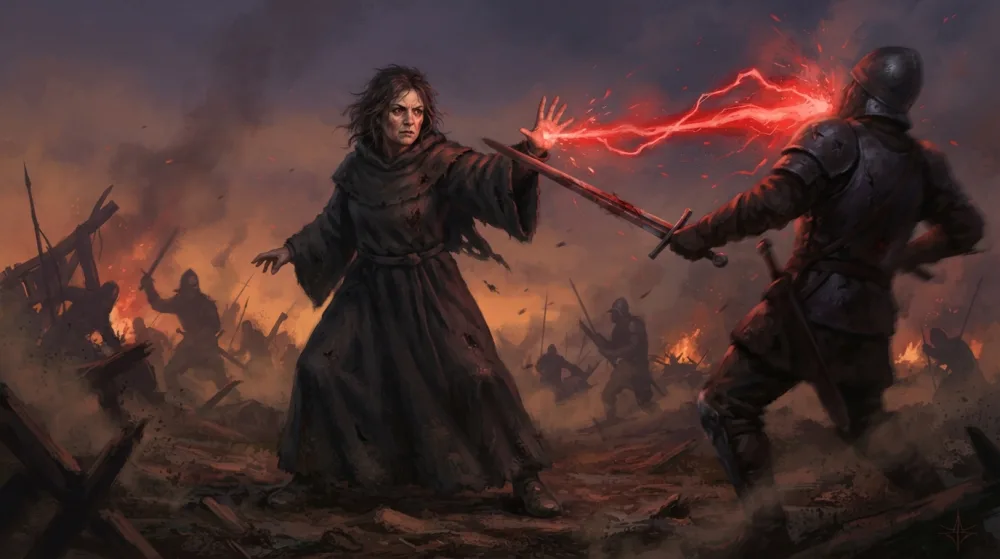
Volo's Guide to Monsters added six "monstrous adventurers" to the 2014 rules, the enemy races of countless low-level adventures turned into player options. Five of them share a design logic: Bugbear, Goblin, Hobgoblin, Kobold, and Orc each get one sharply defined trick, a stat line that points at a narrow set of classes, and in two cases an ability score penalty. The sixth, Yuan-ti Pureblood, plays in a different power bracket and has its own guide.
Putting the five side by side shows what a separate page for each hides. Three of them (Goblin, Bugbear, Kobold) answer the same question, which is how to deal extra damage on a turn that matters, and they answer it in different ways. Orc only makes sense next to the Half-Orc. Hobgoblin turns out to be the best Wizard race among them.
Each of the five is also misread in at least one rule that changes how it plays. Those rules are called out where they apply.
How the Ratings Work
Ratings reflect overall power under the 2014 rules, judged for the build the race suits best.
- ● Poor. Avoid, or situational at best.
- ● Situational. Useful in specific builds or campaigns.
- ● Good. Reliable value in most builds.
- ● Excellent. Best-in-slot or near it for the right build.
The Five Races at a Glance
| Race | Ability scores | Signature trait | Strongest classes |
|---|---|---|---|
| Bugbear ● | +2 STR, +1 DEX | Surprise Attack, Long-Limbed | Barbarian, Rogue, Gloom Stalker Ranger |
| Goblin ● | +2 DEX, +1 CON | Fury of the Small, Nimble Escape | Sorcerer, Ranger, Warlock, Rogue |
| Hobgoblin ● | +2 CON, +1 INT | Martial Training, Saving Face | Wizard, Eldritch Knight Fighter |
| Kobold ● | +2 DEX, -2 STR | Pack Tactics | Rogue, Warlock, Sorcerer |
| Orc ● | +2 STR, +1 CON, -2 INT | Aggressive | Barbarian, Strength Fighter |
All five have darkvision to 60 feet and no subraces. Goblin and Kobold are Small; the other three are Medium.
Goblinoids: One Origin, Three Playstyles
Goblins, hobgoblins, and bugbears are the three goblinoid peoples, and all three speak Goblin. They share a history in most settings and almost nothing mechanically. In the Volo's versions the Goblin is a Dexterity skirmisher, the Hobgoblin is a disciplined Constitution-and-Intelligence soldier, and the Bugbear is a Strength ambusher.
That split is useful at the table. A goblinoid party can cover a caster, a scout, and a frontliner without anyone playing against their race. Settings lean on the shared history in different ways. Eberron's goblinoids are heirs to the fallen empire of Dhakaan rather than raiders. In Wildemount, goblinkin are citizens of the Kryn Dynasty in Xhorhas. Guildmasters' Guide to Ravnica also prints the Goblin with the same traits as Volo's.
Bugbear
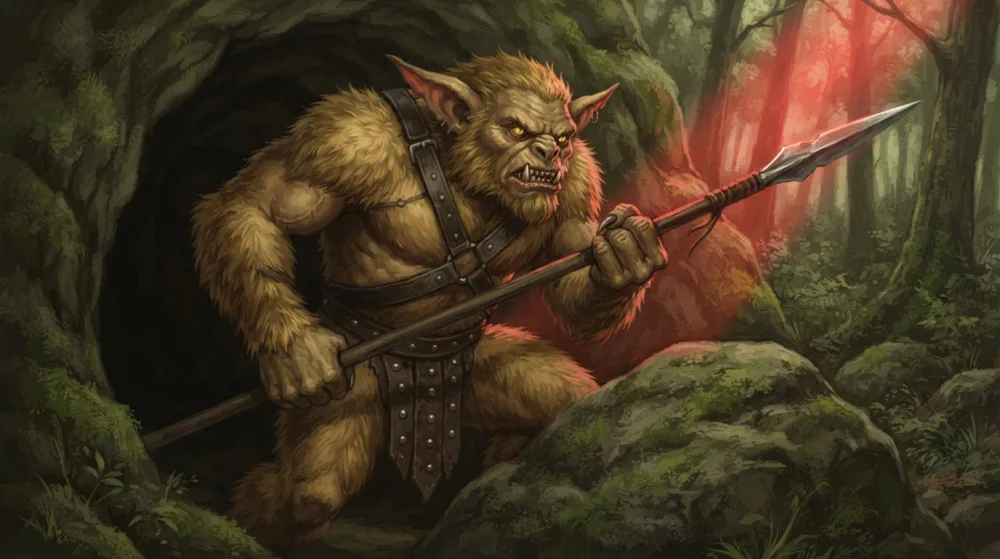
Bugbears are hulking, stealthy goblinoids built around one idea: the first hit of a fight should hurt more than any other. Sneaky sets up the ambush, Surprise Attack pays it off, and Long-Limbed lets you strike from further away than the enemy expects.
Bugbear Racial Traits
- ● +2 STR, +1 DEX. A melee stat line that works for a heavy-weapon build and still helps AC, initiative, and Stealth.
- ● Surprise Attack. If you surprise a creature and hit it with an attack on your first turn in combat, the attack deals an extra 2d6 damage. Once per combat. It rewards a party that scouts and sets up ambushes.
- ● Long-Limbed. When you make a melee attack on your turn, your reach for it is 5 feet greater than normal. See the rules note below.
- ● Sneaky. Proficiency in Stealth, which is what makes Surprise Attack happen more than once in a campaign.
- ● Powerful Build. You count as one size larger for carrying capacity and the weight you can push, drag, or lift. It rarely matters in play.
- ● Darkvision and languages. Darkvision to 60 feet, plus Common and Goblin.
Long-Limbed Does Not Extend Opportunity Attacks
The words "on your turn" are the whole trait. Opportunity attacks happen on another creature's turn, so they use your normal reach. A Bugbear with a glaive attacks from 15 feet on its own turn but makes opportunity attacks at the glaive's usual 10 feet.
The trait is still good, just for a different reason. On your turn you can hit an enemy from 15 feet away and end your movement outside its reach, forcing it to spend movement to come to you. Once it steps into your 10-foot reach, Polearm Master gives you an opportunity attack, and Sentinel can stop it there. The zone you control between turns is the weapon's reach, not the weapon's reach plus 5 feet.
Surprise has a similar trap. Being surprised stops a creature from acting on its first turn. It does not give your attack rolls advantage on its own. You get advantage only if something else grants it, such as the target being unable to see you, so a Barbarian's Reckless Attack or an unseen Rogue is what makes the opening hit reliable.
Powerful Build also has nothing to do with grappling. The Bugbear, Goliath, Firbolg, and Orc versions are the same text, and none of them changes grapple rules.
Best and Worst Classes for Bugbear
| Class | Verdict |
|---|---|
| Barbarian ● | +2 STR feeds Rage damage, and Reckless Attack supplies the advantage that makes the Surprise Attack opener land. |
| Rogue ● | Surprise Attack and Sneak Attack both apply to the same first hit. Sneaky covers the Stealth a Rogue wanted anyway. |
| Ranger ● | A Gloom Stalker's extra first-turn attack gives Surprise Attack a second chance to land. |
| Fighter ● | A reach-weapon Fighter uses Long-Limbed well, and Action Surge adds attacks to the ambush turn. |
| Paladin ● | The Strength helps, but nothing feeds Charisma, and heavy armor fights the Stealth plan. |
| Wizard, Sorcerer, Cleric ● | No casting-stat bonus, and a trait set built for melee. |
Best Feats for Bugbear
Polearm Master ● is the best pairing, for the reach reasons above. Sentinel ● turns that reach into a place enemies cannot walk through. Great Weapon Master ● suits a heavy-weapon build, especially when Reckless Attack offsets the -5 to hit. Alert ● keeps you from being surprised yourself and helps you act before the target does.
For a multiclass, Barbarian with a Rogue dip layers Sneak Attack onto the same opening hit. A Fighter dip adds Action Surge, which gives you more first-turn attacks for Surprise Attack to land on.
Bugbear Build: Berserker Barbarian (Levels 1-10)
Race: Bugbear | Class: Barbarian (Path of the Berserker) | Background: Outlander
Point buy: STR 15 (17), DEX 13 (14), CON 15, INT 8, WIS 12, CHA 8
| Level | Choice | Notes |
|---|---|---|
| 1 | Barbarian 1 | Rage, Unarmored Defense |
| 2 | Barbarian 2 | Reckless Attack gives the opening hit advantage |
| 3 | Barbarian 3 | Path of the Berserker, Frenzy |
| 4 | Barbarian 4 | ASI: +1 STR, +1 CON (18, 16) |
| 5 | Barbarian 5 | Extra Attack, Fast Movement |
| 6 | Barbarian 6 | Mindless Rage |
| 7 | Barbarian 7 | Feral Instinct: advantage on initiative, and you can act on a surprised first turn if you rage |
| 8 | Barbarian 8 | Feat: Polearm Master with a glaive |
| 9 | Barbarian 9 | Brutal Critical |
| 10 | Barbarian 10 | Intimidating Presence |
Open from Stealth when the party can manage it, and spend Reckless Attack on the Surprise Attack hit. Save Frenzy for fights that matter, since it costs a level of exhaustion when the rage ends. Once Polearm Master is online, use Long-Limbed to attack from 15 feet and let enemies walk into your 10-foot opportunity-attack zone.
Goblin
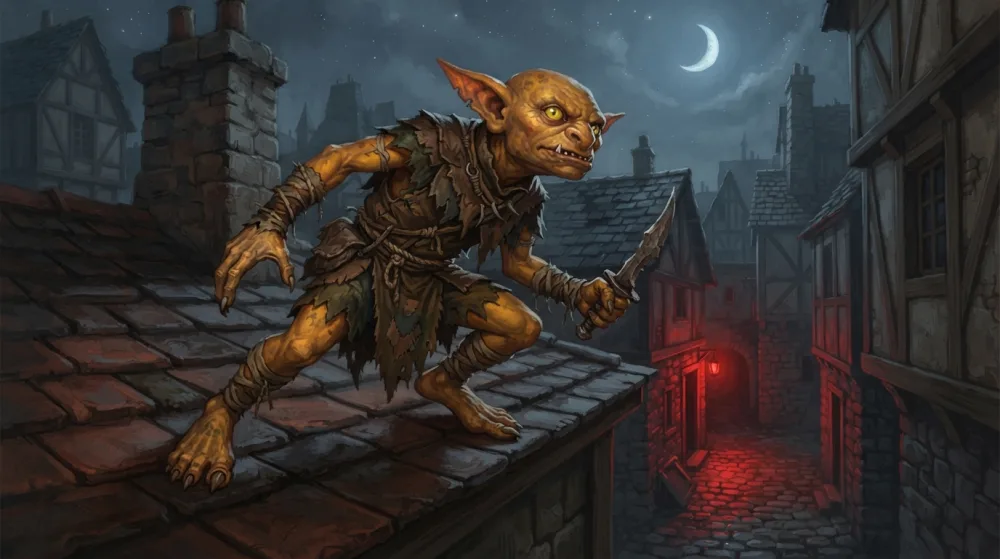
Goblins are small hit-and-run specialists. Fury of the Small adds a burst of damage once per rest, and Nimble Escape gives every turn a free Disengage or Hide.
Goblin Racial Traits
- ● +2 DEX, +1 CON. Good for AC, initiative, Stealth, finesse and ranged attacks, and the hit points and concentration saves a Small character needs.
- ● Fury of the Small. When you damage a creature larger than you with an attack or a spell, you can add damage equal to your level. Once per short or long rest. It works on cantrips and leveled spells as well as weapons, so it scales into a caster's kit.
- ● Nimble Escape. You can take the Disengage or Hide action as a bonus action on each of your turns, with no limit on uses.
- ● Darkvision and languages. Darkvision to 60 feet, plus Common and Goblin.
Nimble Escape and Cunning Action Use the Same Bonus Action
Many guides call Goblin a perfect Rogue and describe Nimble Escape as a second Cunning Action. It is not a second one. You get one bonus action per turn, and both traits spend it, so from Rogue level 2 a Goblin Rogue has nothing Nimble Escape adds. You cannot Hide with one and Dash with the other on the same turn.
That makes Nimble Escape most valuable on classes that lack a bonus-action escape. A Sorcerer, Warlock, archer Fighter, or Cleric who gets caught in melee can shoot and Disengage on the same turn, which normally costs a class feature or a spell.
Fury of the Small starts at 1 extra damage and reaches 10 at level 10, and it triggers only against creatures larger than you. As a Small race, that covers most monsters. Spend it on the fight's most dangerous target rather than the first one you hit.
Best and Worst Classes for Goblin
| Class | Verdict |
|---|---|
| Sorcerer ● | Fury of the Small rides a damaging spell, and Nimble Escape is the escape button the class lacks. CON protects concentration. |
| Ranger ● | Dexterity-primary, and Disengage-and-shoot fits the class. Fury stacks with Hunter's Mark. |
| Rogue ● | The stats are ideal and Fury adds to the Sneak Attack turn, but Nimble Escape duplicates Cunning Action from level 2. |
| Warlock ● | No Charisma bonus, but Fury works on Eldritch Blast and Nimble Escape keeps a blaster out of melee. |
| Monk ● | Dexterity helps, but Nimble Escape competes with Flurry of Blows and Step of the Wind for the bonus action. |
| Barbarian, Paladin, Cleric ● | No bonus to the primary stat, Small size penalizes heavy weapons, and the escape trait works against a class that wants to hold the line. |
Best Feats for Goblin
Mobile ● fits a melee skirmisher, though it overlaps Nimble Escape's Disengage. Alert ● lets a fragile character act first. War Caster ● protects a Goblin Sorcerer's concentration. Lucky ● is strong on anyone. Xanathar's Squat Nimbleness is open to Small races, including Goblin and Kobold, and adds +1 Dexterity or Strength, 5 feet of speed, and an Acrobatics or Athletics proficiency.
For a multiclass, a Sorcerer with a Warlock dip gives Fury of the Small an Eldritch Blast to ride on every turn it is available.
Goblin Build: Assassin Rogue (Levels 1-10)
Race: Goblin | Class: Rogue (Assassin) | Background: Criminal
Point buy: STR 8, DEX 15 (17), CON 14 (15), INT 10, WIS 13, CHA 12
| Level | Choice | Notes |
|---|---|---|
| 1 | Rogue 1 | Sneak Attack, Expertise; Nimble Escape is your bonus-action escape before Cunning Action |
| 2 | Rogue 2 | Cunning Action (replaces what Nimble Escape did) |
| 3 | Rogue 3 | Assassinate: advantage against creatures that have not taken a turn, critical hits against surprised ones |
| 4 | Rogue 4 | ASI: +1 DEX, +1 CON (18, 16) |
| 5 | Rogue 5 | Uncanny Dodge |
| 6 | Rogue 6 | Expertise |
| 7 | Rogue 7 | Evasion |
| 8 | Rogue 8 | Feat: Alert |
| 9 | Rogue 9 | Infiltration Expertise |
| 10 | Rogue 10 | ASI: +2 DEX (20) |
The opening turn is the build. Against a surprised target, Assassinate turns a hit into a critical, and Fury of the Small adds your level on top of the doubled Sneak Attack dice. Alert helps you act before the target.
Hobgoblin
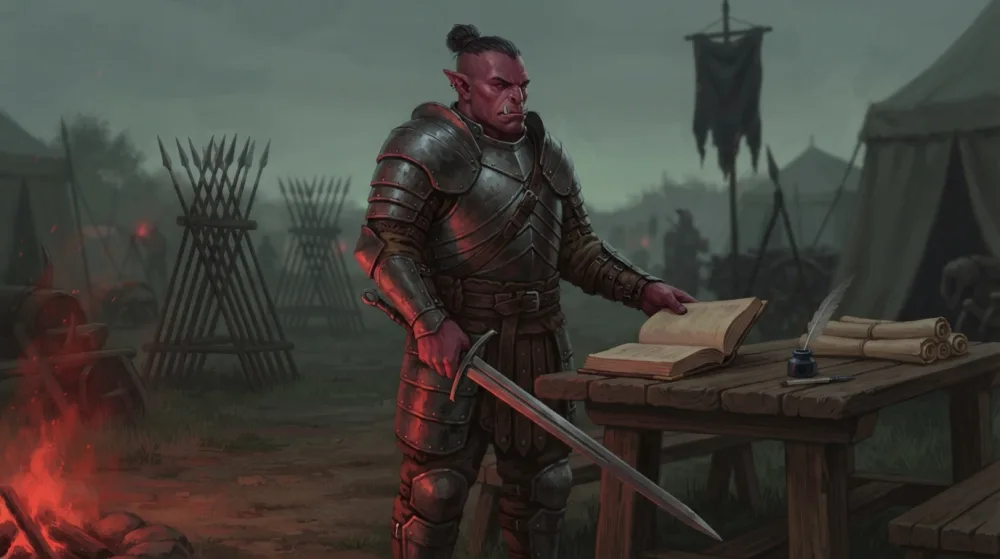
Hobgoblins are disciplined goblinoid soldiers, and their stat line fits a class few players expect from a monstrous race: Wizard.
Hobgoblin Racial Traits
- ● +2 CON, +1 INT. The most useful secondary stat for a d6-hit-die caster, plus the stat that runs Wizard spellcasting.
- ● Martial Training. Proficiency with two martial weapons of your choice and with light armor. Valuable on a Wizard or Sorcerer, redundant on a Fighter or Paladin.
- ● Saving Face. When you miss with an attack roll or fail an ability check or saving throw, you can add a bonus equal to the number of allies you can see within 30 feet of you, to a maximum of +5. Once per short or long rest.
- ● Darkvision and languages. Darkvision to 60 feet, plus Common and Goblin.
Saving Face counts the allies you can see, which is sometimes described the other way round. Whether they can see you does not matter, so a Hobgoblin in the middle of the party formation gets the full bonus even when its allies are facing away. On a failed concentration save, a bonus of +3 or +4 often saves the spell.
Why Hobgoblin Suits a Wizard
A Wizard has the smallest hit die in the game and depends on concentration spells. A +2 Constitution bonus addresses both problems at once. Martial Training adds light armor, so a Hobgoblin Wizard can start in studded leather (AC 12 plus the full Dexterity modifier) without spending a spell slot on Mage Armor. Light armor has no Dexterity cap.
High Elf and Gnome still beat it in some builds, High Elf for the free cantrip and Gnome for advantage on mental saves against magic. The Hobgoblin wins on survivability, and at low levels that matters more than most utility traits.
Best and Worst Classes for Hobgoblin
| Class | Verdict |
|---|---|
| Wizard ● | Both bonuses land on the class's two most important stats, and Martial Training adds armor. |
| Fighter (Eldritch Knight) ● | The only Fighter subclass that uses Intelligence, so both bonuses count. |
| Fighter (other subclasses) ● | Constitution alone is enough, and Saving Face suits a frontliner inside a formation. |
| Paladin ● | Constitution helps and Saving Face fits, but nothing feeds Charisma. |
| Barbarian ● | Constitution raises hit points and Unarmored Defense; the rest is wasted. |
| Sorcerer, Bard, Warlock ● | Charisma casters get no stat help. |
Best Feats for Hobgoblin
War Caster ● gives advantage on concentration saves on top of a high Constitution. Resilient ● (Constitution) adds proficiency to the same save and rounds out an odd score. Tough ● is worth more on a d6 caster than on almost anyone. A martial Hobgoblin can take Ritual Caster ● with the Wizard list to use its Intelligence bonus.
For a multiclass, a Wizard with one Fighter level gains Action Surge and a Fighting Style, both fed by the same stats. The reverse, a Fighter with a Wizard dip, picks up ritual utility spells such as Find Familiar and Identify.
Hobgoblin Build: Evocation Wizard (Levels 1-10)
Race: Hobgoblin | Class: Wizard (School of Evocation) | Background: Sage
Point buy: STR 8, DEX 14, CON 15 (17), INT 15 (16), WIS 10, CHA 8
| Level | Choice | Notes |
|---|---|---|
| 1 | Wizard 1 | Magic Missile, Shield; studded leather from Martial Training |
| 2 | Wizard 2 | School of Evocation, Sculpt Spells |
| 3 | Wizard 3 | 2nd-level spells |
| 4 | Wizard 4 | ASI: +2 INT (18) |
| 5 | Wizard 5 | Fireball, with Sculpt Spells protecting allies |
| 6 | Wizard 6 | Potent Cantrip |
| 7 | Wizard 7 | Wall of Fire |
| 8 | Wizard 8 | Feat: War Caster |
| 9 | Wizard 9 | Wall of Force |
| 10 | Wizard 10 | Empowered Evocation |
Starting with 17 Constitution means this Wizard can take a hit or two. Stay within 30 feet of the party so Saving Face has allies to count when a concentration save fails.
Build Your Dungeons & Dragons (5e, 2014) Character
The Dungeons & Dragons (5e, 2014) character builder is live - build a Beastkin, a Kobold, or whatever your table is missing, free, right now.
Start BuildingKobold
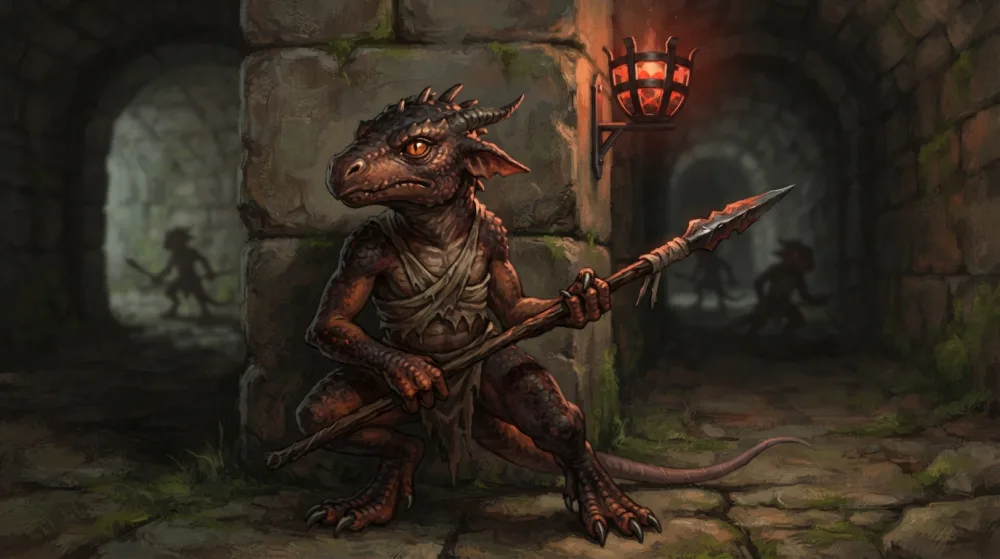
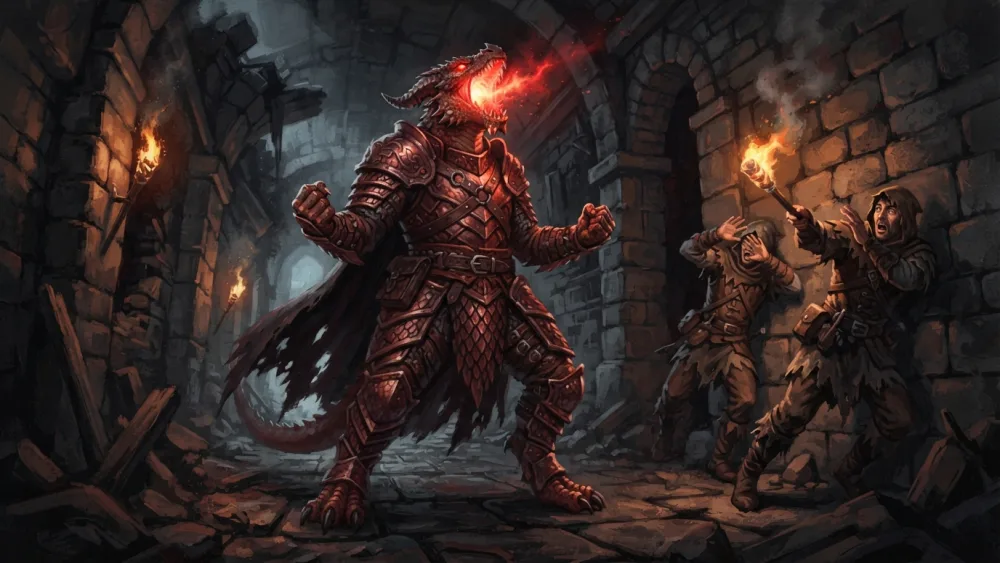
Kobolds are small reptilian pack hunters. Pack Tactics is one of the most consistently useful racial traits in the 2014 rules, and the race pays for it with a Strength penalty and Sunlight Sensitivity.
Kobold Racial Traits
- ● +2 DEX, -2 STR. A trade rather than a bonus. Excellent for a Dexterity build, harmful for anything that wanted Strength.
- ● Pack Tactics. You have advantage on an attack roll against a creature if at least one ally who is not incapacitated is within 5 feet of it. That includes spell attacks, and it has no limit on uses.
- ● Grovel, Cower, and Beg. As an action, you cower to distract nearby foes. Until the end of your next turn, your allies have advantage on attack rolls against enemies within 10 feet of you that can see you. Once per short or long rest.
- ● Sunlight Sensitivity. Disadvantage on attack rolls and sight-based Wisdom (Perception) checks when you, your target, or what you are trying to see is in direct sunlight.
- ● Darkvision and languages. Darkvision to 60 feet, plus Common and Draconic.
How Sunlight Sensitivity Interacts With Pack Tactics
Advantage and disadvantage cancel each other out, however many sources you have of each. A Kobold in direct sunlight with an ally next to its target rolls one d20, as if it had neither. The trait turns the race's main strength off rather than just weakening it, which is why its rating depends so heavily on the campaign.
The Strength penalty mostly matters if you wanted Strength. Heavy armor is not forbidden, but with less Strength than the armor requires, your speed drops by 10 feet. A Dexterity build never notices the penalty.
Grovel, Cower, and Beg costs your whole action. Use it on a turn when your own attack matters less than two or three allies attacking with advantage.
Best and Worst Classes for Kobold
| Class | Verdict |
|---|---|
| Rogue ● | Pack Tactics supplies Sneak Attack advantage without a Hide check, and the Strength penalty costs nothing. |
| Warlock ● | Every Eldritch Blast beam is its own attack roll and can gain advantage. |
| Sorcerer ● | Fire Bolt and other attack cantrips benefit whenever a melee ally is engaged. |
| Ranger ● | A bow Ranger shooting at an enemy the fighters are engaging has advantage most turns. |
| Monk ● | Dexterity helps, but a Monk often fights away from its allies. |
| Barbarian, Paladin, Strength Fighter ● | The race subtracts from the stat these builds depend on. |
Best Feats for Kobold
Sharpshooter ● is the standout for a ranged Kobold, since regular advantage offsets its -5 to hit. Alert ● and Mobile ● help a fragile character reach the right position. Resilient ● (Constitution) shores up a race with no durability bonus. Squat Nimbleness is available here too.
For a multiclass, Rogue and Warlock both turn advantage into damage: one through Sneak Attack, the other through extra Eldritch Blast beams.
Kobold Build: Fiend Warlock (Levels 1-10)
Race: Kobold | Class: Warlock (The Fiend) | Background: Urchin
Point buy: STR 8 (6), DEX 14 (16), CON 15, INT 8, WIS 10, CHA 15
| Level | Choice | Notes |
|---|---|---|
| 1 | Warlock 1 | Eldritch Blast, Dark One's Blessing |
| 2 | Warlock 2 | Invocations: Agonizing Blast, Eldritch Spear |
| 3 | Warlock 3 | Pact of the Tome for extra cantrips |
| 4 | Warlock 4 | ASI: +1 CON, +1 CHA (16, 16) |
| 5 | Warlock 5 | Eldritch Blast fires two beams, each rolled with Pack Tactics |
| 6 | Warlock 6 | Dark One's Own Luck |
| 7 | Warlock 7 | 4th-level spells |
| 8 | Warlock 8 | ASI: +2 CHA (18) |
| 9 | Warlock 9 | 5th-level spells |
| 10 | Warlock 10 | Fiendish Resilience |
Target whatever your frontliners are fighting, and you will have advantage on most beams. Skip Repelling Blast: pushing the target away from your ally can remove Pack Tactics before your next beam. In daylight, fight from shade or cover: in direct sunlight you are rolling straight dice.
Orc
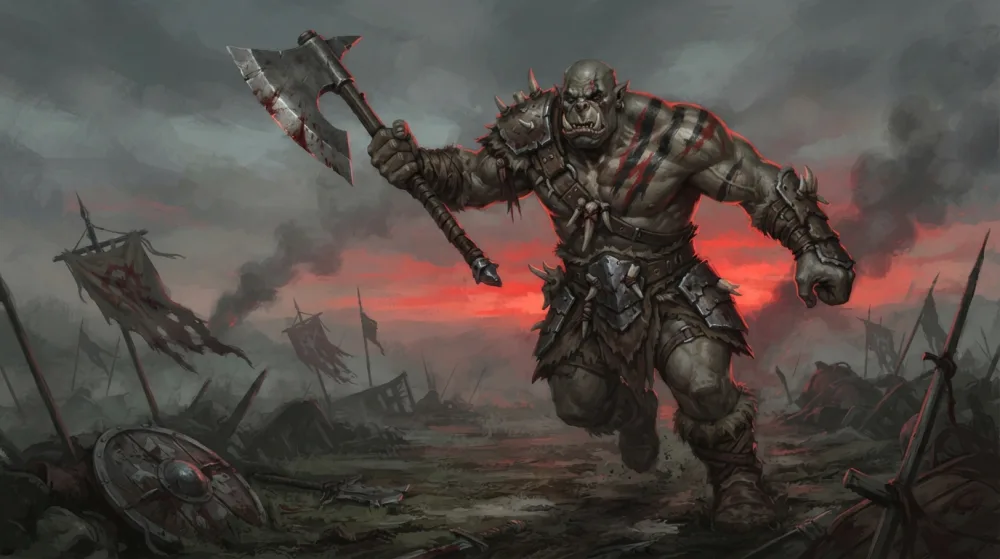
The Volo's Orc is the full-blooded counterpart to the Player's Handbook Half-Orc, with the same ability bonuses, a different trait package, and an Intelligence penalty.
Orc Racial Traits
- ● +2 STR, +1 CON, -2 INT. The same Strength and Constitution as a Half-Orc or Goliath, plus a penalty neither of them has.
- ● Aggressive. As a bonus action, you can move up to your speed toward an enemy you can see or hear, ending the move closer to it than you started. It does not stop opportunity attacks.
- ● Menacing. Proficiency in Intimidation.
- ● Powerful Build. Carrying capacity only, as with the Bugbear.
- ● Darkvision and languages. Darkvision to 60 feet, plus Common and Orc.
Orc vs. Half-Orc vs. Goliath
All three get +2 Strength and +1 Constitution, which makes the comparison unusually clean.
| Race | Traits beyond the ability scores | Penalty |
|---|---|---|
| Orc | Aggressive, Menacing, Powerful Build, darkvision | -2 INT |
| Half-Orc | Relentless Endurance, Savage Attacks, Menacing, darkvision | None |
| Goliath | Stone's Endurance, Powerful Build, Athletics, Mountain Born | None |
Menacing is not what separates Orc from Half-Orc; both races have it. The real trade is Relentless Endurance (drop to 1 hit point instead of 0, once per long rest) and Savage Attacks (an extra weapon die on melee critical hits) for Aggressive and Powerful Build. Most combat math favors the Half-Orc.
Aggressive is the reason to pick Orc anyway. A free move toward the enemy lets a melee character reach an archer or caster across open ground and still attack, which a Half-Orc can only do by giving up its action to Dash. The Orc also cannot take Orcish Fury, which requires the Half-Orc race.
Eberron: Rising from the Last War prints an Orc without the Intelligence penalty, which narrows the gap. The Eberron orcs of the Shadow Marches are also some of the setting's oldest guardians against aberrations, a better roleplaying hook than the usual raider.
Best and Worst Classes for Orc
| Class | Verdict |
|---|---|
| Barbarian ● | Aggressive plus Rage and Reckless Attack on the same turn. The penalty never comes up. |
| Fighter (Strength, not Eldritch Knight) ● | Full value from both bonuses, and a gap-closer saves Action Surge for attacks. |
| Paladin ● | Strength and Constitution help, but nothing feeds Charisma. |
| Ranger (melee) ● | Workable, though most Rangers are Dexterity builds. |
| Wizard ● | The worst pairing among these five races: the race subtracts from the Wizard's key stat. |
| Sorcerer, Cleric ● | No casting-stat support and a melee trait set. |
Best Feats for Orc
Great Weapon Master ● is the natural pick once Aggressive has you in range. Sentinel ● holds enemies in place once you arrive. Tough ● partly makes up for the missing Relentless Endurance. Savage Attacker ● is thematic but weak.
For a multiclass, Barbarian and Fighter share the same Strength and Constitution needs. A Barbarian with a few Paladin levels adds Divine Smite, though the Paladin levels will want 13 Charisma.
Orc Build: Battle Master Fighter (Levels 1-10)
Race: Orc | Class: Fighter (Battle Master) | Background: Soldier
Point buy: STR 15 (17), DEX 13, CON 15 (16), INT 8 (6), WIS 10, CHA 10
| Level | Choice | Notes |
|---|---|---|
| 1 | Fighter 1 | Great Weapon Fighting, Second Wind |
| 2 | Fighter 2 | Action Surge |
| 3 | Fighter 3 | Battle Master: Trip Attack, Menacing Attack, Precision Attack |
| 4 | Fighter 4 | ASI: +1 STR, +1 DEX (18, 14) |
| 5 | Fighter 5 | Extra Attack |
| 6 | Fighter 6 | Feat: Great Weapon Master |
| 7 | Fighter 7 | Know Your Enemy, two more maneuvers |
| 8 | Fighter 8 | ASI: +2 STR (20) |
| 9 | Fighter 9 | Indomitable |
| 10 | Fighter 10 | Improved Combat Superiority (d10), two more maneuvers |
Aggressive closes the gap with your bonus action, so the whole action goes to attacks. Precision Attack rescues a Great Weapon Master swing that misses by a few points, and Trip Attack gives the rest of the party advantage against the target.
Goblin, Kobold, or Bugbear: Which Damage Trait Does More?
Goblin, Kobold, and Bugbear are three answers to the same question.
| Trait | How often | What it adds |
|---|---|---|
| Surprise Attack (Bugbear) | Once per combat, only if you surprise the target | 2d6 on one hit |
| Fury of the Small (Goblin) | Once per short or long rest | Your level on one damaging attack or spell |
| Pack Tactics (Kobold) | Every attack roll with an ally next to the target | Advantage |
The two burst traits are easy to evaluate because they produce a number. Surprise Attack averages 7 damage, but only in fights your party opens with surprise, which many tables manage once or twice a session at best. Fury of the Small is worth less than that at levels 1 to 6 and more from level 8, and it needs a rest to come back.
Pack Tactics produces no number, which is why it gets underrated. Advantage raises your chance to hit by up to 25 percentage points (usually 15 to 25) on every attack, and it also roughly doubles your chance of a critical hit. Over three or four combats a day, that adds up to more damage than a once-per-rest bonus, provided your party fights close together and you are out of the sun.
Hot Take: Pack Tactics is the strongest trait among these five races, even though Fury of the Small produces the biggest single number. A once-per-rest bonus fires once. Pack Tactics fires on every Sneak Attack and every Eldritch Blast beam, and it doubles critical-hit chances the whole time. Sunlight Sensitivity is the whole reason Kobold is not rated higher: plan your campaign's daylight fights before you plan the build.
Monsters of the Multiverse Versions
Mordenkainen Presents: Monsters of the Multiverse (2022) reprinted all five races for the 2014 rules with substantial changes. Every race lets you assign +2 and +1 (or three +1s) to any scores, and none has a penalty. Several traits switched from once per rest to a number of uses equal to your proficiency bonus per long rest.
| Race | What changed |
|---|---|
| Bugbear | Surprise Attack now adds 2d6 to a hit against any creature that has not yet taken a turn in the combat, with no once-per-combat limit. Gains Fey Ancestry. |
| Goblin | Fury of the Small adds your proficiency bonus instead of your level, usable a number of times equal to your proficiency bonus. Gains Fey Ancestry. |
| Hobgoblin | Martial Training becomes Fey Gift (the Help action as a bonus action). Saving Face becomes Fortune from the Many, capped at +3. Gains Fey Ancestry. |
| Kobold | Loses Sunlight Sensitivity. Grovel, Cower, and Beg becomes Draconic Cry, a bonus action. Gains a Kobold Legacy choice, one option of which is a Sorcerer cantrip. |
| Orc | Loses the Intelligence penalty and Menacing. Gains Adrenaline Rush (a bonus-action Dash with temporary hit points) and Relentless Endurance. |
The ratings in this guide describe the Volo's versions. Under Multiverse, the Kobold and Orc improve the most: the Kobold loses the trait that switched off Pack Tactics, and the Orc gains the Relentless Endurance that made the Half-Orc better. The Bugbear's new Surprise Attack is much stronger at a table that rolls initiative well. The Hobgoblin's changes weaken it as a Wizard, because flexible ability scores and the loss of Martial Training remove what set it apart.
Ask your DM which book is in use. Customizing Your Origin from Tasha's Cauldron of Everything also lets you move the Volo's ability bonuses, which changes several of the class ratings above.
Playing a Monstrous Race at the Table
These races come with a problem the Player's Handbook races do not: in most published adventures, their people are the enemy. Talk with your DM about how the setting treats a goblin or orc in town before the first session, not after a guard attacks you.
Settings that give these peoples a society of their own are easier to play in. Eberron is the strongest example, with the Dhakaani goblinoids and the orcs of the Shadow Marches both central to its history. In Wildemount, goblinoids are ordinary citizens of Xhorhas. On Ravnica, goblins are members of several guilds.
Mechanical traits suggest personality hooks as well. A Hobgoblin whose Saving Face depends on nearby allies reads naturally as someone who cares about the unit's honor. A Kobold with Grovel, Cower, and Beg can play the coward as a tactic. A Bugbear's Sneaky and Surprise Attack suit a patient, quiet hunter rather than a brute.
Verdict
Each of these races does one thing well and asks you to build around it. Take Hobgoblin for a Wizard or Eldritch Knight who needs hit points. Take Goblin for a caster or archer who needs a free way out of melee, and Kobold for a Dexterity character in a party that fights close together, in a campaign that stays out of the sun. Take Bugbear if your group plans ambushes, and Orc only when Aggressive matters more to you than the Half-Orc's staying power.
For every other option, the race guides hub rates all the 2014 races side by side.
FAQ
What are the monstrous races in D&D 5e 2014?
Volo's Guide to Monsters calls them monstrous adventurers: Bugbear, Goblin, Hobgoblin, Kobold, Orc, and Yuan-ti Pureblood. This guide covers the first five.
Which monstrous race is the strongest?
Hobgoblin has the best stat line for its target class, and Goblin has the most flexible traits. Bugbear and Kobold are strong in the right campaign, and Orc is outclassed by the Half-Orc.
Does Long-Limbed work with opportunity attacks?
No. It applies only to melee attacks on your turn, and opportunity attacks happen on someone else's turn.
Does Nimble Escape stack with Cunning Action?
No. Both use your one bonus action per turn, so Nimble Escape adds nothing to a Rogue from level 2.
Does Fury of the Small work with spells?
Yes, on any attack or spell that damages a larger creature, once per short or long rest in the Volo's version.
Does Pack Tactics work with spell attacks?
Yes, for any spell with an attack roll, as long as an ally who is not incapacitated is within 5 feet of the target. It does not help saving-throw spells.
Who counts for Saving Face?
Allies you can see within 30 feet of you, up to a +5 bonus.
Is Orc better than Half-Orc?
Usually not. The ability scores match, but the Half-Orc keeps Relentless Endurance and Savage Attacks and has no penalty.
Can an Orc take the Orcish Fury feat?
No. Orcish Fury requires the Half-Orc race.
Does a surprised creature give me advantage for Surprise Attack?
Not by itself. You need something else, such as being unseen or Reckless Attack, to gain advantage. The extra 2d6 applies either way.
Does Powerful Build help with grappling?
No. It only affects carrying capacity and the weight you can push, drag, or lift.
What did Monsters of the Multiverse change about these races?
It removed the ability penalties, made all ability bonuses flexible, removed Kobold Sunlight Sensitivity, gave the Orc Relentless Endurance, and switched several traits to proficiency-bonus uses per long rest.