Introduction
Character level 5 is the single largest power jump in D&D 5e (2014), and 3rd-level spells are most of the reason.
Three things arrive simultaneously. Martials get Extra Attack, doubling their damage. Cantrips step up to two dice. And casters get 3rd-level slots, which contain Fireball, Counterspell, Hypnotic Pattern, Spirit Guardians, Haste and Fly - a list with no weak entries and several encounter-deciding ones.
Before level 5, a caster contributes to fights. From level 5, a caster decides them. A well-placed Hypnotic Pattern ends an encounter before initiative reaches the bottom of the order. A Counterspell prevents the enemy from doing the same thing to you. A Fireball converts a slot into more damage than a Fighter produces in three rounds.
The tension in this tier is that nearly every one of those options demands concentration, and the two that do not - Fireball and Counterspell - are the two you will most often want to cast on the same turn as something else.
Verdict: Counterspell earns a held slot in every fight against a caster. Beyond that, this is the tier where you should be casting control, not damage, whenever there are three or more enemies.
The Reaction That Defines the Tier
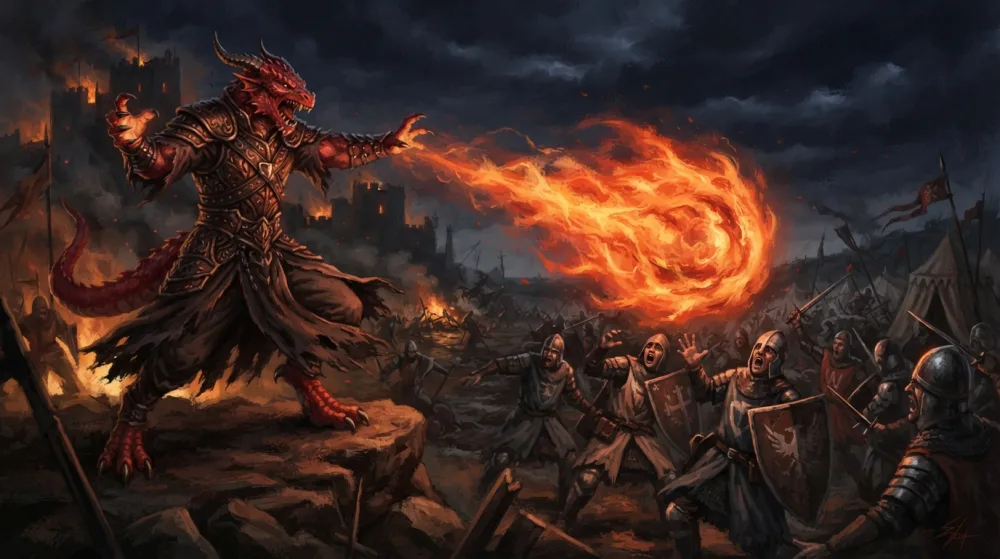
Counterspell
Sorcerer, Warlock, Wizard. 1 reaction, which you take when you see a creature within 60 feet casting a spell. 60 feet, S, instantaneous.
You attempt to interrupt a creature in the process of casting a spell. If it is casting a spell of 3rd level or lower, the spell fails automatically. If it is 4th level or higher, make an ability check with your spellcasting ability against DC 10 + the spell's level - or upcast Counterspell to that level and it succeeds automatically.
This is the most important spell in the game between levels 5 and 20, and its importance is not about its own effect. It is about denial. Every catastrophic thing an enemy caster is about to do to your party - the Hold Person on your Fighter, the Fireball into your back line, the Banishment on your Paladin - has exactly one clean answer, and this is it.
Understand the three things it needs, because each one is a way it fails:
- You must see the creature casting. A caster with Subtle Spell has no visible components at all and cannot be counterspelled. Invisibility, total darkness and total cover all defeat it too.
- You must have a reaction available. Shield, Absorb Elements and Silvery Barbs all want the same reaction. Deciding which one is your default for a given fight is a real decision.
- You must have the slot. This is the failure people actually experience: a Wizard who spent every 3rd-level slot on Fireball is defenceless when the enemy caster starts moving their hands.
The counterspell-versus-counterspell exchange is worth understanding: your Counterspell is itself a spell, so it can be counterspelled, and that counter can be countered in turn. Whoever runs out of reactions or slots first loses the exchange.
Rating: A-Tier. Hold a 3rd-level slot for it in every fight where a caster might appear.
The Best 3rd-Level Spells
Fireball
Sorcerer, Wizard. 1 action, 150 feet, V S M (a tiny ball of bat guano and sulfur), instantaneous. 8d6 fire in a 20-foot radius, Dexterity save for half.
The most famous spell in D&D, and it is famous because it is deliberately above the curve. 8d6 averages 28 damage in a 20-foot-radius sphere at 150 feet, upcasting at 1d6 per slot level. By the game's own damage guidelines a 3rd-level area spell should do about 6d6; Fireball does 8d6 because it did in every previous edition and the designers kept it.
The 20-foot radius is a 40-foot-diameter sphere, which at typical monster spacing catches three to six enemies. Against six, Fireball produces around 170 total damage from one slot, which nothing else at this level approaches.
Two things temper it. Fire is the most-resisted damage type in the game, and half damage on a successful Dexterity save means a group of dexterous enemies takes 14 each rather than 28. And the sphere spreads around corners and does not distinguish friend from foe - the single most common cause of party friction at this tier is a Wizard who did not check where the Barbarian was standing.
It also ignites flammable objects and destroys unattended flammable items, which burns the treasure, the map, and the rope bridge you needed.
Rating: A-Tier. The best damage-per-slot in the game at its level, and the wrong cast more often than people think.
Hypnotic Pattern
Bard, Sorcerer, Warlock, Wizard. 1 action, 120 feet, S M (a pinch of confectioner's sugar), concentration up to 1 minute. Each creature in a 30-foot cube that can see the pattern makes a Wisdom save or becomes charmed, incapacitated and unable to move for the duration.
The best control spell in the game at this level, and arguably the best single spell in the tier.
The reason is one word in the text that most save-or-suck spells do not have: there is no recurring save. A creature that fails is out for the full minute. It only gets free if it takes damage or an ally uses an action to shake it awake.
Incapacitated means no actions, no reactions, no movement. A 30-foot cube catches most enemy formations. And because the pattern is a visual effect with no verbal component, a hidden caster can cast it without revealing themselves - the somatic and material components are all you need.
The discipline it demands is that your party must not attack the affected enemies, because damage ends it. That is a conversation you have before you cast it, not after your Rogue has woken up the entire enemy squad.
Blind creatures are unaffected, as is anything immune to being charmed - including undead and constructs.
Rating: A-Tier. Against four or more grouped enemies it is strictly better than Fireball.
Spirit Guardians
Cleric. 1 action, self (15-foot radius), V S M (a holy symbol), concentration up to 10 minutes. 3d8 radiant or necrotic to creatures that enter the aura or start their turn in it, Wisdom save for half, and the area is difficult terrain for them.
The best sustained damage effect in the game at this level and the spell that defines mid-level Clerics.
3d8 averages 13.5 to every enemy in a 15-foot radius, every round, for up to ten minutes. It moves with you, so a Cleric who walks into the enemy formation applies it to everyone. It halves their movement. And it upcasts at 1d8 per slot level.
The complete Cleric turn at this tier is: round one, Spirit Guardians with your action; round two, Spiritual Weapon with your bonus action and a weapon attack or cantrip with your action; every round after, move to keep as many enemies inside the aura as possible.
It requires you to be in the middle of the fight, which is where Clerics with heavy armour proficiency can actually stand. Concentration on a character taking hits means War Caster is close to mandatory.
Rating: A-Tier. The reason a mid-level Cleric out-damages most of the party.
Haste
Artificer, Sorcerer, Wizard. 1 action, 30 feet, V S M (a shaving of licorice root), concentration up to 1 minute.
The target's speed doubles, it gains +2 AC, advantage on Dexterity saving throws, and an additional action each turn. The extra action can be used only to Attack (one weapon attack), Dash, Disengage, Hide, or Use an Object. When the spell ends, the target cannot move or take actions on its next turn.
The best single-target buff in the game, with two rules that decide how you use it.
The extra action cannot cast a spell. Hasting a caster gives them a Dash. Hasting a Fighter with Extra Attack takes them from two attacks to three - a 50% damage increase - and a Paladin gains an extra attack to deliver a smite through. Cast it on the martial, always.
Losing concentration costs the target a full turn. The lethargy clause means a broken Haste is worse than never casting it. This is why Haste on the front-liner is a real risk: your Wizard is standing at the back concentrating while the enemy archers shoot at them.
It does not upcast at all - a 5th-level Haste is identical to a 3rd-level one.
Rating: A-Tier on a martial party, B-Tier in a caster-heavy one.
Dispel Magic
Artificer, Bard, Cleric, Druid, Paladin, Sorcerer, Warlock, Wizard. 1 action, 120 feet, V S, instantaneous.
End one spell on a creature, object or magical effect. Spells of 3rd level or lower end automatically; for higher-level spells, make an ability check with your spellcasting ability against DC 10 + the spell's level. Upcasting counters automatically up to the slot's level.
The universal answer to ongoing magic, and the spell whose limits are most often misunderstood.
It does end: an enemy's Hold Person on your ally, a Wall of Force blocking your path, a Fly on an escaping enemy, an Invisibility, a Web, a magical darkness.
It does not end: a magic item's properties (it suppresses some effects temporarily at best), a monster's innate ability that is not a spell (a beholder's rays, a dragon's frightful presence), an instantaneous effect that has already resolved, or a curse. Curses are Remove Curse.
The nearly universal class access is itself notable - almost every caster in the game can prepare this, which makes it the party's shared answer rather than any one character's job.
Rating: A-Tier. Prepare it on somebody.
Revivify
Artificer, Cleric, Paladin. 1 action, touch, V S M (diamonds worth 300 gp, consumed), instantaneous. A creature that died within the last minute returns to life with 1 hit point.
The most consequential spell in the game, because it is the difference between a character death and a bad round.
The three constraints are all in the text and all matter: within the last minute, which means the party has roughly ten rounds, not until the end of the session; 300 gp of diamonds, consumed, which is a real cost at this tier and needs buying in advance; and 1 hit point, so the revived character is standing in the same fight that killed them and will drop again unless somebody follows up.
It does not restore missing body parts and does not work on a creature that died of old age.
The practical advice is the boring kind: buy the diamonds before you need them. A party that discovers at the worst moment that nobody has 300 gp of diamonds has learned this lesson the expensive way.
Rating: A-Tier. Not a combat spell - an insurance policy that every party should hold.
Slow
Sorcerer, Wizard. 1 action, 120 feet, V S M (a drop of molasses), concentration up to 1 minute. Up to six creatures in a 40-foot cube; Wisdom save or halved speed, -2 AC, -2 to Dexterity saves, and they can use either an action or a bonus action on their turn but not both, and cannot take reactions. A slowed creature that casts a spell with a casting time of 1 action may not take effect until your next turn.
The most complete debuff at this level, and the most underrated spell in the tier.
Read the list of effects again: it removes half a creature's turn, drops its AC by 2, drops its Dexterity saves by 2, removes its reactions entirely - so no opportunity attacks and no Counterspell - and it does all of that to up to six creatures in a 40-foot cube.
The clause that matters most against bosses is the one people skip: "Regardless of the creature's abilities or magic items, it can't make more than one melee or ranged attack during its turn." Slow shuts off Multiattack. A hill giant, a young dragon, or a knight with three attacks gets one. Against a single big monster that is close to halving its damage output for the whole fight, on top of everything else the spell does.
Targets repeat the save at the end of each of their turns, which is the weakness. Against six enemies, though, expected value is high even with a moderate save rate.
Rating: A-Tier. Fireball's real competition, and far less popular.
Conjure Animals
Druid, Ranger. 1 action, 60 feet, V S, concentration up to 1 hour. Summon fey spirits taking beast form: one CR 2, two CR 1, four CR 1/2, or eight CR 1/4.
The most action-economy-warping spell at this level and the most contentious.
Eight CR 1/4 beasts - wolves being the standard choice - is eight extra attacks per round, each with Pack Tactics giving advantage because they are all adjacent to the same target. That is a larger damage output than the rest of the party combined, from one 3rd-level slot, for up to an hour.
Three things determine how good it actually is at your table:
- Who chooses the animals. The 2014 text says the DM chooses which creatures appear. A DM who reads that strictly can hand you one CR 2 giant elk instead of eight wolves. Ask before you prepare it.
- How your DM handles eight statblocks. Eight creatures with their own initiative-sharing turn slows combat down considerably, and many DMs restrict the spell for that reason alone.
- Upcasting doubles or triples the count, which at 5th level is sixteen creatures and at 7th is twenty-four. Very few tables run this as written.
Rating: A-Tier by the numbers, and the numbers are why it is the most house-ruled spell in the game.
Fly
Artificer, Sorcerer, Warlock, Wizard. 1 action, touch, V S M (a wing feather from any bird), concentration up to 10 minutes. The target gains a flying speed of 60 feet.
Flight solves whole categories of problem, and it solves them completely.
In combat: a flying character is out of reach of any melee enemy without a ranged attack, which is a large fraction of the Monster Manual. In exploration: chasms, cliffs, rivers, locked upper floors and dungeon shafts stop being obstacles. In a chase: 60 feet of unobstructed movement beats almost anything on the ground.
Upcasting adds one target per slot level, so a 5th-level Fly moves three characters.
The danger is specific and worth stating: when the spell ends, you fall. Concentration broken at 100 feet up is 10d6 falling damage, so a character who takes a hit while flying is making a Constitution save with real stakes. Feather Fall is the standard insurance.
Rating: A-Tier. There is no level at which flight stops being one of the best things a spell can grant.
Lightning Bolt
Sorcerer, Wizard. 1 action, self (100-foot line, 5 feet wide), V S M (a bit of fur and a rod of amber, crystal or glass), instantaneous. 8d6 lightning, Dexterity save for half.
Fireball's twin with a different shape, and the shape is the entire review.
Same damage, same save, same upcast rate. The line originates from you and runs 100 feet, so it does not have Fireball's 150-foot placement flexibility - you cannot drop it around a corner or centre it on a distant group.
Where the line wins: a corridor, a bridge, a line of enemies charging you, a formation in ranks, and any situation where a sphere would catch your own party. Lightning damage is also resisted much less often than fire. And the bolt does not spread around corners, which makes friendly fire easier to avoid.
Where it loses: enemies in a rough cluster rather than a line, which is most encounters.
Rating: A-Tier in a dungeon, B-Tier in an open field. Prepare Fireball first and this second.
Sleet Storm
Druid, Sorcerer, Wizard. 1 action, 150 feet, V S M (a pinch of dust and a few drops of water), concentration up to 1 minute. A 40-foot-radius, 20-foot-high cylinder of freezing rain: the ground is difficult terrain, the area is lightly obscured, exposed flames are doused, and a creature entering or starting its turn there makes a Dexterity save or falls prone. A creature concentrating in the area must make a Constitution save or lose concentration.
The largest area of any spell in the tier - a 40-foot radius is four times Fireball's - and it deals no damage at all.
What it does instead: knocks enemies prone repeatedly, halves their movement, obscures the area so ranged attacks suffer, and breaks enemy concentration. That last clause makes it a soft Counterspell that keeps working every round.
It is a zone-denial spell for shaping a battlefield rather than winning an exchange, and it hits your party as hard as theirs if you place it badly.
Rating: B-Tier. Excellent against an enemy caster and a group, and it demands a plan.
Hunger of Hadar
Warlock. 1 action, 150 feet, V S M (a pickled octopus tentacle), concentration up to 1 minute. A 20-foot-radius sphere of blackness: the area is heavily obscured and difficult terrain, creatures starting their turn there take 2d6 cold with no save, and creatures ending their turn there make a Dexterity save or take 2d6 acid.
The Warlock's signature control spell, and the strongest area-denial effect at this level.
The 2d6 cold has no saving throw at all, which is rare. The area is heavily obscured, so everything inside is effectively blinded - attacks out of it have disadvantage and everything inside is invisible to attackers. And it is difficult terrain, so leaving takes twice the movement.
An enemy that starts inside it, tries to leave, and fails to get out takes both instances. A party that pushes enemies into it - a Repelling Blast Warlock is often the same character - converts it into a repeating damage engine.
The obvious cost is that your own party cannot see or fight inside it either. It is a wall, not a weapon.
Rating: A-Tier for Warlocks. It is the reason Warlock control is respected at this tier.
Call Lightning
Druid. 1 action, 120 feet, V S, concentration up to 10 minutes. A storm cloud 60 feet wide; call a bolt with your action each turn for 3d10 lightning in a 5-foot-radius, Dexterity save for half. If you are outdoors in a storm, the damage becomes 4d10.
Sustained damage that costs one slot and then your action every round for up to ten minutes. Across a six-round fight that is roughly 100 damage from a single 3rd-level slot, which beats Fireball's one-shot 28 by a wide margin if the fight lasts.
Two clauses shape it. The 4d10 upgrade in an actual storm is significant, and a Druid who can create weather or who plans around the forecast gets it often. And it needs 100 feet of vertical space above you, so most indoor and dungeon environments rule it out entirely.
It upcasts at 1d10 per slot level, applied to every bolt for the whole duration, which is one of the better upcast rates in the game.
Rating: A-Tier outdoors, unusable indoors. Prepare it based on where the session is going.
Animate Dead
Cleric, Wizard. 1 minute, 10 feet, V S M (a drop of blood, a piece of flesh, and a pinch of bone dust), instantaneous. Create a skeleton or zombie from a corpse; you control it with a bonus action, and re-casting the spell within 24 hours extends control and can add two more.
The only spell in the game that compounds. Cast it once and you have one undead servant. Cast it every day, re-asserting control over the existing ones and adding two more, and after a week you have a small army - all from 3rd-level slots that would otherwise go unspent.
Each skeleton is an archer with a shortbow; each zombie is a durable body that takes hits meant for the party. Commanding them all costs a single bonus action.
The costs are not mechanical. Animating the dead is evil in most settings and most campaigns, the party's Paladin will have opinions, and a growing undead entourage changes how every town reacts to you. Many DMs cap the practical number.
Rating: B-Tier mechanically, and its real rating depends entirely on your table's tolerance.
Vampiric Touch
Sorcerer, Warlock, Wizard. 1 action, self, V S, concentration up to 1 minute. Melee spell attack for 3d6 necrotic, and you regain half the damage dealt. You can repeat the attack with your action each turn.
Sustained self-healing damage: roughly 10 damage and 5 healing per round for a minute, from one slot.
The delivery ruins it for most casters. It is a melee spell attack, so you must be adjacent to the enemy, which is precisely where an arcane caster does not want to be - and losing concentration to the resulting damage ends it.
Its home is on a Hexblade or a melee-capable arcane caster who is standing there anyway, where the sustained healing is a real resource.
Rating: C-Tier. Good numbers, wrong delivery for the classes that get it.
Mass Healing Word
Cleric. 1 bonus action, 60 feet, V, instantaneous. Up to six creatures each regain 1d4 + your spellcasting modifier hit points.
Healing Word for the whole party, as a bonus action, at 60 feet.
Its purpose is very specific: it picks up multiple downed characters in one bonus action. In the round where an area attack has dropped three party members, this one spell reverses it and leaves your action free. That is a fight-saving turn and there is no other way to produce it.
For topping up a conscious party it is poor - 1d4 + 4 each does not keep pace with anything. Upcasting adds 1d4 per slot level, a bad rate.
Rating: B-Tier. Prepare it on any Cleric in a party that gets hit by area attacks, and understand you are holding it for one specific round.
Thunder Step
Sorcerer, Warlock, Wizard (Xanathar's). 1 action, self, V, instantaneous. Teleport up to 90 feet to a space you can see; each creature within 5 feet of the space you left takes 3d10 thunder damage, Constitution save for half. You can bring one willing creature with you.
Misty Step with an exit blast and triple the range. 90 feet is a long way, the damage punishes everyone who had you surrounded, and you can take an ally with you - which is how you extract a downed character or a captured NPC.
The costs against Misty Step: it is an action rather than a bonus action, and it is loud out to 300 feet.
Upcasts at 1d10 per slot level.
Rating: B-Tier. Situationally better than Misty Step and never a replacement for it.
Major Image
Bard, Sorcerer, Warlock, Wizard. 1 action, 120 feet, V S M (a bit of fleece), concentration up to 10 minutes. An illusion up to a 20-foot cube with sound, smell and temperature; physical interaction reveals it, or an Investigation check against your spell save DC.
The full-sensory illusion, and the biggest jump in the illusion line. Where Silent Image is a silent picture, Major Image is a 20-foot cube that makes noise, smells right, and feels warm - which is enough to fool anyone who does not touch it.
The clause worth knowing: cast with a 6th-level slot, it lasts until dispelled, with no concentration. That turns it from a trick into permanent architecture - a false wall, a hidden doorway, a dragon guarding an empty vault.
Like every illusion, its value is bounded by your DM's willingness to play out what an NPC believes.
Rating: B-Tier, and it varies more by table than almost anything else here.
Remove Curse
Cleric, Paladin, Warlock, Wizard. 1 action, touch, V S, instantaneous. End all curses affecting one creature, and break the attunement curse on one cursed object it is touching.
Narrow and, when it is needed, the only answer.
Curses in 5e 2014 are permanent by design - a cursed item you have attuned to cannot be unattuned, a lycanthropy infection does not wear off, a hag's curse does not expire. Remove Curse is how those end. It does not destroy the cursed object, it breaks your attunement to it, which is the distinction people miss.
It does nothing at all until a curse exists, which for many campaigns is never, and in Ravenloft is every other session.
Rating: C-Tier as a default, A-Tier the moment somebody picks up the wrong sword.
Gaseous Form
Sorcerer, Warlock, Wizard. 1 action, touch, V S M (a bit of gauze and a wisp of smoke), concentration up to 1 hour. A willing creature becomes a misty cloud with a 10-foot fly speed, resistance to nonmagical weapon damage, immunity to prone/grapple/restrain, and the ability to pass through any space a liquid could - but it cannot attack, cast spells, or speak.
The infiltration spell. Passing through any opening a liquid could pass through means keyholes, grates, gaps under doors, and cracks in a wall - a whole category of physical barrier stops mattering.
The 10-foot flying speed is glacial, and the total inability to act means a character in gaseous form is a passenger for the duration. It is a way to get somewhere, not a way to do anything once you arrive.
Rating: C-Tier. A specialist tool with no combat use whatsoever.
Clairvoyance
Bard, Cleric, Sorcerer, Wizard. 10 minutes, 1 mile, V S M (a focus worth at least 100 gp - a jeweled horn for hearing or a glass eye for seeing), concentration up to 10 minutes. Create an invisible sensor in a location you know or a location you can see, then perceive through it.
Scouting without a scout. A mile of range covers most of a city, and the sensor is invisible - a creature that can see invisible objects sees a glowing orb the size of a fist.
The ten-minute casting time keeps it strictly out of combat, and the location requirement is stricter than people expect: a place familiar to you, having been there or seen it, or an obvious location like behind a door or around a corner. You cannot scry a place from a description.
Rating: C-Tier. Genuinely strong in a planning-heavy campaign, unusable on a dungeon crawl.
Speak with Dead
Bard, Cleric. 1 action, 10 feet, V S M (burning incense), 10 minutes. Ask a corpse up to five questions; it answers in the way it knew in life, and can lie or be evasive.
The investigation spell, and it has more restrictions than any other tool of its kind: the corpse must have a mouth, cannot have been the target of this spell in the last 10 days, and the spirit knows only what it knew in life. It can refuse, it can lie, and it is under no compulsion to be helpful.
Five questions is few, so the entire skill of using this spell is writing the questions before you cast it.
Rating: C-Tier. Campaign-shaped: essential in a murder mystery, absent everywhere else.
Plant Growth
Bard, Druid, Ranger. 1 action or 8 hours, 150 feet, V S M (a bit of bark and a few seeds), instantaneous.
The one-action version: plants in a 100-foot radius become thick and overgrown, and a creature moving through the area spends 4 feet of movement for every 1 foot it moves. The 8-hour version enriches land in a half-mile radius so crops yield double for a year.
A 100-foot radius is by far the largest area of any spell at this level, and quartering movement is a harsher penalty than ordinary difficult terrain by a wide margin - a 30-foot-speed enemy moves 7 feet a round. There is no saving throw, and the effect is instantaneous, so it does not cost concentration and cannot be dispelled.
Combined with any ranged party, it converts a melee encounter into a shooting gallery. Its limits are that it needs plants and it is as slow for your party as for theirs.
Rating: A-Tier outdoors. The single best battlefield-shaping spell at this level, and almost nobody prepares it.
Stinking Cloud
Bard, Sorcerer, Wizard. 1 action, 90 feet, V S M (a rotten egg or several skunk cabbage leaves), concentration up to 1 minute. A 20-foot-radius sphere of noxious gas; a creature that starts its turn there makes a Constitution save or loses its action retching.
The same footprint as Fireball, and instead of damage it removes turns. A failed save costs the creature its entire action, though it can still move and use a bonus action.
It tests every round, unlike a one-shot save, so a group standing in it keeps failing. The area is also lightly obscured.
Two weaknesses: Constitution saves are strong on exactly the brutes you want to stop, and anything that does not need to breathe - undead, constructs, elementals - is immune outright. A strong wind disperses it in 4 rounds.
Rating: B-Tier. Hypnotic Pattern is more decisive; Stinking Cloud works on things that cannot be charmed.
Blink
Sorcerer, Wizard. 1 action, self, V S, 1 minute, no concentration. At the end of each of your turns, roll a d20; on an 11 or higher you vanish to the Ethereal Plane until the start of your next turn, then reappear within 10 feet.
Roughly half the time, you are not there to be attacked at all - immune to everything on the Material Plane, unable to be targeted, and returning to a space of your choosing within 10 feet.
No concentration is the reason this is worth a slot. It runs alongside your control spell, and a caster who is ethereal half the time is a caster who does not lose concentration.
The costs are that it is random rather than reliable, and that while ethereal you cannot affect anything either - so a Blink turn spent away is a turn where your Spirit Guardians is not hurting anyone. It also puts you somewhere slightly different every round, which occasionally lands you badly.
Rating: B-Tier. Better than its reputation, specifically because it does not compete for concentration.
Protection from Energy
Artificer, Cleric, Druid, Ranger, Sorcerer, Wizard. 1 action, touch, V S, concentration up to 1 hour. The target gains resistance to one damage type of your choice: acid, cold, fire, lightning or thunder.
An hour of resistance to a chosen damage type, on any creature you touch.
This is the spell for the fight you know is coming. Against a red dragon, a fire giant, or a lair full of elementals, halving the primary damage source for the entire encounter is worth more than any single control spell.
The catch is that you have to know what you are fighting - it is one damage type and it is chosen at cast time. And it costs an hour of concentration, so you cannot run anything else all the way in.
Compare Absorb Elements, which is a 1st-level reaction that halves one instance without knowing anything in advance. Absorb Elements is more flexible; Protection from Energy is more total.
Rating: B-Tier. A prepared-slot decision made after the scouting, not before.
Beacon of Hope
Cleric. 1 action, 30 feet, V S, concentration up to 1 minute. Any number of creatures you choose in range gain advantage on Wisdom saving throws and death saving throws, and regain the maximum number of hit points from any healing.
The healing multiplier. Every healing spell cast on an affected creature rolls maximum - a Healing Word becomes 4 + modifier, a Cure Wounds becomes 8 + modifier, and Mass Healing Word maxes for all six targets at once.
Advantage on death saves is the quiet half, and in a fight that is going badly it is what keeps characters alive to be revived.
It costs concentration on a Cleric who wants that concentration for Spirit Guardians, which is why it mostly sits unprepared - and why the Clerics who do prepare it are usually the ones playing a dedicated support build.
Rating: B-Tier. It only pays off in a party that is going to take a lot of healing, and it pays off enormously there.
Bestow Curse
Bard, Cleric, Wizard. 1 action, touch, V S, concentration up to 1 minute. Wisdom save or cursed with one of four effects: disadvantage on a chosen ability; disadvantage on attacks against you; the creature must save each turn or waste its action; or you deal an extra 1d8 necrotic to it.
Four spells in one, and the third option is the strong one - "wastes its action doing nothing" on a failed Wisdom save each turn is a repeating chance to remove an enemy's whole turn.
The upcast clauses are unusually generous: at 4th level it no longer requires concentration, at 5th it lasts 8 hours, at 7th it lasts 24 hours, and at 9th it lasts until dispelled. A 4th-level Bestow Curse that runs without concentration is a genuinely different spell.
The delivery is the problem: touch range, on a hostile creature, which means a melee spell attack situation for a caster who should not be there.
Rating: C-Tier at 3rd, B-Tier upcast to 4th.
Leomund's Tiny Hut
Bard, Wizard. 1 minute, self (10-foot-radius hemisphere), V S M (a small crystal bead), 8 hours, ritual.
An immobile dome of force, 10 feet in radius, that nothing can pass through - creatures, objects, or spell effects - except creatures that were inside when you cast it. It is opaque from outside and transparent from inside, and it does not require concentration.
It is a ritual, so it costs no slot at all. That single fact makes it one of the most campaign-altering spells in the game: a party with a Wizard who has this can take a guaranteed safe long rest anywhere, in a dungeon, in a wasteland, in enemy territory.
It fails as a combat wall because it takes a full minute to cast, and anyone who steps outside cannot get back in.
Rating: A-Tier as a ritual. It removes the entire "is it safe to rest here" problem from your campaign, which some DMs will not thank you for.
Magic Circle
Cleric, Paladin, Warlock, Wizard. 1 minute, 10 feet, V S M (holy water or powdered silver and iron worth at least 100 gp, consumed), 1 hour.
A 10-foot-radius, 20-foot-high cylinder that celestials, elementals, fey, fiends or undead cannot cross, cannot target creatures inside, and against which they have disadvantage on attacks - or, inverted at cast time, that traps such a creature inside.
The summoning and binding spell. Every planar-bargain plot, demon interrogation and fiend-contract scene runs through it, and it is the safety measure that makes those scenes survivable.
100 gp per cast, consumed, and a 1-minute casting time keep it entirely out of combat.
Rating: C-Tier in a dungeon, A-Tier in a campaign about planar politics.
Wind Wall
Druid, Ranger. 1 action, 120 feet, V S M (a tiny fan and a feather of exotic origin), concentration up to 1 minute. A wall of strong wind 50 feet long, 15 feet high and 1 foot thick; 3d8 bludgeoning on a failed Strength save, and ordinary ranged weapon attacks cannot pass through it at all.
The counter to archers. Arrows and bolts simply do not cross it - not disadvantage, not a save, they cannot pass. Against an enemy line of archers or a volley from a wall, Wind Wall ends the ranged phase of the encounter.
It also disperses gases and keeps out Small or smaller flying creatures like swarms.
It does nothing against spells, thrown boulders from giants, or anything in melee, and it blocks your party's arrows too.
Rating: B-Tier. A precise answer to a specific and common problem.
Tongues
Bard, Cleric, Sorcerer, Warlock, Wizard. 1 action, touch, V M (a small clay model of a ziggurat), 1 hour, no concentration. The target understands any spoken language it hears, and any creature that knows a language understands what it says.
An hour of universal translation, no concentration, on any creature you touch.
Whether it matters is a question about your DM. In a campaign where language barriers are a real obstacle - planar travel, ancient ruins, a monster who wants to parley - it opens conversations that otherwise cannot happen. In a campaign where everyone speaks Common, it is dead weight.
It handles spoken language only; Comprehend Languages covers writing.
Rating: C-Tier, and it is the spell most likely to turn a fight into a negotiation.
Aura of Vitality
Cleric, Druid, Paladin. 1 action, self (30-foot radius), V, concentration up to 1 minute. As a bonus action on each of your turns you can heal one creature in range for 2d6.
Ten heals of 2d6, one per round for the full minute, totalling around 70 hit points from a single 3rd-level slot.
That is by far the best healing rate in the game, and its restriction is that it takes ten rounds to deliver. Almost no combat lasts ten rounds. Its real use is immediately after a fight, where you spend a minute and heal the whole party for the cost of one slot rather than several - which is what makes it a Paladin staple.
Rating: B-Tier. The most slot-efficient healing in the game, delivered too slowly to matter mid-fight.
Glyph of Warding
Artificer, Bard, Cleric, Wizard. 1 hour, touch, V S M (incense and powdered diamond worth at least 200 gp, consumed), until dispelled or triggered.
Inscribe a glyph that triggers on a condition you set, releasing either an explosive rune (5d8 damage of a chosen type in a 20-foot radius, Dexterity save for half) or a stored spell of 3rd level or lower that you cast into it at the time of inscription.
The spell-storing version is the interesting one, because the stored spell is cast by the glyph, not by you - so a party can walk into an ambush with a Hypnotic Pattern or a Fireball already primed and waiting.
The costs keep it honest: an hour to cast, 200 gp of diamond dust consumed every time, and a slot for the glyph plus a slot for the stored spell. It is a planning tool for a party that knows where the fight will be.
Rating: C-Tier. Expensive, slow, and unmatched for a prepared ambush.
Spirit Shroud
Cleric, Paladin, Warlock, Wizard (Tasha's). 1 bonus action, self (10-foot radius), V S, concentration up to 1 minute. Your attacks deal an extra 1d8 radiant, necrotic or cold damage, creatures within 10 feet cannot regain hit points, and their speed is reduced by 10 feet.
A bonus-action self-buff that adds a damage die to every attack you make, plus a healing lockout and a speed debuff to everything near you.
It scales unusually well: the bonus damage rises by 1d8 for every two slot levels above 3rd, so a 9th-level cast adds 4d8 per hit. On a character making several attacks a round - a Paladin, a Bladesinger, a melee Warlock - that is a large and compounding number.
The 10-foot radius means it only applies to melee and very close range, and it is concentration.
Rating: B-Tier, A-Tier on a high-level melee caster who upcasts it.
Fireball Versus Everything
The recurring argument at this tier is whether to cast damage or control, and it has a clean answer that depends only on the number of enemies.
| Enemies | Fireball (8d6, half on save) | Hypnotic Pattern | Slow | Better cast |
|---|---|---|---|---|
| 1 | ~28 damage | one target out | one target crippled | Fireball or a single-target spell |
| 2 | ~56 total | two out | two crippled | Fireball |
| 3 | ~84 total | three out | three crippled | Roughly even |
| 4 | ~112 total | four out | four crippled | Control |
| 6 | ~168 total | six out | six crippled | Control, clearly |
The reason the crossover sits around three is that damage is partial and control is total. Fireball's 28 damage to a 60-hit-point enemy removes 47% of it and none of its actions. Hypnotic Pattern removes 100% of its actions for up to a minute.
Two adjustments to that table:
- Against enemies who will die to the Fireball, damage wins outright, because a dead enemy is also fully controlled. Against low-hit-point mooks, cast Fireball.
- Against enemies with strong Wisdom saves or charm immunity, control fails and damage is all you have. Undead and constructs are the standard example.
The version of this advice worth internalising: cast Fireball when it kills things, cast control when it does not.
Best Picks by Class
Wizard
Counterspell, Fireball, Hypnotic Pattern, Fly, Dispel Magic. Hold a slot for Counterspell. Fireball and Hypnotic Pattern are the two casts you choose between each fight based on enemy count. Slow deserves a prepared slot far more often than it gets one.
Sorcerer
Counterspell, Fireball, Haste, Slow. Sorcerers know few spells, and Counterspell plus Fireball is a defensible pair of picks on its own. Twinned Haste on two martials is one of the strongest uses of sorcery points in the game.
Cleric
Spirit Guardians, Revivify, Dispel Magic, Mass Healing Word. Spirit Guardians and Revivify are close to permanent fixtures. Rotate the rest - Mass Healing Word when the enemy has area damage, Dispel Magic when they have a caster.
Druid
Conjure Animals, Call Lightning, Dispel Magic, Sleet Storm. Whether Conjure Animals is your best spell depends entirely on how your DM runs it, so ask early. Call Lightning is the outdoor answer and Sleet Storm the indoor one.
Bard
Hypnotic Pattern, Dispel Magic, Major Image, Speak with Dead. Hypnotic Pattern is the best spell a Bard has at this level and one of the best in the game. Bards do not get Counterspell natively until Magical Secrets, which is a real gap.
Warlock
Hunger of Hadar, Counterspell, Fly. With two short-rest slots that are always cast at your highest level, a Warlock's 3rd-level list is short and every entry is doing heavy work. Hunger of Hadar is the signature; Counterspell is why you save the second slot.
Artificer
Dispel Magic, Haste, Revivify, Fly. Artificers get Haste and Revivify, which is an unusual and strong combination - the buff and the safety net on one prepared list.
Ranger
Conjure Animals, Lightning Arrow, Dispel Magic. Conjure Animals is a Ranger's single strongest spell and it competes with Hunter's Mark for concentration. Conjure Animals wins.
Paladin
Revivify, Dispel Magic, Aura of Vitality, Crusader's Mantle. A Paladin's 3rd-level slot is worth 4d8 of Divine Smite, which is the honest benchmark every Paladin spell has to beat. Revivify beats it. Most others do not.
Hot Take: Slow is a better spell than Fireball and almost nobody casts it. Six enemies losing half their turn, two points of AC, two points of Dexterity save and all of their reactions, for a full minute, is a larger swing than 28 fire damage that half of them save against - and it turns off enemy Counterspell and opportunity attacks at the same time. Fireball is more satisfying. Slow wins more fights.
Related Guides
- Cantrips
- 1st-Level Spells
- 2nd-Level Spells
- 4th and 5th-Level Spells
- 6th to 9th-Level Spells
- D&D 5e 2014 Spell Guides hub - class-by-class spell selection.
Level 5 is where a caster starts deciding encounters. Find a D&D 5e game on The Role Players Guild and put yours in front of one.