Introduction
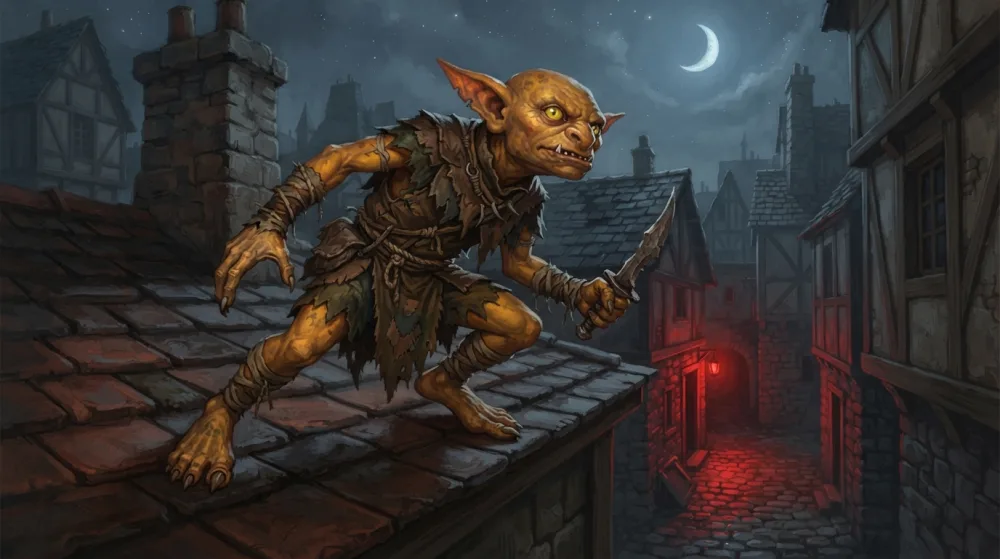
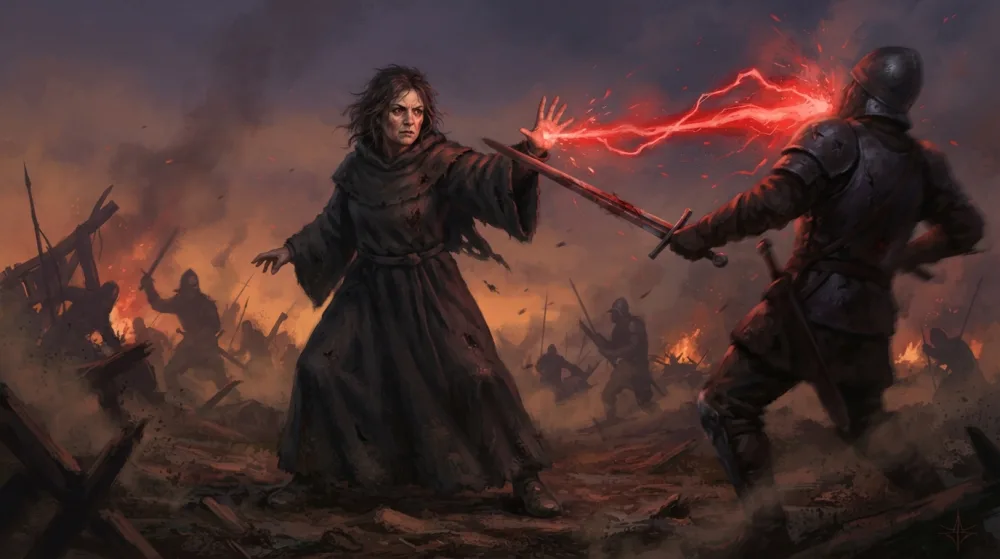
Mythic Odysseys of Theros hands D&D 5e 2014 players and DMs a mythic-Greek world where the gods are not a matter of faith. Fifteen deities move visibly across the night sky, acting out entire scenes for anyone who looks up, and a hero's standing with them, Piety, is a real trackable reward rather than background flavor. Five races call Theros home, two subclasses channel a bard's silver tongue or a paladin's legendary deeds, and a compact, walkable continent of city-states and homelands, plus two other realms entirely, gives a DM a full campaign without ever leaving a single tightly-woven setting.
Theros reads differently depending on which side of the screen you're on. A player usually starts with character options, since the Supernatural Gifts every hero picks at 1st level are the setting's biggest mechanical addition. A DM starts from the opposite direction: pick a region or a god whose interests drive the plot, then let the party's own Piety choices determine how deep into the pantheon's politics the campaign goes.

Character Options
The Character Creation chapter splits cleanly into four pieces: a Supernatural Gifts subsystem every Theros hero uses, five races with a place in the setting, two subclasses, and one new background. None of the race or subclass mechanics change once you apply Theros's framing. Centaur, Minotaur, and Triton play exactly the same on Theros as they do anywhere else this library covers them.
Supernatural Gifts
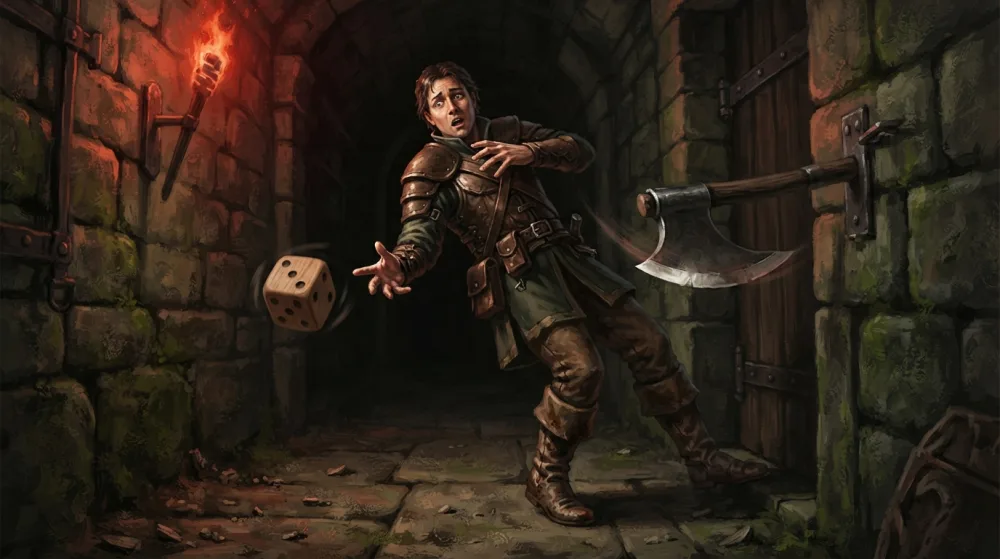
Every Theros hero chooses one Supernatural Gift at 1st level. It is mandatory, not an optional trait. Each grants a small mechanical benefit and a strong narrative hook tying the character to the setting's mythic-epic tone.
| Gift | What It Grants |
|---|---|
| Anvilwrought | Forged in Purphoros's fires; advantage on saving throws against poison and resistance to poison damage. |
| Heroic Destiny | Marked for a great deed; advantage on death saving throws, plus once per long rest drop to 1 hit point instead of 0 when reduced to 0. |
| Iconoclast | Openly rejects the gods (common among leonin); the closest thing to a Theros opt-out for a character who wants no divine entanglement at all. |
| Inscrutable | A mind as impenetrable as a sphinx's; resistance to psychic damage. |
| Lifelong Companion | Tied to another hero's greatness through a bonded NPC or, with consent, another player's character. |
| Nyxborn | Born from the dreaming minds of the gods rather than mortal parents; a distinct, otherworldly origin. |
| Oracle | A conduit between mortals and the gods, trading standard Piety rewards for a separate benefit track tied to unwanted prophetic insight. |
| Pious | Favored by a god since birth; once per long rest, reroll a failed saving throw and use the new result. |
| Unscarred | Resistant to physical harm like the legendary hero Haktos; once per turn, reduce incoming damage by a d12 roll plus Constitution modifier. |
Iconoclast and Oracle are the two that interact directly with the Piety system below: Iconoclast gives a godless character piety-like rewards without a patron, and Oracle swaps the standard god-specific piety rewards for its own track.
Races
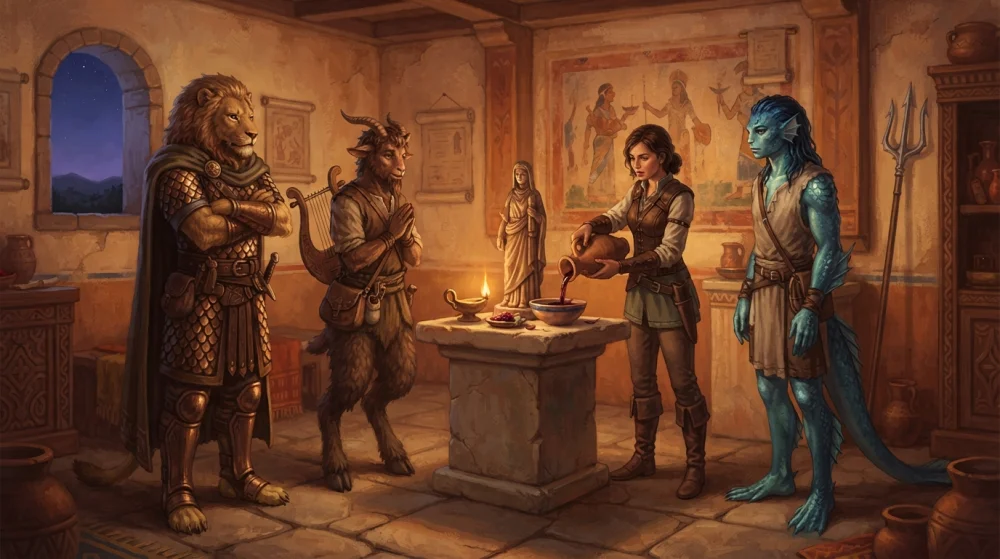
Three of Theros's five relevant races were already covered by this library under an earlier sourcebook, and the traits carry over unchanged. Leonin and Satyr are the two with no prior guide anywhere in this library.
| Race | Theros Homeland | Guide |
|---|---|---|
| Centaur | Lagonna and Pheres bands across the plains | Centaur Race Guide |
| Leonin | Oreskos | Leonin Race Guide |
| Minotaur | Phoberos and Skophos | Minotaur Race Guide |
| Satyr | Skola Vale | Satyr Race Guide |
| Triton | The Siren Sea | Triton Race Guide |
The book itself confirms the minotaur traits specifically are meant to be shared across settings. Each of those three guides carries a dedicated "on Theros" subsection covering the cultural framing without repeating mechanics.
Build Your Dungeons & Dragons (5e, 2014) Character
The Dungeons & Dragons (5e, 2014) character builder is live - build a Beastkin, a Kobold, or whatever your table is missing, free, right now.
Start BuildingTwo Subclasses and a Background
| Subclass | Class | Built Around | Guide |
|---|---|---|---|
| College of Eloquence | Bard | Silver-tongued persuasion and forced rerolls on social checks | College of Eloquence Guide |
| Oath of Glory | Paladin | Legendary feats of athleticism and heroism | Oath of Glory Guide |
Both originate here; Tasha's Cauldron of Everything later reprinted each one for use outside the setting, which is why you may see either credited to Tasha's elsewhere. Neither requires setting buy-in. Both drop into any 2014 campaign without adjustment.
The Athlete background is Theros's one new background, covering skills, tools, the Favored Event table, and the Echoes of Victory feature in full at the D&D 5e Backgrounds Guide's Theros section.
The Gods and the Piety System
Theros doesn't ask you to take its gods on faith. They are visible most nights, moving as vast humanoid forms across the dome of the sky, sometimes acting out entire scenes for anyone who bothers to look up. That sky is called Nyx, and it is both a place, where the gods reside, and the shared dream-substance the gods were born from in the first place.
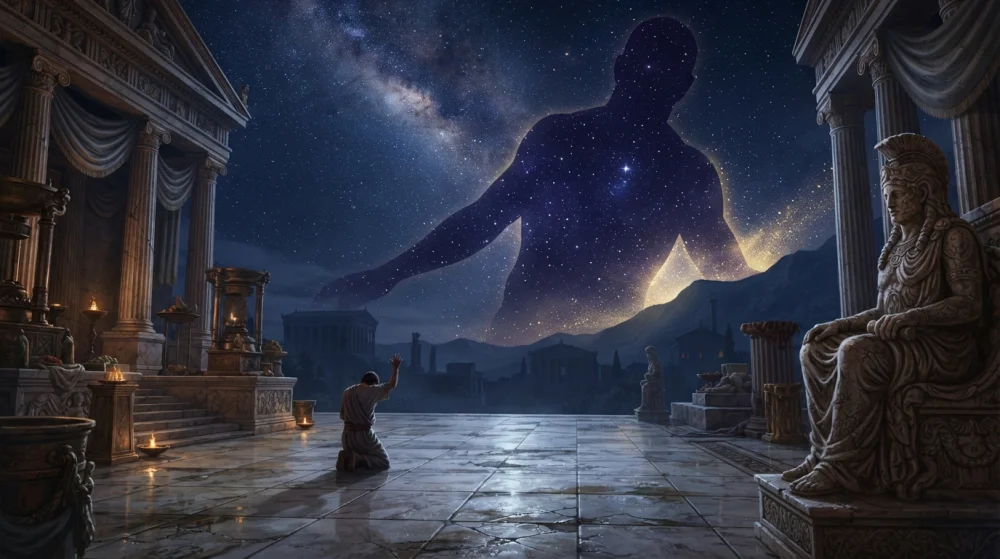
That visibility changes how belief works. The gods took shape only once enough mortals trusted them to act, so worship isn't just a response to divine power here, it's part of what generates that power. A god who lost every worshiper would see their own might dwindle along with it.
The Pantheon at a Glance
| God | Domain / Portfolio | Suggested Cleric Domains | Worship Note |
|---|---|---|---|
| Athreos | God of passage | Death, Grave | Presides over the crossing between life and death; petitioned for safe passage more than comfort. |
| Ephara | God of the polis | Knowledge, Light | Governs the laws and civic structures that hold a city-state together, distinct from Heliod's broader moral code. |
| Erebos | God of the dead | Death, Trickery | Bleak-hearted ruler of the dead, one of the third generation born once mortals could imagine principle and order. |
| Heliod | God of the sun | Light | Sun-crowned and demanding; takes personal pride in hand-picking only the champions he judges worthy. |
| Iroas | God of victory | War | Widely held to be Mogis's brother, locked with him in an endless rivalry over the nature of war itself. |
| Karametra | God of harvests | Life, Nature | Oversees nature tamed for mortal use: agriculture, domestication, and the cycles of childbirth. |
| Keranos | God of storms | Knowledge, Tempest | Myths disagree on his origin; some call him the child of Thassa and Purphoros, others a spark of stolen inspiration. |
| Klothys | God of destiny | Knowledge, War | One of the two oldest gods; even the rest of the pantheon is bound by the decrees she hands down. |
| Kruphix | God of horizons | Knowledge, Trickery | Born from a sense of mystery; holds the power to confine other gods to Nyx itself. |
| Mogis | God of slaughter | War | Iroas's rival and, by most accounts, his brother: the two eternally warring deities of the pantheon. |
| Nylea | God of the hunt | Nature | Sharp-eyed goddess of wild nature, predatory animals, and the turning of the seasons. |
| Pharika | God of affliction | Death, Knowledge, Life | Goddess of poison, disease, and secret cures; her clerics are as often healers as curse-bringers. |
| Phenax | God of deception | Trickery | Keeper of secrets so guarded that only a handful of mortal heroes are said to have stolen one from him. |
| Purphoros | God of the forge | Forge, Knowledge | Bronze-blooded god of the forge, said by some myths to have shaped mountains with an errant hammer blow. |
| Thassa | God of the sea | Knowledge, Tempest | Deep-dwelling ruler of the sea, capable of calling up a tidal wave when her wrath is provoked. |
Most people of Theros aren't devoted to a single god the way a champion is. Someone might pray to one god for a sick relative, then turn around and offer another thanks for a good harvest, all in the same week. Choosing one god above the rest and staying loyal is squarely a hero's decision rather than an ordinary mortal's habit.
How Worship Works
The most common act of devotion is libation: pouring out a splash of wine or water in a god's honor. Pious households perform a small rite of prayer and libation at morning and evening, while even casual worshipers might pour out a splash before drinking the rest of the cup themselves. Every Theran temple centers on a statue of its god, a statue the god can occupy and animate at will, and worshipers kneel before it, dress it in garlands and fine cloth, and leave offerings.
The gods aren't all-seeing, but they perceive everything said or done before their altars and inside their temples, and they never forget what they witness there. Certain liminal places, cave mouths, shorelines, crossroads, and forest edges, also let a mortal voice reach a god, though most gods pay those spots little mind unless something draws their attention.
Full-blown champions are rarer than ordinary devotion, and heroes are far more likely to become one than an everyday mortal. A cleric almost always serves a single god and picks a Divine Domain that fits, and most heroes in a Theros campaign, cleric or not, are assumed to have committed to one god's cause. A typical party might not share a patron at all: one character serves Heliod while another answers to Thassa, each pursuing their own god's interests while adventuring together. Some heroes choose out of piety, others out of self-interest, and a handful don't get much choice at all, since Heliod in particular selects only the mortals he judges worthy whether or not they're willing.
Piety
Serving as a champion carries no automatic reward. What earns divine favor is your piety score, a running measure of how strongly you've proven devotion through action rather than belief. Piety isn't faith in the abstract; it reflects what you've actually done in your god's name.
A beginning character who chooses a god starts with a piety score of 1. From there it rises by 1 whenever you do something that meaningfully advances your god's interests or lives up to their ideals. The gods expect real deeds, not gestures, so piety typically only climbs when you finish a significant goal, sacrifice something that matters, or otherwise earn it in your DM's judgment. As a rough guideline, a character actively following their god's tenets gains about 1 point most sessions, and a single deed usually shifts the score by only 1 point in either direction.
Benefits. Crossing thresholds at 3, 10, 25, and 50 unlocks a blessing tied to that specific god, and losing enough piety to drop back below a threshold costs you the benefit you gained at it. The Oracle gift trades these god-specific rewards for its own set instead.
Inspiration. Piety is partly its own reward. At the DM's discretion, gaining piety can also grant Inspiration, reflecting a moment of real harmony between you and your god on top of the mechanical benefit.
Impiety. Skipping a patron costs you nothing beyond the piety rewards themselves: no score means no benefits, but also no penalty. Iconoclast exists specifically for these characters.
Changing gods. A character can abandon one god's service for another's, though going back afterward is rare without an act of contrition, and it's the new god's choice whether to accept you as a champion at all. Switching costs every benefit tied to your old score. You lose the score itself, not just the blessings above the current threshold, and your standing with the new god starts fresh at 1.
Hot Take: Pick your god by what you want your DM to reward, not by which portfolio sounds coolest. Piety only climbs when you act on a specific god's ideals, so a Heliod champion who never seeks out worthy fights or an Erebos champion who avoids anything to do with death is going to watch their piety score stall no matter how devoted the backstory claims to be. Read the ideals behind your top pick before you commit, and ask whether your actual playstyle is going to generate the deeds your god cares about often enough to matter.
The Regions of Theros
Theros doesn't spread across a dozen kingdoms the way most D&D settings do. The mortal world the book describes is small enough to walk in a season, a scatter of city-states, homelands, and badlands packed between two mountain ranges and one restless sea, and that compactness is the point. Every region presses up against at least one neighbor it doesn't fully trust. Layered underneath all of it are two more planes entirely.
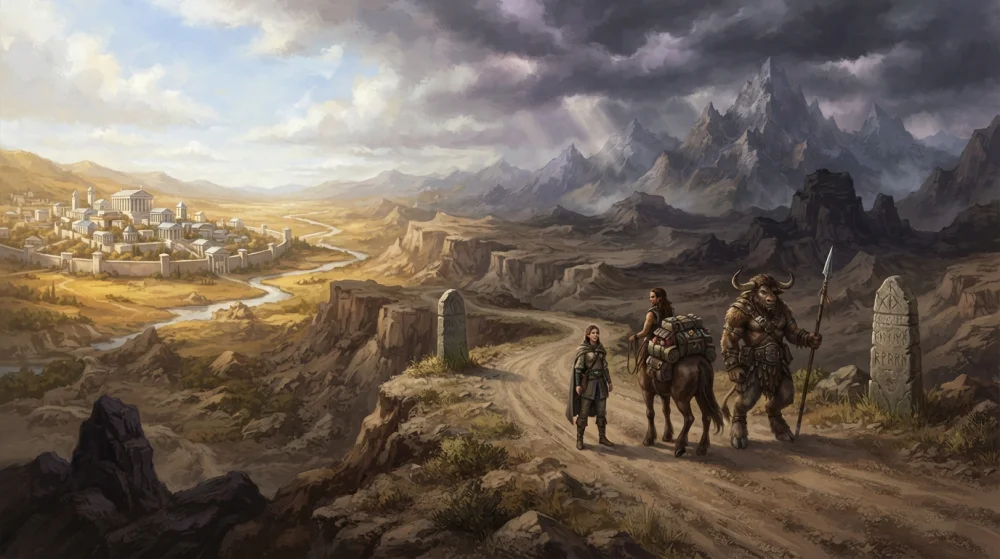
Region and god aren't separable here. Setessa answers to Karametra, Akros to Iroas and Purphoros, Skophos to Mogis, so a hometown does work a background alone can't: it sets which god's favor a character grew up under and which neighboring peoples they were taught to trust or fear.
| Region | Character | Best campaign fit |
|---|---|---|
| Akros | Militaristic mountain fortress-polis, warrior caste and serf underclass, endless border war | Martial campaigns, monster-hunting frontier, honor and glory themes |
| Meletis | Cosmopolitan magic-and-philosophy polis, most welcoming to outsiders | First-campaign default, arcane academy intrigue, political maneuvering |
| Setessa | Matriarchal forest polis fused with the Nessian Wood, distinct gender and family customs | Nature-flavored campaigns, found-family stories, coming-of-age arcs |
| Oreskos | Leonin grassland homeland between two mountain ranges | Frontier survival, pride and clan politics, first contact with insular cultures |
| Phoberos and Skophos | Minotaur badlands and a hidden labyrinth-polis at war with Akros | War campaigns, dungeon-crawl-as-city, redemption-arc minotaur characters |
| Realms of the Returned | Necropoleis of the undead who escaped the Underworld | Gothic horror, undead-adjacent characters, memory and identity themes |
| The Siren Sea | Triton homeland, a vast ocean of wandering islands | Nautical campaigns, exploration, Thassa-flavored divine-favor stories |
| Skola Vale | Satyr homeland, a permanently blessed valley of revelry | Lighthearted campaigns, fey-flavored antics, hedonism-versus-consequence stories |
| The Katachthon and Oraniad Mountains | Twin ranges, one volcanic and god-touched, one starlit and Nyx-adjacent | Dungeon delving, pilgrimage quests, dragon and giant encounters |
| Realms of the Gods | Nyx and the Underworld, the two fully divine planes Theros treats as real destinations | Planar campaigns, endgame divine confrontation, epilogue and afterlife stories |
Akros
Akros is a walled fortress-polis perched on a cliff, and everything about it is built to project the idea that it has never lost a fight. Its central stronghold, the Kolophon, has never been breached, and the city's warrior aristocracy, the lektoi, trace their status back to the seven founders who first raised its walls after the fall of the tyrant-archons. Membership isn't purely hereditary; anyone can win a place among the lektoi by taking the annual Iroan Games, though most families keep their standing by fulfilling a strict duty to serve in the army. Beneath the lektoi sit the servants and, at the bottom, the serfs who work the region's scattered arable land.
That military culture runs through the whole society. Akros's soldiers, the stratians, split into three roles: fast-moving border scouts, heavily armored shock troops sent to finish what the scouts started, and city-bound guardians who protect the Kolophon itself. The region's temples lean toward Iroas, Purphoros, and Keranos rather than the gentler corners of the pantheon. Akros treats its neighbors with open suspicion, though Akroans do respect demonstrated courage wherever they find it.
Meletis
Where Akros prizes the sword, Meletis prizes the mind. Born from a rebellion against the tyrant-archon Agnomakhos, a revolt the goddess Ephara personally armed with magic, Meletis grew into a republic ruled by an elected council of philosophers called the Twelve. Its mages, called thaumaturges, train for years at the city's premier academy but can't claim the title without receiving some sign of favor from a god first. The city's army, the Reverent Army, folds that same religious devotion into its battlefield discipline, and its architecture doubles as a teaching tool, with mathematically patterned streets meant to reflect the city's obsession with both magic and philosophy.
Meletis is also the most outward-facing polis. It maintains the friendliest relationship with the tritons of the Siren Sea of any human settlement, hosts a wary but functioning trade relationship with the Lagonna-band centaurs, and stands open in principle to any well-intentioned visitor, leonin included, even though old memories of Agnomakhos's leonin-heavy armies still keep most leonin away.
Setessa
Setessa doesn't so much sit in the Nessian Wood as grow out of it. Its buildings are coaxed from living trees rather than built beside them, and the polis answers directly to Karametra, whose day-to-day rule is handled by a five-member council of tower commanders. Setessa is unusual on Theros for its demographics: adult men are rare within its walls, since young men undergo a coming-of-age journey called peregrination and often settle elsewhere, while women hold nearly every leadership role and trace ancestry matrilineally. Some Setessans choose a distinct third role tied to Ophis Tower, whose wandering agents scout peregrination routes and rescue abandoned children for the city to raise.
Four fortress-towers, each tied to a season and a cluster of gods worshiped at that season's Nexus, defend the borders. Outsiders generally aren't welcome inside the walls, with the notable exception of orphaned or abandoned children brought in from anywhere on Theros, a detail that gives a Setessa-raised character a built-in reason to be there regardless of ancestry.
Oreskos
A broad valley of dry grassland pinned between the Katachthon and Oraniad Mountains, Oreskos is leonin territory through and through, home to close-knit prides that treat every member as family and share hunting, cooking, and childcare duties without rigid hierarchy beyond age and earned respect. Councils of matriarchs guide most prides, and once a year the matriarchs gather at the plains capital of Tethmos to select a speaker who represents the leonin to the wider world, a role currently held longer than tradition strictly calls for by Brimaz. Not every pride recognizes that authority: the fiercely independent Ironmanes answer to no one, staining their fur with rust and adorning themselves with trophies.
Leonin history with the wider world is scarred. Many prides suffered under the archons and still carry a learned wariness of soldiers, deities, and strangers generally, so Oreskos stays largely closed to outsiders without a trusted leonin guide to vouch for them. Oreskos sits closer to Heliod, worshiped at the mountaintop Temple of Mount Kure, than to most of the pantheon, since few natives pay the wider pantheon much mind at all.
Phoberos and Skophos
West of Akros, the arid canyons of Phoberos are what most of Theros associates with minotaurs, and not without reason. The marauding bands who haunt these badlands are outcasts even by minotaur standards, closer to feral monsters than to any organized society. Farther north, hidden from nearly every human who's ever tried to find it, stands Skophos: an organized minotaur polis built as a literal labyrinth of red sandstone streets, ruled by priests and warlord-tyrants of Mogis who rarely agree on anything except when a crisis forces their hand.
Skophos isn't purely Mogis's city. A small temple called the Lesser Peristyle serves Ephara instead, and its priests spend their time arguing for philosophy and restraint against the tyrants' worst excesses. The whole region reads as the dark mirror of Akros: where Akros worships Iroas's ideal of heroic struggle, Skophos answers to Mogis's ideal of savage victory, and Phoberos between them is the literal battleground where that divine rivalry gets fought out by mortals.
Realms of the Returned
Not every Theros region belongs cleanly to the living. The Returned are beings who escaped the Underworld along a secret route first opened by the god Phenax, and while they walk among the living again, they do so as hollow shells stripped of memory and old identity. Most gravitate toward one of two necropoleis. Asphodel, ruled by three identical masked judges called the Aphonai, is a place of quiet ennui where the streets go largely unwalked. Odunos is the opposite extreme: its Returned actively resent the living, and raiding parties led by the self-appointed Murder King Tymaret strike out to menace Akros, Meletis, and Phoberos alike, driven by Tymaret's fruitless hunt for the god who first escaped death before him.
Both sit in blighted country, Asphodel amid the sucking bogs of the Despair Lands and Odunos behind mires and a bottomless chasm called the Bothros. The region works best as a source of tragic or antagonistic NPCs rather than a hometown.
The Siren Sea
West of the mainland, the Siren Sea stretches to the edge of the known world, and it belongs to Thassa and the triton civilization that calls it home. Most tritons live scattered through the sea rather than in one central capital, migrating with the tides or building hidden cities of striking beauty, with sophisticated metalworking and craft traditions built around materials the sea provides. Communities closest to shore tend toward more organized worship of Thassa, with priest-led leadership and warriors trained specifically to fight the massive creatures and surface ships that threaten their waters; some train shorethieves, tritons skilled at disguising themselves to move unnoticed through the human poleis.
The sea's most famous feature, the Dakra Isles, was born from Thassa's own grief. The god wept over the death of a triton queen, and where her tears struck the water, an island of living magic and memory rose up. Thassa's power keeps the isles perpetually unmapped, drifting to appear wherever and whenever she wills, which makes them equal parts legendary destination and narrative wildcard.
Skola Vale
Tucked into the Oraniad Mountains' highlands, Skola Vale is the satyr homeland and, by its own founding myth, a permanent blessing from Nylea, who poured out her wineskin over the valley to make it flourish forever; the wild goats who drank of it became the first satyrs. Satyr life runs on taboo rather than law: nearly anything goes so long as it doesn't spoil anyone else's fun, disputes get settled through competition rather than courts, and only deliberate cruelty draws real consequences, up to lifelong exile. Distinct roles have emerged within that loose structure: dawngreets travel the world spreading the vale's philosophy, Nylea's Favored work as a standing druid circle that repairs storm and revelry damage alike, and sibyls offer limited but accurate glimpses of the future.
The vale's hospitality has a sharper edge for outsiders who linger. Visitors drawn in by dawngreets can be invited into the Cult of Horns, crowned with a stubby circlet, and subjected to a period of hazing before waking up alone in the mountains once the joke runs its course, a tradition most satyrs quietly disapprove of even as it persists.
The Katachthon and Oraniad Mountains
Oreskos sits pinned between two very different ranges. The Katachthons, to the west, are more volcanic, prone to sudden avalanches and disorienting microclimates, and ruled in practice by the dragons that nest among their peaks. Mount Velus, the range's most active volcano, is Purphoros's own home in the mortal world; Akroans leave regular offerings at its base hoping to stave off a catastrophic eruption, and a red dragon named Thraxes has struck an uneasy bargain to keep a forge in the volcano's abandoned halls. Its smaller sister peak, Mount Vesios, holds a monastery of scholars trying to understand and possibly influence the pair's eruptions.
The Oraniads, to the east, carry a gentler reputation but arguably more danger, since folk wisdom holds they sit closer to Nyx than anywhere else on Theros. Ancient shrines here have a habit of vanishing when travelers look away, and the range's signature site, Nykthos, is a literal nexus between the mortal world and the divine plane: a temple built on a starry-marble plain where pillars of light rise from each god's altar and connect, unseen, to their mirror temple in Nyx. Pilgrims who sleep atop Nykthos report vivid dreams of the gods, sometimes vivid enough to be conversations rather than visions.
Realms of the Gods
Theros treats its cosmology as three planes rather than one, and the two beyond the mortal world are both fully developed destinations. Nyx is where the gods live, an endless plane shaped by belief, potential, and dream, visible from the mortal world as the night sky's shifting constellations. Several gods keep recognizable homes there: Heliod, Purphoros, and Keranos all maintain residences on the drifting Mount Hiastos, Thassa's palace floats beneath the Mystic Sea alongside Ephara's city of copper and marble, and Mogis and Iroas lead their followers in a literally endless war across the Tovian Fields, with Kruphix binding the conflict to its borders.
The Underworld is the destination every mortal soul eventually reaches, ferried across the boundary river by Athreos in exchange for payment. Its wards aren't stacked levels but distinct afterlives suited to how a soul lived: dishonorable warriors end up in the endless-battle ward of Agonas, the unremarkable drift through the gray monotony of Phylias, the heroic and unjustly killed find rest in the lush sanctuary of Ilysia, the lost and grief-haunted wander the misty seas of Nerono, and the worst offenders are dragged down to Tizerus, where Erebos broods over their punishment.
Magic Items and Artifacts
On Theros, a magic item is rarely just loot. The book frames its treasures as objects with a story already attached: a blade that shares a name with a lost company of soldiers, armor scavenged from the sea floor, a weapon a god once carried and might still be watching. The treasure chapter stays small and pointed: 8 standard magic items, all rare or higher, and 5 artifact-tier weapons belonging to five of the fifteen gods.
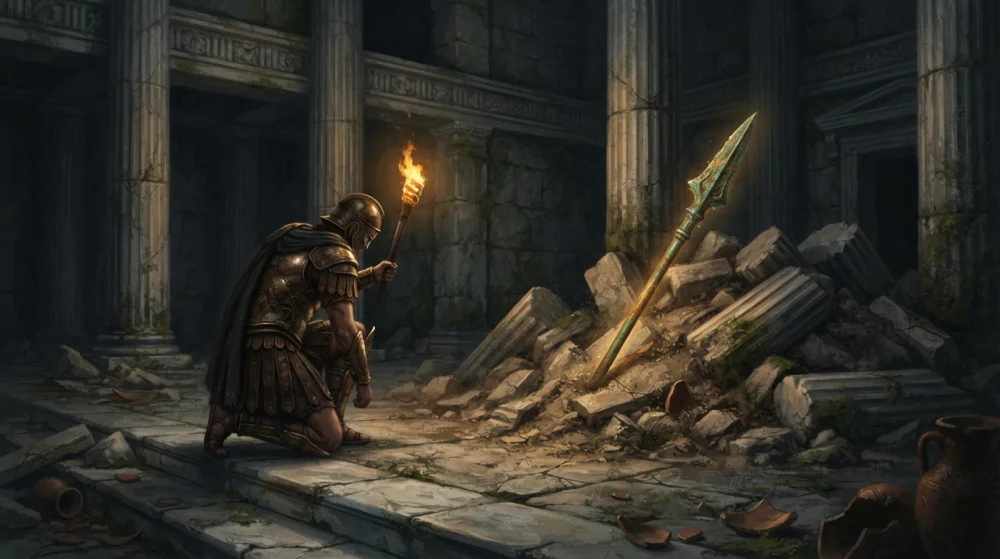
Nearly every treasure ties back to divine favor: an item forged in Nyx, hammered out at Purphoros's forge in Mount Velus, or made by a legendary mortal smith working in a god's name. A magic item found here usually means someone upstream decided a mortal deserved it, and that decision can be reversed as easily as it was granted. That framing shows up in the rarity spread. Nothing lands at common or uncommon, a much steeper curve than a setting like Wildemount or a generic Dungeon Master's Guide haul. For the general rules this sits on top of, rarity tiers, attunement limits, and activation methods, see the D&D 5e 2014 Magic Items Guide.
The Eight Standard Items
Six of the eight sit at rare, the deepest tier in the book by a wide margin.
Flying Chariot (wondrous item, rare). A chariot that grants its rider and the creatures pulling it a small AC bonus. If a flying creature pulls it, the whole rig can fly, a straightforward way to turn a ground mount into an aerial one for a scene that calls for it.
Helm of the Gods (wondrous item, rare, requires attunement). Senses any celestial or fiend within 30 feet and reveals its location. Each dawn, the wearer can pray to one of the fifteen gods and bank that deity's signature spell inside the helm, Heliod's guiding bolt, Erebos's inflict wounds, Nylea's faerie fire, and so on, then spend one of the helm's daily-recharging charges to cast it.
Molten Bronze Skin (armor: breastplate, half plate, or plate, rare, requires attunement). Starts as a jug of molten bronze and, once attuned, adheres directly to the wearer's skin, worn under clothes, never impeding movement, and impossible to remove without the wearer's choice. Grants fire resistance and drops the usual Stealth disadvantage heavy armor carries. Reads exactly like Purphoros's forge-work: armor that stops being equipment and starts being part of you.
Potion of Aqueous Form (potion, rare). Turns the drinker into a pool of water for up to 10 minutes, granting a fast swim speed, the ability to slip through tiny openings and occupy another creature's space, resistance to nonmagical damage, and advantage on Strength, Dexterity, and Constitution saves, at the cost of being unable to talk, attack, cast spells, or use magic items while transformed.
Siren Song Lyre (wondrous item, rare, requires attunement). Lets its player cast animal friendship, charm person, enthrall, or suggestion once each per day simply by playing it. Built for a bard-adjacent character who wants a reliable charm option that doesn't eat their own spell slots.
Two-Birds Sling (weapon: sling, rare). A modest attack and damage bonus whose real trick is a ricochet: a successful hit can bounce the ammunition toward a second target within 10 feet and make a second attack against it.
Sling Bullets of Althemone (weapon: sling bullet, very rare). Several magic bullets, each granting a solid attack and damage bonus and returning to the pouch automatically on a miss. Roll separately for each bullet's bonus property: banishing the target on a failed save, a lightning burst that also threatens nearby creatures, a stunning hit, or a tracking mark that reveals the target's location for a day. Once a bullet connects, it burns its magic and becomes ordinary.
Pyxis of Pandemonium (wondrous item, legendary). An ornate wooden vessel that, once per long rest, grants anyone who spends a minute touching it a short rest's worth of recovery plus bless until their next rest. The catch: touching it also risks a Wisdom save against being charmed into wanting to open it, and opening it unleashes one of eight dangerous effects, from berserk-inducing madness to a localized tsunami to a burst of shadow demons, before the vessel vanishes and reappears sealed elsewhere a day later. The only standard item to reach legendary, and it earns the rarity through risk as much as reward.
The Five Weapons of the Gods
Five artifacts belonging to five of the fifteen gods, each capable of reshaping a campaign. A deity typically lends their weapon to a favored champion, and how much of its full power that mortal can access scales with their piety score for that god. Someone who isn't a worshiper of the weapon's owner tends to find themselves cursed for the mismatch rather than blessed. Every entry follows the standard Dungeon Master's Guide rules for artifacts, including a unique, often multi-step destruction ritual. Read that ritual before you hand a weapon over, so the eventual "how do we get rid of this thing" question already has a concrete answer.
Akmon, Hammer of Purphoros. A warhammer with a strong attack and damage bonus plus bonus fire damage. Worshipers unlock minor and eventually major beneficial properties as piety rises; non-worshipers saddle the hammer with detrimental properties instead. While held, it grants fire resistance, immunity to exhaustion, and smith's-tools mastery, and casts a rotating set of crafting-and-combat spells (animate objects, heat metal, fabricate, magic weapon, mending, shatter) once each per day. Destroying it requires taking it into the Underworld, coating it in a specific ritual clay until it hardens, and having the clay-covered hammer swallowed by a kraken.
Dekella, Bident of Thassa. A trident with a strong attack and damage bonus plus bonus cold damage. Worshipers gain underwater breathing and a fast swim speed at low piety, escalating into randomly determined beneficial properties higher up; non-worshipers take both a minor and a major detrimental property. Its holder can reshape the weather at sea for an hour at a time, and can cast dominate monster or true polymorph against aquatic beasts and monstrosities once each per day. Destroying it means heating it in an ancient red dragon's breath, then plunging it, still hot, into a specific river.
Ephixis, Bow of Nylea. A shortbow with a strong attack and damage bonus, no long-range disadvantage, and an expanded critical-hit range. It comes with four seasonal arrows, each usable only from this bow and each carrying its own effect: awakening a beast or plant, summoning a temporary magical lynx ally, growing a wall of thorns, or calling down an ice storm, regenerating in the quiver each dusk. Destroying the bow requires destroying all four arrows first, each through its own separate seasonal ritual.
Khrusor, Spear of Heliod. A spear with a strong attack and damage bonus plus bonus radiant damage, shedding light that counts as true sunlight rather than an ordinary glow. Worshipers gain a pool of temporary hit points each dawn at the lowest threshold, escalating higher up; non-worshipers take on two major detrimental properties. It punishes anyone who strikes its wielder in melee with a blinding reaction attack, and holds charges for guiding bolt, daylight, or sunbeam. Destroying it requires taking it to the Underworld and using it to sacrifice one of Heliod's own champions to the god of the dead, an act that either destroys the spear outright or twists it permanently to serve the other side.
Mastix, Whip of Erebos. A whip with a strong attack and damage bonus, bonus necrotic damage with life-drain built in, and an extended range once per day. Worshipers start with a minor detrimental property even at the lowest threshold, a burden the god imposes to test his faithful, before unlocking beneficial properties higher up; non-worshipers take on two major detrimental properties. It casts circle of death or dominate monster (against undead only) once per day. Destroying it means carrying it to a specific mountain peak in Nyx, having a Returned unravel it, and leaving it in continual daylight for a month.
Running a Theros Campaign
Mythic Odysseys of Theros frames its continent as a living epic poem, where heroes, gods, and monsters combine to produce the kind of story the setting's own myths are made of. Its adventure framework is built around three ingredients working together, and the through-line that ties them at the table is the champion.
Champions, Quests, and Piety
A champion is a mortal who carries a specific god's favor and, in exchange, is expected to act as that deity's agent. Quests are the primary currency of that relationship. When a champion actively pursues a task their god has set, the baseline guidance is simple: raise piety by roughly one point per session spent in earnest pursuit, with a completed quest earning a further increase and often a blessing on top.
Declining a quest costs less if the character has a reasonable excuse; helping a different champion with an unrelated task rarely draws divine displeasure on its own. Outright refusing a pressing quest is a different matter. Piety can start dropping for as long as the refusal continues, and a god determined to get its way has options beyond a simple penalty: steering the champion back toward the task through circumstance, or in extreme cases, binding them to it the way a geas spell would. None of this needs to be adversarial. It's a lever for pushing a stalled plot forward, not a punishment mechanic to hold over a table that's trying something unexpected.
A Party That Serves Different Gods
Most Theros parties won't share a single patron, and the framework offers three ways to justify a group adventuring together anyway:
- Divine coalition. The party represents champions of several gods who have banded together against a shared threat, whether or not those gods are formally allied.
- Friendly cooperation. Gods whose aims don't directly conflict have no objection to their champions helping one another, so a favor today can be returned tomorrow without friction.
- Together by circumstance. A shipwreck, a siege, or a shared side in a larger conflict throws the party together regardless of patron.
Any of these can carry a campaign, and nothing stops a table from starting with circumstance and drifting toward a deliberate coalition once the characters have a reason to keep working together. When a campaign centers on a particular deity, the framework expects at least one player character to be that god's champion, since it's their entanglement in the god's agenda that pulls the rest of the party in.
Piety works best as a slow-burn scoreboard your players can feel moving, not a spreadsheet you narrate at them. A point gained after a hard-won quest lands harder than a number changing on a sheet. Tie it to something concrete in the fiction, a blessing made manifest, a shrine that finally answers a prayer it used to ignore, and the whole champion relationship starts to feel like it's building toward something session over session.
How the Gods Intervene
Two guiding principles come before anything you improvise: never eliminate a character's choice, and never eliminate real risk. A god can tell a champion what it wants, even threaten consequences for ignoring it, but it cannot simply control a mortal's actions. Divine aid can tilt an encounter or offer an escape route, but it should never hand a party an automatic win or guarantee a loss.
Omens. The most common signal is bending some piece of the natural world slightly out of true: a flock of birds veering off course, weather turning strange, an animal behaving in a way it shouldn't. This ties directly to the augury spell's weal-and-woe framing; a god can answer that simply, or you can dress the same answer in a more elaborate image. Omens can also point somewhere rather than just signal approval, nudging a party toward a location, an oracle, or a piece of information. A character can sometimes puzzle out a simple omen with the right check; a complicated one may call for seeking out someone who reads them for a living.
Divination. Spells like divination and commune let a champion put a direct question to their god and expect a truthful answer: a yes, a no, a cryptic rhyme, or an omen delivered through whatever medium the god favors. Truthful does not mean forthcoming. A god can be evasive without lying, and leaning on the same spell too many times in one day increases the odds of an unclear answer, or none at all, as another power intercedes or the deity tires of being asked.
Dreams and visions. Sleep is the mortal world's most direct line to the divine, a state in which a god can reach a sleeping champion much as the dream spell would, shading the dreamscape toward whatever message it means to send, nightmare included if the occasion calls for it. Like omens, these lean on symbol and metaphor rather than plain instruction, which keeps the god's presence feeling mysterious even when its message is unmistakable.
Common Mistakes
- Skipping the Supernatural Gift. It isn't optional. Every Theros hero picks one at 1st level, and a character sheet without one is incomplete rather than minimalist.
- Picking a god by portfolio instead of by playstyle. Piety only climbs when you act on that god's ideals. Pick the god whose deeds your table is actually going to generate.
- Assuming an irreligious character is playing the setting wrong. No patron means no piety rewards and no penalty. Iconoclast exists precisely for this, and leonin culture backs it up.
- Expecting Centaur, Minotaur, or Triton to play differently here. All three are mechanically identical to their earlier-sourcebook versions. Theros adds culture, not traits.
- Crediting College of Eloquence or Oath of Glory to Tasha's. Both originate in this book; Tasha's reprinted them for use outside the setting.
- Treating Nyx and the Underworld as abstractions. Both are fully mapped destinations a party can travel to, with named wards, residences, and rulers.
- Handing out a weapon of the gods without reading its destruction ritual. Each has a specific, multi-step method. Decide it before the artifact reaches the table.
- Giving an artifact to a character who worships the wrong god. Non-worshipers pick up detrimental properties rather than blessings. That's the design, not a bug, but it should be a deliberate choice.
- Using a god to override a player's decision. Divine involvement can pressure and threaten; it must not remove choice or remove risk.
- Narrating piety as a number. Tie every point to something concrete in the fiction, or the champion relationship stays a spreadsheet.