Introduction
Planescape: Sigil and the Outlands hands D&D 5e 2014 tables the multiverse's crossroads: a ring-shaped city built on the inside of its own ring, floating above a mountain no one has ever climbed, ruled by a being whose true nature nobody claims to know. Two backgrounds and seven feats build a character with real ties to the planes. Twelve factions turn Sigil's day-to-day politics into a character-build input rather than flavor text. A full portal subsystem and four specific alterations to how Planar Travel, Summoning, and Teleportation function inside Sigil change what a caster can and can't do the moment they cross the city's border.
The setting frame is straightforward even where the specifics get dense. The Outlands is the neutral plane at the center of the Great Wheel, a ring of sixteen gate-towns circling its edge, each keyed to one of the sixteen Outer Planes. At the Outlands' own center rises the Spire, and Sigil floats above its apex, connected to every plane in existence through portals that only the enigmatic Lady of Pain controls. Everything in this guide eventually routes back to that portal network.
This guide is built from Sigil and the Outlands alone. It is one volume of a three-book boxed set; the bestiary, Morte's Planar Parade, and the adventure, Turn of Fortune's Wheel, are separate products this library doesn't cover.

Character Options
Sigil and the Outlands adds two backgrounds and seven feats, and the single most important thing to know before evaluating any of them is that both backgrounds hand you a feat for free. That changes the usual question from "is this feat worth an Ability Score Improvement" to "which version of this free feat chain fits my character," the same shift the Strixhaven and Spelljammer backgrounds already created for this library.
None of it is required. Every standard Player's Handbook race, class, and background works perfectly well in a game set in Sigil or the Outlands. A Human Fighter with a Soldier background, a Tiefling Warlock with a Charlatan background, a Dwarf Cleric with an Acolyte background: none of them need a single word of this book to walk through a portal and start playing. What the book actually offers is a way to make a character's planar ties mechanical instead of purely narrative. If your concept is "grew up near a portal" or "belongs to one of Sigil's philosophies," these options are built for exactly that. If your concept doesn't touch the planes at all, build normally.
The Two Backgrounds
| Background | Skills | Tools / Languages | Feature |
|---|---|---|---|
| Gate Warden | Persuasion, Survival | Two languages of choice | Planar Infusion (grants Scion of the Outer Planes) |
| Planar Philosopher | Arcana, faction skill | Two languages of choice | Faction Conviction (grants Scion of the Outer Planes) |
Both grant Scion of the Outer Planes as their background feature, not a narrative-only permission but an actual feat, matching the pattern this library already documented for Strixhaven's five college backgrounds and Spelljammer's Astral Drifter and Wild Spacer. That makes both close to strictly better than a PHB background for any character who wants the feat chain at all.
Gate Warden fits a character who grew up near a permanent portal or in one of the Outlands' gate-towns, close enough to intense planar energy that it shaped how they see the multiverse. Persuasion and Survival skew this toward a character who talks their way past trouble or tracks through unfamiliar terrain, and the free lodging tied to "the community you grew up in" rewards a campaign that eventually returns to that gate-town.
Planar Philosopher fits a character formally tied to one of Sigil's twelve factions, or an invented philosophy of your own. Arcana plus a faction-matched skill (Religion for an Athar character, Perception for a Harmonium recruit, and so on down the Sigil Faction Affinities table) makes this the mechanically flexible pick, since your second skill proficiency is chosen to fit your concept rather than fixed. The free lodging is tied to faction holdings instead of a hometown, which makes it the stronger pick for a campaign based mainly in Sigil itself: faction holdings exist all over the city, while a single hometown might be nowhere near the action.
Neither is meaningfully stronger on paper. The real decision is where your character's roots actually are: a specific gate-town on the Outlands' rim, or a specific philosophy inside the Cage. A character built without either can reach for a similar effect with the Magic Initiate feat, which costs an actual feat slot rather than arriving free.
Build Your Dungeons & Dragons (5e, 2014) Character
The Dungeons & Dragons (5e, 2014) character builder is live - build a Beastkin, a Kobold, or whatever your table is missing, free, right now.
Start BuildingThe Seven Feats
All seven trace back to one prerequisite chain. Scion of the Outer Planes requires only a Planescape campaign and grants a plane-tied damage resistance and a free at-will cantrip. At 4th level, six follow-on feats become available, five locked to the specific plane you chose, and one, Planar Wanderer, open regardless.
The five plane-locked follow-ons all grant an Ability Score Increase plus one unique benefit. The tradeoff is what that benefit actually does:
Agent of Order (Lawful Outer Plane): Stasis Strike adds 1d8 force damage and a chance to restrain a target once per turn, uses equal to your proficiency bonus per long rest. The strongest pick for a martial build that wants a control tool layered on top of its normal attacks; it doesn't cost an action, it rides along on a hit you were already making.
Baleful Scion (Evil Outer Plane): Grasp of Avarice adds necrotic damage and heals you for the same amount, once per turn, uses equal to your proficiency bonus per long rest. The best pick for a melee build that wants sustain without spending resources on healing spells or potions.
Cohort of Chaos (Chaotic Outer Plane): Chaotic Flare triggers a randomized bonus effect on any natural 1 or 20 you roll on an attack or save. High variance, and the best fit for a build that rolls a lot of dice; a Fighter with multiple attacks triggers this far more often than a single-attack character.
Outlands Envoy (The Outlands): Crossroads Emissary grants free castings of misty step and tongues once each per long rest, with material components waived on tongues. Close to a straight utility upgrade for any build, including a character with no spellcasting at all.
Righteous Heritor (Good Outer Plane): Soothe Pain is a reaction that reduces damage to yourself or an ally within 30 feet by 1d10 plus your proficiency bonus, uses equal to your proficiency bonus per long rest. The strongest defensive pick of the five, and it scales with level.
Planar Wanderer is the odd one out. It requires only 4th level and Scion of the Outer Planes in any variety, but it's the one follow-on that skips the Ability Score Increase entirely in exchange for three portal-focused benefits: Planar Adaptation (a daily choice of acid, cold, or fire resistance), Portal Cracker (force a portal open or closed without its key, risking 3d8 psychic damage on a failed check), and Portal Sense (detect nearby portals and sense the direction to the last one you used). Useful in a portal-heavy campaign, weak anywhere else. See the full Planar Wanderer guide for the complete tradeoff, since the missing ASI is a real cost most feats don't ask you to pay.
Choosing Your Two-Feat Chain at Level 1
Because the plane you choose for Scion of the Outer Planes locks which follow-on you're eligible for, you commit to your entire chain the moment you pick a plane, well before you're anywhere near 4th level. Decide your follow-on plan first, then work backward to the plane it requires, rather than picking a plane for its immediate resistance and cantrip and discovering later that its follow-on doesn't fit your build. Planar Wanderer is the exception; it stays available no matter which plane you picked, so a character who wants flexibility can defer until 4th level actually arrives.
The full build order:
- Decide if your character concept touches the planes at all. If not, build normally with any PHB option.
- If it does, pick Gate Warden or Planar Philosopher based on whether your roots are a specific gate-town or a specific Sigil faction.
- Choose your plane for Scion of the Outer Planes based on which 4th-level follow-on you actually want.
- If you took Planar Philosopher, pick a faction using the Sigil Faction Affinities table below, and find one whose philosophy actually fits your character.
- At 4th level, take your locked-in follow-on, or pivot to Planar Wanderer if your campaign has turned out to be more portal-focused than plane-focused.
Every feat in this book requires "Planescape Campaign" as a prerequisite, the same way a Ravnica guild feat or an Eberron dragonmark feat requires its own setting. Confirm with your DM before building around any of them. This material is strongest for a campaign actually based in or regularly returning to Sigil or the Outlands. For a campaign that visits Sigil once as a waypoint, a standard PHB character works just as well.
Inside Sigil, the City of Doors
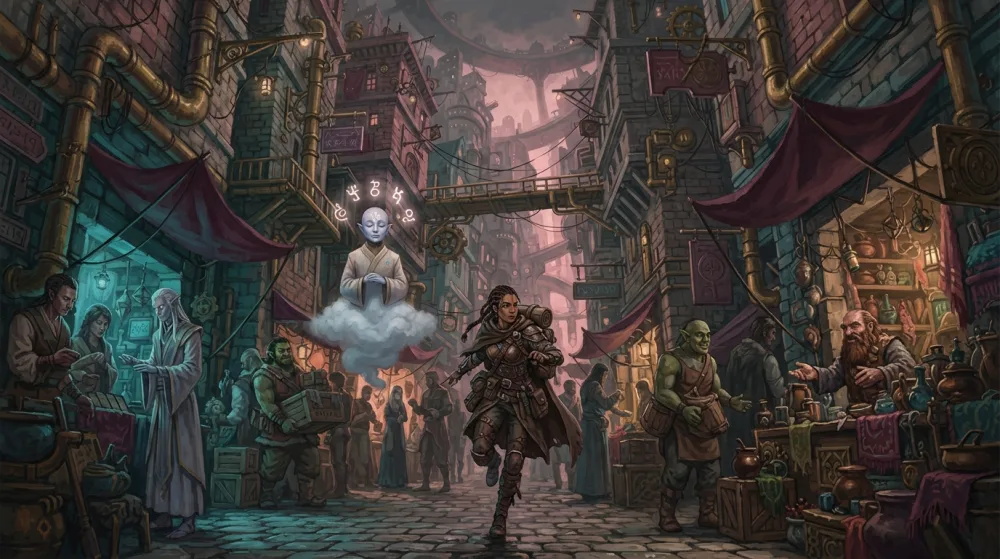
Sigil breaks the geometry a party expects the moment they arrive. The City of Doors is built on the inside surface of a stone ring, floating above the apex of the Spire, so a resident standing at street level can look straight up and see the far side of their own city hanging overhead. There is no sun, no moon, no horizon, only the ring, the portals set into it, and the being who controls every one of them.
The City's Impossible Geometry
Anyone who climbs to the city's outer wall and looks past its edge sees only empty sky; creatures who fall past that edge don't land in the Outlands below, they're scattered to random corners of the planes instead.
Day and night follow a 24-hour cycle locally called peak and antipeak, driven by an ambient luminescence that isn't sunlight and gradually brightens or fades rather than rising and setting. Gravity pulls toward whichever section of the ring's inner surface is nearest, which is what lets residents on opposite sides of the ring both stand upright with their own "down." Weather means fog, smog, and drizzle rather than storms, with visibility on the worst days dropping to a few hundred feet, and temperature stays mild year-round.
Life in the City
Every corner of the multiverse has sent someone to Sigil eventually, and the city's culture is what happens when all of them settle in the same place for centuries. Common is spoken almost universally, so universally that scholars in-world suspect the language originated here, since travelers from worlds that have never met can still understand each other on arrival. Most native residents also speak the Cant, a dense local slang layered on top.
Two dangers cut across every ward regardless of wealth or faction: cranium rats, whose "squeaker" variant shares a citywide psionic hivemind and doubles as an informal information network, and razorvine, a black, thorned, fast-growing plant from the Lower Planes that's simultaneously a nuisance work crews fight back and a deliberate defensive hedge some residents cultivate on purpose.
Getting around usually means hiring a sedan chair (roughly 1 sp per passenger for a standard chair, more for a heavier one carried by something like an ogre or umber hulk) or a tout, an independent local guide who knows a ward's shortcuts, charging anywhere from a couple silver an hour up to 20 gp an hour for one with faction connections or magical backup. Because Sigil's geometry and portal network make normal distance largely meaningless, how long a trip across the city takes is a DM call more than a fixed travel-time rule.
Currency follows standard D&D coin values, though the Outlands' own currency, the lodestar (a magnetic cobalt coin minted in the gate-town of Tradegate), circulates here at a fixed 1 gp exchange rate.
The Five Wards, and Undersigil Below Them
Clerks' Ward, bureaucracy and order. The administrative heart of the city. Pristine, heavily patrolled by the Harmonium, and home to the Fated's headquarters at the Hall of Records, where property deeds, financial records, and (for the right bribe) inconvenient paperwork all get processed. The Hall of Speakers hosts the Council of Speakers, a public forum where every ascendant faction has a representative and debates are more theater than governance. The safest ward in Sigil, and the Society of Sensation's presence keeps it from being purely dry.
Hive Ward, the city's rough edge. The poorest and most dangerous ward, with the least civic oversight. The Bleak Cabal's Gatehouse offers sanctuary here to anyone in need, particularly those suffering planar maladies picked up wandering too close to the Outer Planes' influence. The Heralds of Dust's Mortuary handles Sigil's dead. A night market trades in goods too scandalous for the Great Bazaar's daylight crowds.
Lady's Ward, wealth and law. The wealthiest ward and the seat of Sigil's justice system end to end. The Doomguard's Armory, the Fraternity of Order's High Courts, the Harmonium's Barracks, and the Mercykillers' Prison all sit here, which means the faction that catches you, the court that tries you, and the faction that carries out your sentence are headquartered within a few streets of each other. Over half of Sigil's temples to outside deities stand here, though none to the Lady of Pain, whose worship is an imprisonable offense.
Lower Ward, industry and infernal bleed. The industrial engine of the city: forges, alchemical refineries, and smelters that turn raw material from every plane into finished goods. The ward takes its name from its unusually high concentration of portals to the Lower Planes, whose influence bleeds brimstone and ash into the air and slowly corrodes anything left unprotected. The Mind's Eye's Great Foundry operates here.
Market Ward, commerce. Home to the Great Bazaar, where goods from every corner of the multiverse change hands, and the Bank of Abbathor, whose true vaults sit behind portals rather than ordinary doors. The Transcendent Order trains at the Great Gymnasium here. This is the fastest ward to drop a new party into contact with the wider setting.
Undersigil, the depths below. A labyrinth of tunnels, flooded cisterns, and catacombs beneath the entire city, home to monsters, restless undead, and the remnants of factions banished from the surface who never stopped scheming. The Lady of Pain largely ignores what happens down here, though nothing in or under Sigil is outside her reach. A campaign that wants dungeon-crawl flavor without leaving the setting can find it entirely within Undersigil.
The Lady of Pain
The greatest power in Sigil answers to no faction and claims no title beyond the one everyone already uses. The Lady of Pain appears almost human beneath robes and a mantle of verdigris-coated blades that obscure her face, but she isn't, and no one in the setting, including its own scholars, claims to know what she is. She's strong enough to bar gods from entering her city and forbids her own worship outright; attempting it is a crime punishable by imprisonment in the Mazes. She rarely appears in person, drifting silently through the streets when she does, and any creature foolish enough to interfere with her, attack her, or in some cases merely address her directly is flayed to 1 hit point instantly. A second offense ends with the offender vanishing into the Mazes. She has no stat block; she is not designed as a combat encounter.
The dabus are her servants: silent, floating beings found only in Sigil who communicate exclusively through rebus-like illusory images rather than speech. They handle much of the city's unglamorous maintenance, including keeping razorvine from overrunning the streets, and are broadly regarded as safe to approach, if inscrutable.
The Mazes are demiplanar prisons she creates for anyone who threatens the city on a large enough scale, or who targets her directly. They resemble an empty, endlessly repeating labyrinth of Sigil's own streets. Prisoners don't need food, drink, or sleep inside; they simply exist there, isolated, indefinitely. Local legend holds that every Maze contains a single hidden portal out, but no verified escape has ever been documented, and even if the rumor is true, the portal reportedly can't be found by magical means.
Hot Take: The four restrictions on magic inside Sigil are the setting, not fine print. A DM who waves them through so the party can teleport and summon as usual has kept the ring-shaped skyline and thrown away the reason any of it matters: Sigil is interesting precisely because the normal escape hatches are closed and every route in or out is a door somebody controls.
Portals and Magic in Sigil
Sigil's defining subsystem isn't a new spell list or class option. It's a set of hard restrictions on how magic itself behaves once a creature crosses into the city, plus the portal network those restrictions force everyone to use instead.
How Portals Work
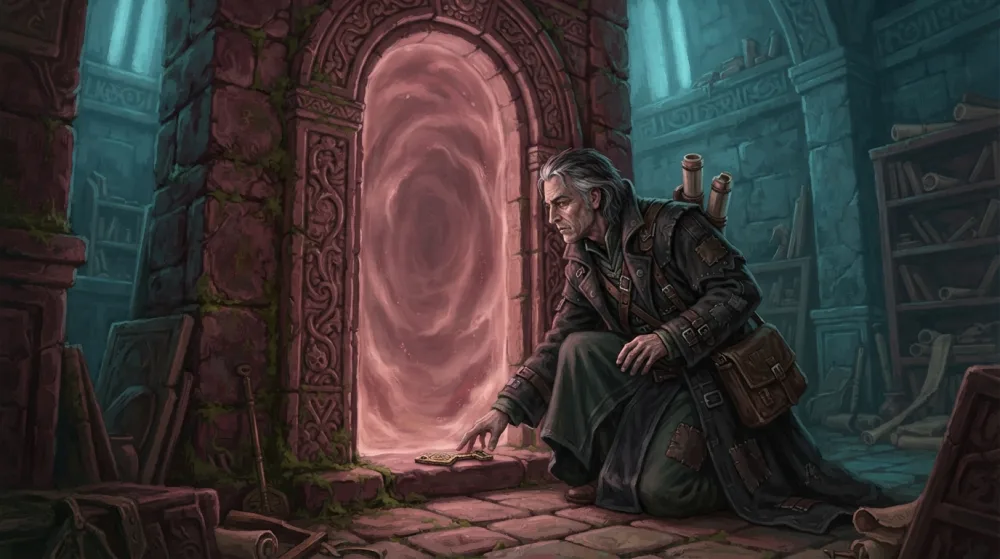
Sigil has more planar portals than anywhere else in the multiverse, and any ordinary-looking opening, a doorway, a window, a sewer grate, might be one. Most aren't permanently active. They open on a schedule, in response to a condition, at a command word, or when a creature carrying the correct portal key crosses the threshold; once open for a keyholder, the portal stays open until the start of that creature's next turn. Inactive portals are invisible, including to detect magic. Only true seeing or the Warp Sense spell can find one before it activates. An active portal typically shows as an outline of light with its destination visible through it.
Portal keys are almost always physical objects with a symbolic tie to their destination: a silver sphere for the Astral Plane, a length of chain for Carceri, a white lily for Elysium. The same key works from either side. Rarer keys aren't objects at all: a type of creature, a specific memory, even a whistled tune can serve.
Portal quirks give an individual portal personality beyond a simple in-and-out doorway. Some run one-way only, some shift their far end between multiple locations, some impose a multi-day stasis delay before the traveler arrives, some risk exhaustion on passage, some allow only a handful of travelers before vanishing, and some demand a fresh key every single time.
When a scene needs a portal and the DM hasn't planned one, three quick decisions cover it: pick a physical anchor that fits the location (a cracked mirror in an abandoned shop, an old well in a courtyard, a closet door in someone's bedroom), pick a destination, and optionally layer on a quirk. The key should have some thematic link to that destination; no fixed list is required, just something evocative and consistent.
The Four Alterations to Magic Inside Sigil
Every one of these is worth explaining to your players before their first spellcasting surprise:
1. Planar Travel fails. Spells and effects that allow interplanar travel, astral projection, plane shift, and similar, simply fail if used to enter or leave Sigil. There is exactly one exception: the city's permanent teleportation circles.
2. Summoning redirects or fails. An effect that summons a creature or object from another plane (a ring of djinni summoning, for example) instead pulls a valid target from within Sigil itself, if one exists, or fails outright if it doesn't. An effect that targets one specific creature or object located outside the city, such as Leomund's secret chest retrieving a chest left on another plane, fails automatically rather than redirecting.
3. Teleportation is intra-city only. Attempts to teleport into or out of Sigil fail. The same magic works completely normally when used to move between two points already inside the city.
4. Teleportation circles let you in, never out. Sigil contains a small number of permanent teleportation circles, and new ones can't be created inside the city. A creature with permission can use one alongside plane shift to arrive in Sigil, but not to leave the same way.
Two related restrictions round this out. Effects that banish a target from Sigil treat the city as if it were that target's home plane, which changes how a banishment spell's return condition resolves. And extradimensional spaces, a bag of holding, the demiplane created by rope trick, and similar effects, still function inside Sigil, but the space they create follows all four restrictions as though it were physically part of the city.
The practical effect: a party can't teleport-scout their way in or out, a hostile summoner inside the city can accidentally summon something Sigil-native instead of their intended threat, and getting out after arriving via a one-way teleportation circle always requires a portal.
The Two Spells
Warp Sense (2nd-level divination) senses portals within 30 feet, including inactive ones, for the duration; studying a detected portal with an action and a successful check reveals its destination and required key. Gate Seal (4th-level abjuration) seals portals within a 30-foot cube for 24 hours, consuming a broken portal key as its material component, and blocks planar-travel effects from crossing the sealed area. Both are available to Sorcerer, Warlock, and Wizard. Both are campaign-gated utility picks: useful in a portal-heavy game, dead weight anywhere else.
The Three Magic Items
Mimir (rare, requires attunement) is a floating skull-shaped device that casts legend lore once per dawn and verbally answers planar-lore questions on demand, including basic information about the Outlands' gate-towns. Because it requires attunement, it competes with the standard three-item cap the way any other rare attuned item does; see the magic items guide for how that cap works in general.
Portal Compass (uncommon, no attunement) points toward the last portal it passed through while it and that portal remain on the same plane, going static if the portal stops existing. Useful for retracing a route through unfamiliar portal networks.
Sensory Stone (uncommon, no attunement) records up to six seconds of a creature's sensation and lets a later user experience that recorded moment by touching the stone. As a bonus action, its stored sensation can also be consumed to end the charmed or frightened condition on the user, a small but real defensive use beyond its recording function.
The Twelve Factions
Sigil's day-to-day governance doesn't run through a monarch or an elected council. It runs through twelve factions, each built around a single cosmic philosophy, each holding a real piece of the city's infrastructure. A faction isn't a club; it's closer to a guild that also happens to run the courts, the bank vaults, or the weapons trade.
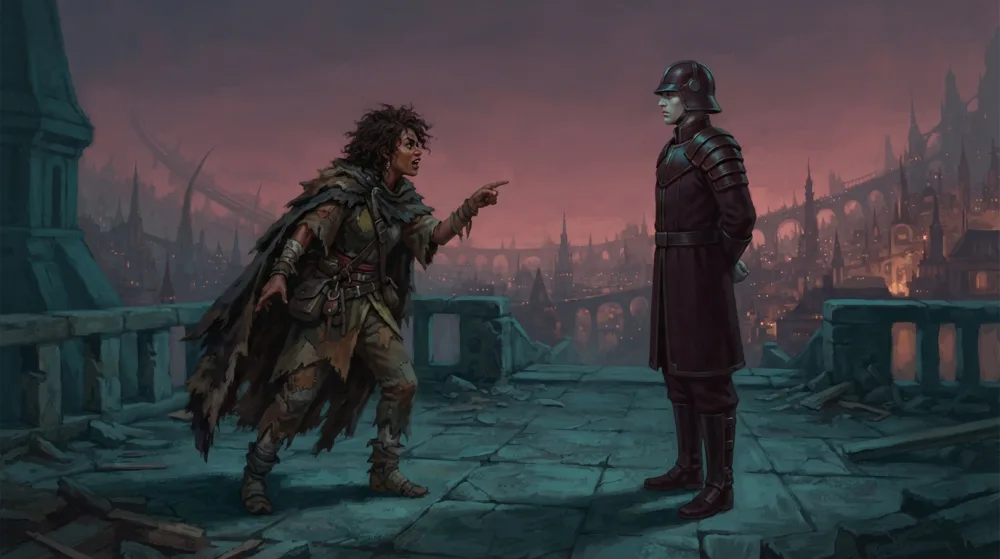
Factions are led by a factol, whose delegates represent the faction's interests in the Council of Speakers. Mid-ranking members called factotums run day-to-day operations as clerks, enforcers, or recruiters out of the faction's Sigil headquarters. Membership isn't exclusive by rule, though a faction's own culture usually expects real commitment once you've joined.
| Faction | Philosophy | Headquarters | Aligned Plane |
|---|---|---|---|
| Athar | The gods are frauds who stole real power | Shattered Temple | Astral Plane |
| Bleak Cabal | The multiverse has no meaning; make your own | Gatehouse | Pandemonium |
| Doomguard | Everything exists to crumble; that's natural | Armory | Elemental Chaos |
| Fated | Take what you can hold; no one owes you | Hall of Records | Ysgard |
| Fraternity of Order | Law and knowledge of law is ultimate power | High Courts | Mechanus |
| Hands of Havoc | Rigid institutions must burn to make room | Various warehouses | Limbo |
| Harmonium | Peace through unity, by force if needed | Barracks | Arcadia |
| Heralds of Dust | Existence is already the afterlife | Mortuary | Hades |
| Mercykillers | Justice is absolute and merciless | Prison | Acheron |
| Mind's Eye | Experience and growth toward transcendence | Great Foundry | The Outlands |
| Society of Sensation | Understanding through every experience | Civic Festhall | Arborea |
| Transcendent Order | Unify thought and action, act on instinct | Great Gymnasium | Elysium |
Athar. Every deity is a mortal who accumulated enough power to fake divinity, and real, unknowable power exists beyond them. Factol Terrance, a compassionate former believer, reveres an entity called the Greater Unknown. The faction runs a quiet spy network out of the Shattered Temple, watching Sigil's many faiths for overreach. Table role: religious-conspiracy plot hooks, and a faction that treats a party's own cleric or paladin with polite, needling skepticism rather than hostility.
Bleak Cabal. The multiverse doesn't mean anything, and that's fine, because meaning is something each person builds for themselves. Factol Lhar, an orc gladiator, focuses on expanding the faction's charitable reach; the Bleakers run community kitchens and staff the Gatehouse. Table role: the faction most likely to help a struggling party with no strings attached, and at odds with the Fraternity of Order, Harmonium, and Mercykillers over the very idea of enforceable order.
Doomguard. Decay is the natural, necessary end of everything, including the gods, and the faction works to see that process along rather than fight or recklessly hasten it. Operating out of the Armory, it controls weapon production and sale in Sigil. Table role: unsettling but not villainous. A party buying quality weapons in Sigil is very likely buying from the Doomguard, whether they realize the philosophy behind the sale or not.
Fated. The multiverse belongs to whoever's strong enough to hold it, and fate is a story people tell themselves to excuse not going after what they want. "Duke" Rowan Darkwood runs tax collection and debt enforcement from the Hall of Records, which earns the resentment their epithet, Takers, implies. Table role: a reliable antagonist for a heist or debt-collection subplot, with vaults full of information other factions would pay heavily to see.
Fraternity of Order. Understanding and exploiting the multiverse's laws is the path to real power, formalized through a hierarchy of Rules, Laws, and Axioms. Factol Hashkar presides over Sigil's courts from the High Courts, allied with the Harmonium and Mercykillers in a rough tripartite of justice. Table role: the faction a party deals with after any arrest, and a rich source of "we need a specific legal loophole" hooks given their obsession with portal and key records.
Hands of Havoc. A controlled burn against oppressive institutions, deliberately leaderless so no single arrest can decapitate the movement. Wreakers convene in secret from scattered warehouses and express their philosophy through bold public art as much as direct action. Table role: the faction most likely to have quietly infiltrated a party's other faction contacts, and a useful wildcard ally for an anti-establishment thread.
Harmonium. Only war and peace are possible states of existence, and unifying the multiverse under peace justifies nearly any method. Factol Sarin commands the "Hardheads" from the Barracks, Sigil's default city watch, mostly sincere protectors with a harder-edged minority. Table role: the faction a party interacts with most by default, since Harmonium patrols are the closest thing Sigil has to police in every ward.
Heralds of Dust. The multiverse is itself an afterlife, and every living creature is already dead and working through the early stages of that death toward a final transcendence. Factol Skall, a neutral evil lich and the faction's founder, oversees the Mortuary and counts many undead among the ranks. Table role: an unusually respectful contact around death and burial, and a natural ally for any undeath plotline that isn't automatically villainous.
Mercykillers. Justice must be cold, absolute, and merciless. They don't judge; they carry out sentences the Fraternity of Order's courts have already passed. Factol Alisohn Nilesia runs the Prison in the Lady's Ward, using divination to track anyone who's fled judgment. Table role: a natural friction point for a party sheltering a fugitive, deliberately or not.
Mind's Eye. Formed from the merger of two older factions, it treats experience and craft as the path to realizing your full potential, and suspects even godhood is one more stepping stone past that. Factol Saladryn, an elf archmage, guides its work from the Great Foundry, which produces much of the tools and parts the rest of the city depends on. Table role: one of the friendlier factions for an adventuring party.
Society of Sensation. Understanding the multiverse means experiencing every part of it, pleasant and painful alike. Factol Erin Darkflame Montgomery runs the Civic Festhall. Table role: the easiest faction to align a party with by default, since their philosophy rewards exactly the kind of varied experience a campaign naturally generates.
Transcendent Order. The Ciphers train body and mind toward perfect unity, believing that acting purely on instinct is the closest a mortal gets to harmony with the multiverse. Factol Rhys trains athletes, dancers, and acrobats at the Great Gymnasium. Table role: a low-friction faction that mostly keeps to itself, well-liked citywide, and a natural fit for a monk or any character built around physical mastery.
Minor Factions
Beyond the twelve, Sigil hosts numerous smaller philosophies, some rising, some resurging, some fallen from a past ascendant status. Three examples: the Free League, a loose collection of individualists and faction dropouts who want to be left alone to choose their own path; the Incanterium, a once-presumed-dead faction of mages who siphon magic from items and spellcasters to extend their own lives, recently returned along with their headquarters, the Tower Sorcerous; and the Ring Givers, a direct philosophical foil to the Fated who give away everything they have on the belief that generosity always returns tenfold. A DM or player can also invent an original faction, provided it has a core philosophy, a headquarters, and a factol.
Sigil Faction Affinities
This table ties directly into the Planar Philosopher background: your chosen faction determines your background's second skill proficiency.
| Faction | Skill |
|---|---|
| Athar | Religion |
| Bleak Cabal | Insight |
| Doomguard | Nature |
| Fated | Intimidation |
| Fraternity of Order | History |
| Hands of Havoc | Stealth |
| Harmonium | Perception |
| Heralds of Dust | Medicine |
| Mercykillers | Survival |
| Mind's Eye | Persuasion |
| Society of Sensation | Performance |
| Transcendent Order | Athletics |
Match a faction to the question your character actually wants answered, not just a skill you want proficiency in. A character chasing truth about the gods fits the Athar; one who wants to matter regardless of cosmic meaninglessness fits the Bleak Cabal; one who believes in earning everything through strength fits the Fated. For low-friction faction ties without heavy ideological baggage, Mind's Eye and Society of Sensation are the safest picks. For a faction that doubles as a source of tension and complicated favors, Harmonium, Mercykillers, or the Fraternity of Order provide that out of the box.
The Outlands
The Outlands is the plane the rest of the Great Wheel measures itself against: a neutral disk of prairie, mountain, and river ringed by sixteen gate-towns, each keyed to a single Outer Plane and shaded by its character. A celestial and a fiend can share a drink in an Outlands tavern without anyone blinking, because the plane itself refuses to fully belong to either side.

Life at the Center of the Wheel
The Outlands has no visible sun, moon, or stars, but it still runs on a peak-and-antipeak day cycle, and travelers orient themselves relative to the Spire instead of the sky: spireward means toward the mountain at the plane's center, brinkward means away from it, toward the gate-towns at the edge. Distance and travel time are deliberately unreliable; a journey can take minutes or days by the DM's call, and the locals sum it up with a shrug: "It takes as long as it takes." The lodestar, minted in Tradegate, is accepted throughout at a fixed 1 gp exchange rate.
Cosmic realignment is the Outlands' built-in check against any location leaning too hard into one Outer Plane's nature: if a place embodies that plane too strongly, the plane itself absorbs it, permanently expanding at the Outlands' expense. It's a standing threat every gate-town lives with, and a ticking-clock device a DM can use against a town whose character has drifted too far from center.
The Sixteen Gate-Towns
Sixteen evenly spaced towns ring the plane, each built around a portal to one of the sixteen Outer Planes. Grouping them by the alignment axis their linked plane occupies makes the set easier to use at the table than sixteen unconnected names.
The Lawful axis: Automata, Excelsior, Fortitude, Ribcage, Rigus. Automata (Mechanus, ruled by the Council of Order) is rigid geometric order made into a town, with numbered grid streets and a population of friendly but utterly literal modrons; best for a lawful-order culture-shock scene or a puzzle built around modron logic. Excelsior (Mount Celestia, high chancellor Forough) centers on the Godstrand, an alabaster tower defended by the angelic Cinderwings squadron; best for a celestial quest hub or a paladin-flavored patron. Fortitude (Arcadia, the elected Spotless Seven) is governed by long-lived officials whose spotless public image hides real secrets, and its elections sync with the Great Modron March; best for intrigue with a "clean government has secrets too" hook. Ribcage (Nine Hells, five districts around the Citadel of Cinders) is the most literal doorway to devils and infernal contracts; best for a fiend-contract subplot without a full descent. Rigus (Acheron, the Crown Generals) runs on strict military hierarchy where even visitors are assigned a rank; best for a mercenary-company hook.
The Chaotic axis: Bedlam, Glorium, Plague-Mort, Xaos. Bedlam (Pandemonium) sits inside a three-layered basin, its gate a set of shrieking blastgates that batter anyone passing through with biting wind; best for an unsettling, sanity-fraying approach scene. Glorium (Ysgard, the gladiator Tyrza Bonebreaker) is a hard-fighting frontier town; best for a combat-sports subplot or a giant-themed quest hub. Plague-Mort (the Abyss) is controlled by an unambiguously evil bariaur crime lord and is the Outlands' least law-abiding gate-town; best for a black-market or demon-cult hook played straight as a hostile location. Xaos (Limbo) has no fixed ruler, since a shifting crystal diadem randomly crowns a new "Your Majesty" whose edicts rarely outlast their reign; best for a town where the local authority is a running joke.
The Good axis: Ecstasy, Faunel, Sylvania, Tradegate. Ecstasy (Elysium, the paired Lightcaller and Nightwhisperer) is a farming town built around one cardinal rule, do no evil; best as a safe haven, or a moral test when that rule gets complicated. Faunel (the Beastlands) draws foragers and awakened-wildlife allies to Camp Greenbriar, threatened by a poacher gang called the Vile Hunt; best for a conservation subplot. Sylvania (Arborea) never stops celebrating, with elves and hobgoblins dancing together nightly under a rotating festival theme; best for a downtime or social episode between darker gate-towns. Tradegate (Bytopia, the Five Star Guild) mints the Outlands' currency and runs as an honest trade hub threatened periodically by treasure-hungry xorn raids; best as a first supply stop, or a monster-raid encounter with an economic stake.
The Evil axis: Curst, Hopeless, Torch. Curst (Carceri, Burgomaster Villigus Bazengar) is a town of exiles arranged in concentric rings radiating from its gate, explicitly warded against outside teleportation or planar magic; best for a prison-break or fugitive-redemption story that has to be approached on foot. Hopeless (Hades, the Castle of Bone) is as grim as its name promises; best for a bleak, resource-scarce survival scene. Torch (Gehenna) is a den of thieves run by a secretive crime family called simply the Family, built on three volcanic spires that periodically vent flame; best for a heist with real environmental hazard layered in.
The Spire
At the Outlands' exact center rises the Spire, an impossibly tall, needle-thin mountain that no one has ever successfully climbed or flown to the top of. Sigil floats above its apex, barely visible from the ground below. The book is explicit that attempts to reach the top are futile. Treat it as a fixed, unreachable landmark rather than a dungeon waiting to be climbed; the absence of a path up is the point.
Running a Planescape Campaign
Sigil and the Outlands gives a DM a complete setting to run, plus structural tools built to generate ongoing play without a pre-written campaign.
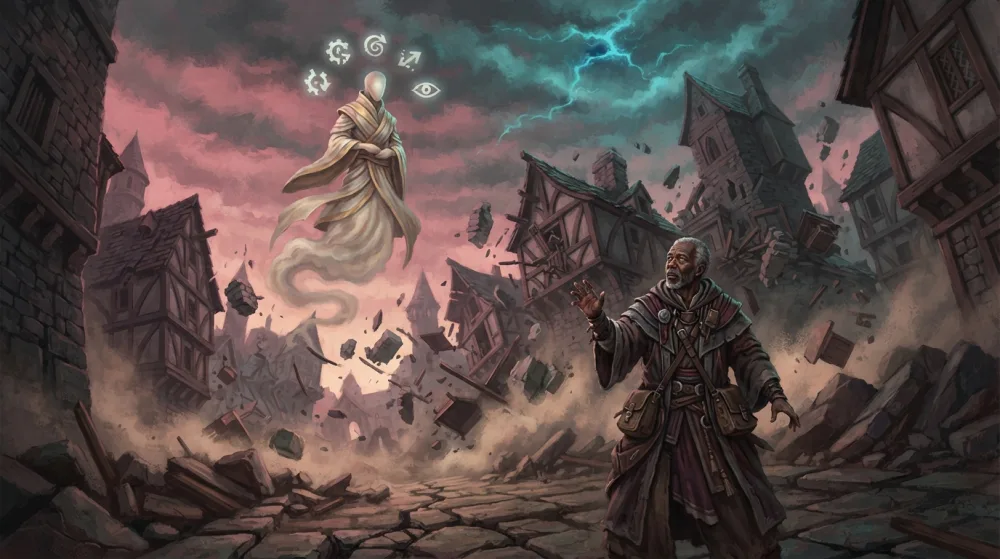
What the Book Gives You
Three things, completely: a setting (the City of Doors and the plane surrounding it, both covered down to ward-by-ward and gate-town-by-gate-town detail), character options, and a portal-and-altered-magic subsystem that gives Sigil a mechanical identity distinct from any other city in the game. It also gives you generation tools, the Adventure Hooks, Faction Missions, and Sigil Calamities tables covered below, meant to be drawn on repeatedly rather than used once.
What it doesn't include: a bestiary of Planescape-specific creatures, and a full pre-written adventure. Neither absence stops a DM from running original content. Any Monster Manual creature works as an encounter without modification, or with the bending and reskinning techniques that guide covers.
Campaign Tones This Setting Supports
City intrigue. Twelve factions, each holding a real piece of civic infrastructure, support a campaign built entirely around faction politics: who controls what, who owes whom a favor, and what happens when two factions' interests collide over a party caught in the middle.
Portal-hopping exploration. A party based in Sigil can reach nearly any other plane through the right portal, making this the natural setting for a campaign that visits a different plane every few sessions without the overhead of a dedicated travel subsystem like Spelljammer's.
Outlands frontier. A campaign based in one or more gate-towns instead of Sigil plays closer to a traditional regional game: each town has its own ruler, its own threats, and its own connection to a single Outer Plane, without Sigil's citywide political density.
A single portal layered onto another world. Because Sigil connects to everywhere, a DM can introduce one portal into an existing Forgotten Realms, Eberron, or homebrew campaign as a new destination rather than restarting in Sigil. This is the lightest-touch way to bring this material to a table that isn't ready to relocate.
Adventure Hooks, Faction Missions, and Calamities
Rather than a fixed campaign arc, the book gives two tables of modular hooks meant to be drawn on repeatedly and combined with whatever the party is already doing.
Adventure hooks are broad, Sigil-wide premises that can happen to any party regardless of faction ties: a stranger asking an unusual favor, a case of mistaken identity involving a lookalike villain, a hidden threat moving through the city that only the party notices in time. Use these as session openers or as complications that interrupt whatever else is happening, since most require no prior faction commitment.
Faction missions are the same idea scoped to a specific faction relationship: digging up dirt on a rival, infiltrating a rival's headquarters, providing security at a public event, rooting out a suspected spy, breaking someone out of custody, investigating a factol's disappearance. These work best once a party has an established relationship with at least one faction, since the stakes depend on the party caring whether that faction succeeds. Layering a faction mission on top of an unrelated adventure hook is a reliable way to keep multiple threads alive without over-planning.
Sigil Calamities scale the same approach up to citywide, arc-length threats: tremors with an unknown cause, arcane blackouts that suppress magic and portals across the city, the Lady of Pain banishing a huge fraction of the population to the Mazes without explanation, a portal to an active planar war opening directly into a ward, or dead factions rising from Undersigil to challenge the living factions above. Each is deliberately open-ended; the book gives the premise and the scale and expects the DM, often via the party's own investigation, to determine the cause and resolution. Use one as the spine of an extended arc once the party has enough faction context for the stakes to land.
Building Your First Session
- Decide your campaign's center of gravity: Sigil itself, one or more gate-towns, or a single portal layered onto an existing world.
- Pick one adventure hook or faction mission to open with, rather than establishing the whole setting before play starts.
- Introduce one faction naturally through that opening hook, rather than front-loading all twelve at once.
- Hold Sigil Calamities in reserve for when the campaign has enough momentum for a city-scale stake to land emotionally.
- Let the party's choices generate the next hook. Sigil's dense faction politics mean nearly any player decision creates a natural follow-up complication.
Common Mistakes
- Treating the backgrounds as flavor-only. Both Gate Warden and Planar Philosopher grant a real feat. Skipping past the feature line the way you might for a PHB background means missing free mechanical value.
- Picking a plane for Scion of the Outer Planes before deciding on the follow-on. Four of the five plane choices lock your 4th-level options. Decide the follow-on first, then work backward.
- Assuming Planar Wanderer is a free upgrade because it has no prerequisite plane. It skips the Ability Score Increase every other follow-on includes. Weigh that against your campaign's actual portal content.
- Forgetting these feats are campaign-gated. Every one requires "Planescape Campaign" as a prerequisite. Confirm with your DM before building around them.
- Treating Sigil like a normal fantasy city with normal travel times. Distance and duration inside the ring are explicitly a DM call, not a fixed grid.
- Making the Lady of Pain a boss fight. She has no stat block for a reason. A party that attacks her isn't starting an encounter, they're ending their characters' story in that city.
- Forgetting the wards are political, not just geographic. A party asking a favor in the Lady's Ward is really asking a favor of whichever faction actually holds that specific site.
- Letting a party teleport-scout Sigil from outside. The Planar Travel and Teleportation restrictions exist specifically to stop this.
- Forgetting summoning redirects instead of just failing. A villain's summoning ring going off inside Sigil might pull something else from inside the city, which complicates an encounter in DM-controlled ways rather than simply denying the spell.
- Treating every portal as a simple two-way door. Portal quirks are what keep the signature subsystem from feeling like reskinned teleportation.
- Letting all sixteen gate-towns blur together. Each is meaningfully shaped by a specific Outer Plane; treating them as interchangeable loses the texture that separates the Outlands from a generic hex-crawl.
- Opening with a Sigil Calamity. These are arc-scale escalations. A party with no faction context yet has nothing to invest in when the Lady empties a third of the city into the Mazes.