Introduction
Bigby Presents: Glory of the Giants hands D&D 5e 2014 tables a full toolkit for building giant-themed characters and running giant-focused campaigns: one barbarian subclass, two feat-granting backgrounds, eight feats built around a shared rune-magic theme, and a campaign-wide bonus-feat system that hands every character at the table a free feat once a DM opts in. Layered on top is a deep lore cluster - Annam and his nine divine children, the Ordning's six-kind social hierarchy, and three organizations that unite giants across every world of the Material Plane.
The setting frame runs deep even where the mechanics stay light. Annam the All-Father created the giants and set the Ordning - a fixed ranking of the six giant kinds - as the natural order of the multiverse, then withdrew from his throne in what most giants believe is anger or disappointment. That absence drives everything from individual giants' pride and ambition to entire organizations built around restoring his favor or rejecting the Ordning outright. Every section below eventually connects back to it.
Players usually start with character options, since the bonus-feat system changes the normal feat-slot math for every character in a giant-themed campaign. DMs start from the opposite end: decide whether the campaign centers on giants ruling in the present, giants who shaped the ancient past, or a single giant-driven event, then work backward.

Character Options
Three options have their own dedicated guides for a deeper build breakdown: Path of the Giant as the barbarian subclass, plus Strike of the Giants and Rune Shaper as the two gateway feats. The rune-themed magic item catalog - 27 named items plus the Giant Bags loot subsystem - lives in the D&D 5e 2014 Expansion Magic Items Guide. What follows is everything else: the bonus-feat subsystem, both backgrounds, and the six boon feats compared side by side.
The Campaign-Wide Bonus-Feat System
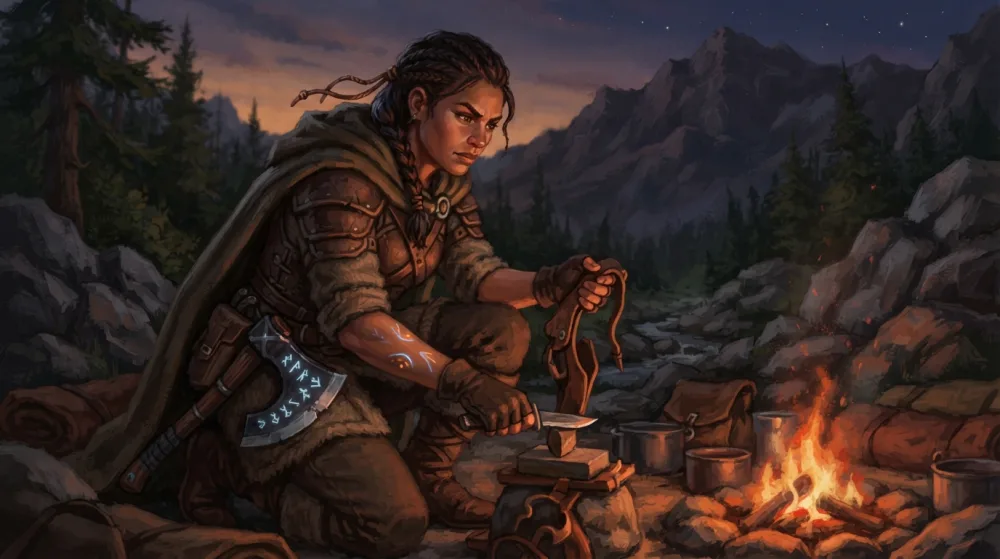
If your DM allows the Giant Foundling and Rune Carver backgrounds at all, every character in the campaign gains a bonus feat at character creation, regardless of which background they actually picked. If you chose Giant Foundling or Rune Carver, you get the specific feat that background grants directly. If you chose any other background, you get a free choice between exactly two Player's Handbook feats: Skilled or Tough.
This is a meaningfully different subsystem shape than some other setting-wide bonus-feat systems in this library - it isn't limited to characters who took a specific background. A Fighter who picked the Soldier background still gets a bonus feat here, just a smaller menu than a Giant Foundling character gets.
Giant Foundling
A background for a character raised among giants, unusually large for their own kind as a result. Skill Proficiencies: Intimidation and Survival. Languages: Giant plus one of your choice. Grants the Strike of the Giants feat directly as its background feature - see the Strike of the Giants guide for the full breakdown of all six damage-type variants.
Six origin-story options cover how you ended up raised by giants (a nomadic giant family, a stone giant rescue, a lost frost giant companion, war orphaning, a storm giant oracle's apprenticeship, or a cloud giant's impulsive adoption) - pick whichever fits your character concept, since none of them change the mechanics.
Rune Carver
A background for a character who has dedicated themselves to studying giant runecraft, whether trained by a master or self-taught from ancient engravings. Skill Proficiencies: History and Perception. Tool Proficiency: one set of artisan's tools. Language: Giant. Grants the Rune Shaper feat directly as its background feature - see the Rune Shaper guide for the full rune-swap mechanic and confirmation that it introduces zero new spells.
Six rune-style options (wax and clay, carved figurines, engraved beads, stitched hems, bone-throwing, or candle wax) are pure flavor with no mechanical difference.
The Six Boon Feats, Compared
Each boon feat requires 4th level plus its exact matching Strike of the Giants variant, and each grants a +1 Ability Score Increase, a damage resistance, and one signature combat trick:
| Feat | Requires | ASI options | Resistance | Signature trick |
|---|---|---|---|---|
| Ember of the Fire Giant | Fire Strike | STR, CON, or WIS | Fire | Bonus-action 15-ft burst, DEX save or 1d8+prof fire damage + blinded |
| Fury of the Frost Giant | Frost Strike | STR, CON, or WIS | Cold | Reaction on being hit: CON save or 1d8+prof cold damage + speed 0 |
| Guile of the Cloud Giant | Cloud Strike | STR, CON, or CHA | none listed | Reaction on being hit: gain resistance to that damage + teleport 30 ft |
| Keenness of the Stone Giant | Stone Strike | STR, CON, or WIS | none listed | 60-ft darkvision (or +60 ft) + bonus-action ranged rock-throw spell attack |
| Soul of the Storm Giant | Storm Strike | STR, WIS, or CHA | Lightning, thunder | Bonus-action 10-ft aura: attackers vs. you have disadvantage, STR save or speed halved |
| Vigor of the Hill Giant | Hill Strike | STR, CON, or WIS | none listed | Reaction: negate forced movement/prone + bonus HP on short-rest Hit Dice spend |
For raw offense: Ember (Fire Strike) deals the most consistent AoE damage of the six.
For a reactive damage-punisher: Fury (Frost Strike) rewards a tanky frontline build that expects to get hit.
For a defensive escape valve: Guile (Cloud Strike) turns a bad hit into a mitigated hit plus a reposition, the best pick for a squishier build in melee range.
For ranged control: Keenness (Stone Strike) is the only boon that adds a ranged attack option alongside its darkvision utility.
For party-wide defense: Soul (Storm Strike) is the only boon with an area effect that helps allies too, not just you.
For sustained durability: Vigor (Hill Strike) is the safest generalist pick for a frontline character who expects to take repeated hits over a long fight.
There's no universally correct pick - match the boon to your Strike of the Giants variant, chosen back at 1st level, and to your build's actual combat role.
Build Your Dungeons & Dragons (5e, 2014) Character
The Dungeons & Dragons (5e, 2014) character builder is live - build a Beastkin, a Kobold, or whatever your table is missing, free, right now.
Start BuildingHot Take: Pick your Strike of the Giants damage type for the 4th-level boon you want, not for the one that sounds best at 1st. Each boon feat names its exact matching variant as a hard prerequisite and there is no substitution, so a casual choice at character creation can quietly put the boon you were building toward out of reach for good.
The Ordning
The Ordning is the ranking that shapes nearly every giant's sense of self-worth: a fixed hierarchy of the six giant kinds, with an individual rank inside that kind measured by a different standard for each. Understanding it is the fastest way to build a believable giant NPC, faction, or antagonist, because a giant's relationship to their own rank - proud, desperate, indifferent, or openly rebellious - tells you more about them than their stat block ever will.
The Six-Kind Hierarchy
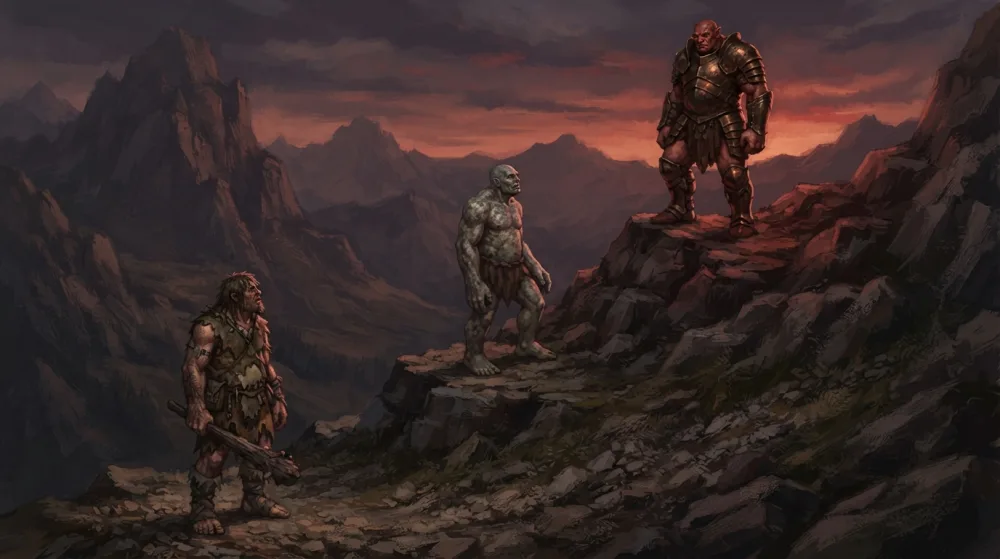
At the largest scale, the Ordning ranks the six true giant kinds in a fixed order: storm giants at the top, then cloud, fire, frost, and stone, with hill giants at the bottom. Every other Giant-type creature - ettins, fomorians, trolls - sits functionally below hill giants, outside the Ordning entirely. No individual achievement crosses a kind boundary: the most accomplished fire giant artisan still ranks below the poorest cloud giant, simply because cloud outranks fire at the kind level.
Within a kind, the ranking standard changes:
| Giant kind | Ranked by |
|---|---|
| Cloud | Wealth |
| Fire | Crafting skill |
| Frost | Physical strength |
| Stone | Artistry and rock-throwing skill |
| Hill | Deference to whoever is bigger or stronger, with little formal thought given to rank |
| Storm | Largely uninterested in ranking themselves at all |
A giant's own attitude toward their rank varies just as widely as a person's attitude toward their social status would: some are desperate to climb, some are content, some are actively declining and despairing over it, and some have been cast out as outcasts entirely.
The Three Ways Giants Reject the Ordning
Personal deviation. A giant who holds themselves to a standard their own kind doesn't traditionally value - a contemplative cloud giant chasing knowledge instead of wealth, a weak frost giant trading in secrets and blackmail instead of raw strength. Devotees of Annam's daughters (Hiatea, Iallanis, and Diancastra) tend to push against the Ordning's strict rules on principle, whether or not they leave giant society entirely.
Revolutionary ambition. A giant who tries to overturn the Ordning outright, usually by imposing their own kind's ranking standard onto every other kind. Frost giants, whose rank depends on raw strength and military force, are the most likely to attempt this by conquest. These attempts rarely have lasting multiversal impact, but some have disrupted the Ordning locally for centuries.
Turning to another god or power entirely. Covered in full in Gods of the Giants below - a giant who worships an interloper god instead of Annam's children rejects the Ordning's authority along with its gods. Joining a hierarchical cult like Elemental Evil replaces the Ordning with a different structure entirely, one that places the joining giant higher than they'd otherwise rank. Joining a demon lord's service rejects the very idea of cosmic order the word "ordning" literally names in the Giant tongue.
Giant Culture: Age, Volume, and Pride
Age. Giants live long lives that track their place in the Ordning: hill giants around 200 years, frost giants 250, fire giants 350, cloud giants 400, storm giants 600, and stone giants up to 800 - the longest-lived of the six despite ranking below cloud and storm. That longevity shapes their pacing: giants tend to speak and decide slowly, and their knowledge of the wider Humanoid world is often decades out of date, learned once in childhood and never refreshed.
Volume. Giants are loud by nature - footsteps that shake the ground, a laugh that feels like a small earthquake, a sneeze that rattles windows. Use this at the table as a physical, not just numerical, reminder of scale.
Pride. Most giants are raised believing Annam intended them to rule the Material Plane, and that inherited self-importance runs through how they treat smaller peoples: ignoring names in favor of generic labels, refusing to kneel or bend in a smaller creature's presence, or reacting to any threat from a Humanoid with open laughter before anything else. A giant that treats a party's warnings as a joke isn't necessarily foolish - it's often exactly the pride the Ordning instills.
Names. The book provides kind-specific name lists (hill, stone, frost, and the others each have their own naming conventions) and explicitly allows mismatched names - a hill giant with lofty aspirations using a cloud giant name, or a stone giant raised among frost giants carrying a frost name, both signal something real about that giant's background without needing extra explanation.
The Six Social Structures
Giants are social by nature and generally prefer living among their own kind, though how large that group gets varies widely:
Recluse. A giant living alone by choice or circumstance - tending an abandoned ruin, wandering to learn the world, or seeking solitude for its own sake. Not every recluse is content; some are desperately lonely and actively looking for a community to rejoin.
Exile. A giant separated from or shunned by their own kind, often living among smaller peoples instead. Exiled giants tend to gravitate toward positions of importance - crime lords, wealthy patrons, teachers - rather than blending in unnoticed.
Band. The most commonly encountered giant grouping: two to four giants united by a shared purpose, whether raiding, hunting, a religious mission (for an Ordning god or an interloper god alike), or simply young giants seeing the world before adult responsibilities set in.
Family. Most giants live this way: four to six adult giants across multiple generations plus one or two younger giants, work divided by individual ability, often including at least one spellcasting member.
Steading. Two or three family groups sharing a stronghold when circumstances allow it - abundant food, a unifying leader, or a dangerous environment that rewards numbers. A steading runs roughly 8-12 adult giants plus 3-5 younger ones, sometimes joined by ettins, ogres, or as many as two dozen Humanoids.
Settlement. Rare and large: multiple steadings and family groups clustered together under one exceptional ruler, often arranged geographically by Ordning rank - the highest-status giants closest to the settlement's center or peak, the lowest-ranked farthest out. A full settlement includes significant Humanoid population alongside the giants.
The Ordning is the single most useful worldbuilding tool this book offers: a fixed external hierarchy that every giant NPC has some relationship to. Use the kind-level ranking to decide power dynamics between giant factions, and use an individual giant's attitude toward their own rank to give a single NPC a motive without inventing anything new. For goliaths and firbolgs, both Humanoid giant-kin rather than part of the Ordning itself, see the Goliath and Firbolg race guides.
Gods of the Giants
Annam the All-Father and his nine divine children form the Ordning's religious backbone - the same hierarchy that ranks every giant by size, strength, and birthright also ranks the gods themselves. But Annam has withdrawn from his throne, and that absence shapes giant religion more than any single deity's own portfolio: most giants believe he's watching in judgment, waiting to see if his children (and their followers) can restore the glory that made him proud.
Annam and the Ordning's Divine Hierarchy
| Deity | Alignment | Domain(s) | Symbol |
|---|---|---|---|
| Annam (All-Father) | Lawful Neutral | Knowledge | Two hands, wrists crossed, fingers pointing down |
| Stronmaus | Neutral Good | Life, Tempest | Forked lightning through a cloud partly obscuring the sun |
| Hiatea | Neutral | Life, Nature | Flaming spear |
| Diancastra | Chaotic Neutral | Trickery | Journey rune |
| Iallanis | Neutral Good | Light, Peace | Garland of flowers |
| Skoraeus | Neutral | Knowledge | Stalactite |
| Surtur | Lawful Evil | Forge, Knowledge, War | Flaming sword |
| Grolantor | Chaotic Evil | War | Wooden club |
| Karontor | Neutral Evil | Death, Knowledge | Broken shackles |
| Memnor | Neutral Evil | Knowledge, Trickery | Black obelisk |
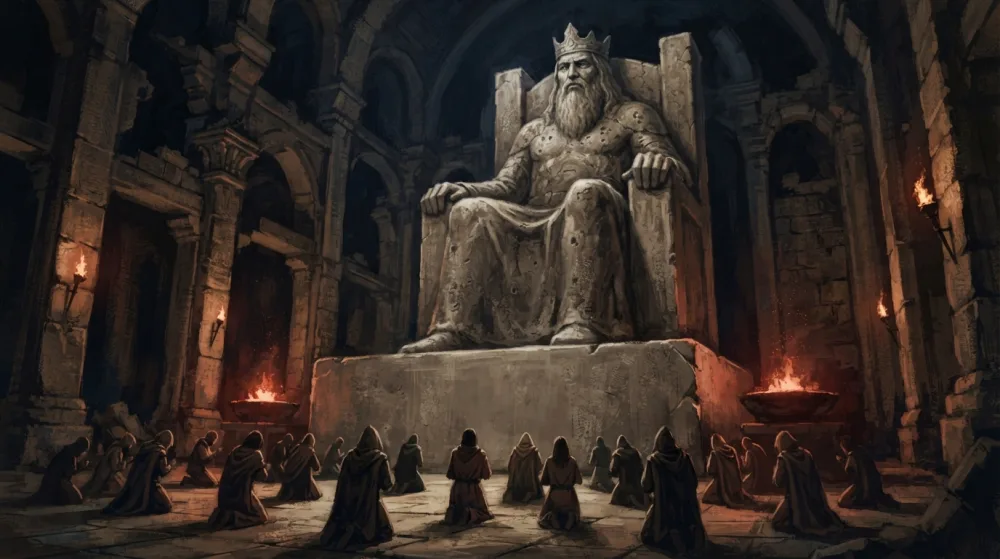
Annam, the All-Father, created the giants and set the Ordning as the natural order of the multiverse - size and strength determine standing, with Annam himself at the peak. He's withdrawn from his throne, and his return (or the reasons behind his absence) is the central unresolved question of current giant religion.
Stronmaus, Annam's eldest, and Hiatea, his second, share a close and friendly rivalry that runs through much of Annam's mythology - Hiatea both protects hearths and hunts as a warrior, and she's the deity most popular among goliaths and firbolgs specifically. Diancastra is the trickster daughter whose own saga (claiming a "mote of matter" from her father to prove her worth) is one of the book's own foundational myths - firbolgs drawn to trickery and disguise often serve her. Iallanis governs light and peace. Skoraeus governs knowledge among stone-focused giants.
Surtur, Grolantor, Karontor, and Memnor are the four evil or ambiguous children. Surtur commands forge, knowledge, and war together - a rare three-domain portfolio. Grolantor is widely mocked among the other giants as a selfish boor who refuses to accept his place beneath his siblings, which makes him a useful god for a hill giant faction defined by resentment rather than raw menace. Karontor governs death. Memnor is a deliberately ambiguous, duplicitous figure - the book notes some myths suggest two different gods share the name.
Unlike Dragonlance's Paladine/Bahamut and Takhisis/Tiamat, this book states no cross-world identity for any of Annam's children. Treat them as their own distinct pantheon unless a specific campaign's DM decides otherwise.
The Interloper Gods
Giants who remain faithful to Annam's children call every other power an "interloper god" - a trespasser on divine territory that rightfully belongs to the Ordning. A giant caught worshiping one is cast out of society if discovered, but many decide the benefits outweigh that risk.
Vaprak the Destroyer. Possibly one of Annam's own children (myths disagree - some say he formed from Annam's spilled blood instead), Vaprak is never granted equal standing with the other nine regardless. Described as a greenish, troll-like figure, he's the patron of trolls and of giants who've given up on ever rising in the Ordning.
The four demon lords with named giant followings. Baphomet draws stone giants who feel stifled by their own society and want to adopt a purely bestial nature. Demogorgon draws few giants directly, but ettins recognize a kindred spirit in the two-headed demon lord. Kostchtchie draws frost giants specifically, offering raw strength and battle-fury that maps directly onto values many frost giants already hold. Yeenoghu draws hill giants whose hunger and appetite for slaughter tip into something monstrous.
The four Elemental Evil cult princes. Giants with close elemental ties sometimes worship these four directly instead of a demon lord: Ogremoch (earth, drawing hill and stone giants who want to level civilization with landslides and earthquakes), Olhydra (water, drawing frost giants who see ice and flood as ultimate destructive power), Imix (fire, drawing fire giants who want to purify the world in flame), and Yan-C-Bin (air, drawing cloud and some storm giants who delight in the power of wind and storm). Giants who join an Elemental Evil cult replace the Ordning with a different hierarchy entirely - one where their own size and strength put them near the top regardless of birth.
Don't treat every interloper-god-worshiping giant the same way. A Vaprak-worshiping troll-kin giant, a Baphomet cultist stone giant, and an Ogremoch-devoted hill giant all reject the Ordning for different reasons - despair, bestial nature, or a raw power grab respectively.
Building a Cleric or Paladin Around a Giant God
A cleric or paladin serving one of Annam's children gets a real mechanical hook: pick the domain that matches the deity's own portfolio (Stronmaus for Life/Tempest, Hiatea for Life/Nature, Karontor for Death/Knowledge, and so on) using the table above. A character who instead serves an interloper god - particularly Vaprak or one of the demon lords - is building toward a darker, likely antagonist-adjacent concept, or an anti-hero who's rejected the Ordning's judgment on their own worth.
Organizations
Three organizations unite giants across the divides of the Ordning and individual devotion to a single deity, each built around its own explanation for why the giants fell from Annam's favor and its own answer for what giants should do about it. All three operate across multiple worlds of the Material Plane, giving a DM a ready-made hook for connecting a giant-themed campaign to settings well beyond wherever it starts.
Hidden Rune
The Hidden Rune believes the giants' decline is temporary - a pause between two great moments in giant history, not a permanent fall. Its mission is purely archival: collect and preserve the accumulated knowledge of the ancient giant empires so a future giant civilization can build on it, without taking any active role in shaping what that future actually looks like.
Members travel the Material Plane investigating the ruins of long-fallen giant empires, including ones tied to other well-known D&D settings - the book names Netheril in the Forgotten Realms and the giant empire of Xen'drik in Eberron as exactly the kind of ruin its scholars comb through for writings, artifacts, and lost technology. Where no historical record survives at all, members search instead for physical remnants of a forgotten empire. On the rare world where a giant civilization is still flourishing, Hidden Rune agents work to document every aspect of it before it, too, is lost.
The order maintains a vast archive in a secret location on the Elemental Plane of Earth, staffed by scholars who catalog each new find against both the specific empire it came from and the broader sweep of giant history. Don't mistake them for a harmless academic faction: its members will fight to protect their archive and their finds, including from adventurers who stumble into the wrong ruin at the wrong time.
Stewards of the Eternal Throne
The Stewards believe the ancient giant empires fell for a specific moral failure: instead of tending the worlds Annam made and guiding their smaller inhabitants toward wisdom and prosperity, the giants tried to rule them, exploit their resources, and subjugate their peoples. For that sin, the Stewards believe, Annam cast down the giants' empires and turned his back on his own children - and only by undoing that original failure can giants earn his favor back.
Organized as a knightly order with independent regional chapters (each led by a chief steward, rarely coordinating with other chapters except against a world-threatening evil), the Stewards swear an oath built on four tenets:
- Stewardship. "We are custodians of the worlds, not rulers."
- Protection. "Smaller and weaker peoples deserve our protection, not subjugation."
- Education. "We strive to ensure all peoples can pursue wisdom, learning, and enlightenment."
- Peace. "We foster peace among all peoples."
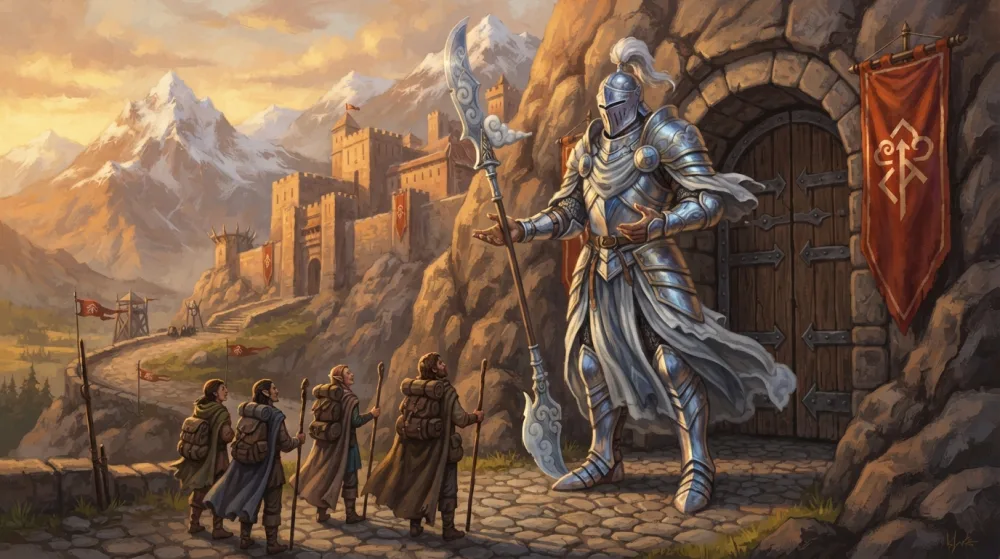
Membership is mostly cloud and storm giants, but the order explicitly accepts goliaths, firbolgs, and other peoples into its ranks - the only one of the three organizations to state an open-membership policy directly, and a natural home for a goliath or firbolg character with a protective bent. Each chapter maintains a fortress stronghold built as a living demonstration of the order's principles: a bastion where diverse peoples live together under giant leadership and protection, exactly the relationship the Stewards believe Annam always intended.
Worldroot Circle
The Worldroot Circle tells a creation myth to explain its purpose: on the First World, the god Corellon planted and tended a great tree, a seedling of Yggdrasil, the World Tree that connects all the Outer Planes. When the First World was destroyed, seeds from that tree scattered into the void, and Annam nurtured each one until it sprouted into one of the countless worlds that now make up the Material Plane.
Giants of the Worldroot Circle see themselves as Annam's gardeners, tasked with tending the metaphysical "root" of every world he made. On some worlds that root is a literal great tree; on others it's a mountain, a yawning cavern, or even a meteorite crater. Whatever physical form it takes, the Circle believes each root functions as a nexus point linking its world to every other world and to the Outer Planes - which makes Circle-guarded sites a natural setting for any adventure involving planar portals, world-threatening incursions, or a Far Realm intrusion specifically.
Choosing an Organization for Your Campaign
Building a party ally or patron? The Stewards of the Eternal Throne is the clear pick - open to non-giant membership, actively cooperative, and structurally built for a party to work alongside rather than around.
Building a knowledge-focused faction or a source of lost lore? Hidden Rune fits a campaign that needs a reason for ancient giant ruins to matter beyond loot - a Hidden Rune agent competing with (or aiding) the party for the same find is a ready-made complication.
Building a portal-guarding or planar-incursion plot? The Worldroot Circle's root-sites are the natural home for any adventure where something dangerous is trying to cross between worlds.
None of the three is hostile to the others by default. The book presents them as three different, mostly non-competing responses to the same underlying problem - Annam's absence and the giants' fall. Conflict between them is a DM choice, not a built-in assumption.
Running a Giant-Themed Campaign
Giants don't have to be the main villain for this book's content to earn its place. The book's own default framing is that giants sit at the margins of most campaign worlds, and the myth types and organizations below work just as well as background texture in a campaign about something else entirely.
Two Ways to Build a Giant-Focused World
Flourishing Giants. Giants still actively rule over smaller peoples in the campaign's present day - as Annam intended, they'd say. Decide four things before you start: how different giant kinds coexist (one unified empire ranked by the Ordning, or several separate hostile realms), what role Humanoids play (protected citizens, subjugated labor, or new arrivals carving out space), whether dragons are allies, rivals, or extinct, and whether Annam remains an active, engaged deity in this version of the setting rather than withdrawn.
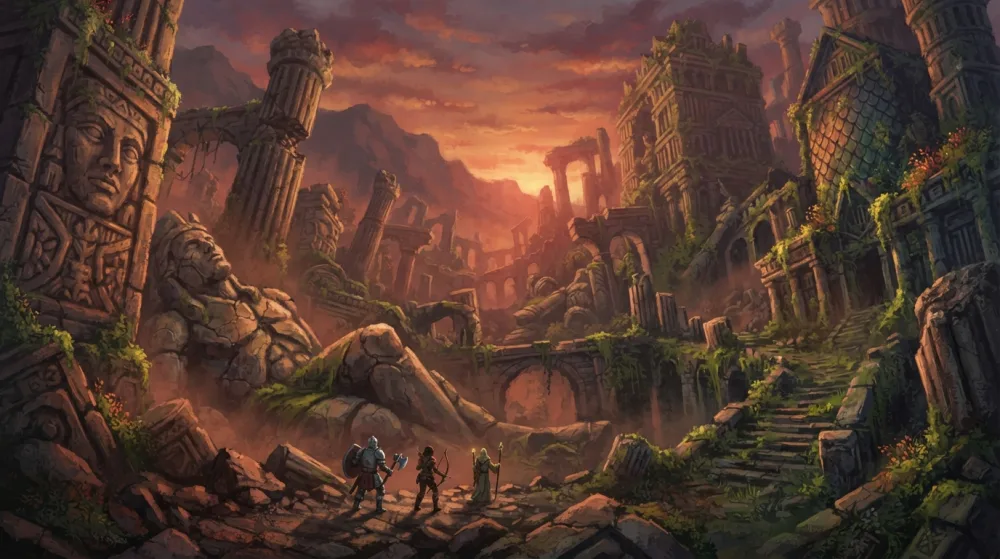
Shaped by Giants. Giants dominate the world's ancient history without necessarily being a major present-day force. This can run post-apocalyptic (Humanoids exploring the ruins of a world giants destroyed) or mystery-driven (a forgotten giant empire rediscovered mid-campaign, rewriting known history). Every dungeon and ancient magic item in the campaign can trace back to giant origin under this framing, including artifacts made by whoever warred against giants instead.
Both paths can also be layered under Campaign Events instead of a full world redesign - single giant-driven moments (a storm giant king's death triggering a succession crisis, a giant-caused disaster mistaken for a natural one, a giant faction's first landfall on a new shore) that kick off or punctuate a campaign without requiring giants to define the whole setting.
Giants and the Other Ancients
Giants share "eldest peoples" status with dragons in most D&D worlds' mythic history, with elves and dwarves arriving later. That relative age gives a DM three natural conflict or alliance threads to build around:
Giants and dragons. Some worlds carry a millennia-old grudge (the Forgotten Realms' Thousand-Year War is the book's own named example) that can sit as unresolved ancient history or as a present, ongoing war depending on the campaign you want to run. Alignment can split the conflict further - evil giants siding with chromatic dragons, good giants with metallic ones.
Giants and dwarves. Several real magic items in the wider game line (the dwarven thrower, Whelm, the Axe of the Dwarvish Lords) were built specifically to fight giants, implying a real history of conflict tied to shared mountainous territory - though nothing stops a DM from making dwarves and giants allies instead.
Giants and elves. The book states no default animosity here - coexistence, alliance against dragons, or invented conflict are all equally valid depending on what a specific campaign needs.
Giants of Myth
Five mythic framings the book offers for giving giants narrative weight without necessarily any giants appearing on-screen:
- Ancient Advocates - giants stole knowledge from the gods and shared it with Humanoids, earning divine punishment for the act (or for teaching evil magic, in a darker version).
- Earth Shapers - real-world geographic features (canyons, boulder fields, basalt columns) are reframed as evidence of ancient giant activity, giving a DM a built-in reason to place a dungeon or lair at any striking landscape feature.
- Gardens of Delight - giants maintain small habitable pockets in an otherwise hostile world (weather-controlled gardens in a frozen wasteland, for instance), with the obvious campaign hook being what happens when the giant caretaker dies.
- Giants Hold Up the World - six scions of giants' gods literally sustain the world's physical structure; their death would unravel it into the Elemental Chaos, and the Worldroot Circle above might be their protector.
- Diancastra's Never-Ending Saga - the trickster goddess still wanders the Material Plane in disguise, pursuing her own agenda to convince Annam to end his withdrawal - a recurring quest-giver or wildcard NPC a party might encounter more than once without knowing her true identity.
Giant Patrons, Enclaves, and Items
Giant Patrons. The book's Giant Patrons table reskins six archetypes - Boss, Financier, Seer, Sovereign, Tutor, and Warleader - that map directly onto six of the eight archetypes already covered in Group Patrons in the DM's Toolbox (Criminal Syndicate, Aristocrat, Ancient Being, Sovereign, Academy, and Military Force, respectively). Use that existing framework and simply reskin the patron as a giant - a hill giant boss running a protection racket, a cloud giant financier backing treasure expeditions, and so on. It is a direct reskin, not new content needing its own system.
Giant Enclaves. Chapter 4 presents giant enclaves: magical locations built, repurposed, or shaped by giants, each with a map, general features, and adventure hooks. As a general rule, giant-scaled spaces run roughly triple the dimensions of a comparable Humanoid space (quadruple for cloud or storm giant construction). Use the book's own chapter directly for the specific room-by-room locations, and see Supernatural Regions and Hazards in the Cosmology guide for how giant-built locations fit alongside the wider category of magical phenomena.
Magic Items. The rune-themed catalog - 27 named items plus the Giant Bags loot subsystem - is fully covered in the D&D 5e 2014 Expansion Magic Items Guide.
Running Giants at the Table
For tactical advice on running a giant encounter itself - rock-throwing as signature giant culture, how giants adapt their defense against smaller attackers, and what actually beats a giant in combat - see Running Iconic Monsters in the Monster Guide, which covers this ground using the same source material this book expands on.
Common Mistakes
Assuming the campaign-wide bonus feat only applies to Giant Foundling and Rune Carver characters. It applies to every character in the campaign once the DM allows those two backgrounds - other characters simply get the smaller Skilled/Tough menu instead of a specific giant feat.
Picking a boon feat's damage type without locking in the matching Strike of the Giants variant first. Each boon requires its exact Strike variant as a hard prerequisite, and that choice was made back at 1st level.
Forgetting Strike of the Giants and Rune Shaper carry zero Ability Score Increase. Only the six boon feats do.
Treating every giant as equally invested in the Ordning. Storm giants are largely indifferent to ranking altogether, and hill giants give it little formal thought - the Ordning matters most to cloud, fire, frost, and stone giants specifically.
Forgetting the kind-level ceiling. No amount of individual accomplishment lets a giant cross into a higher kind's rank - a stone giant can be the greatest artisan in their generation and still rank below every cloud giant by default.
Assuming a giant-themed campaign requires the Flourishing Giants approach. The Shaped by Giants path and the standalone Campaign Events table both let a DM use this book without redesigning the entire setting around a present-day giant empire.
Forgetting Annam's absence is the current state, not backstory. His withdrawal is an active, unresolved plot thread the book leaves open for a DM to resolve however their campaign needs.
Related Guides
- Path of the Giant barbarian subclass guide
- Strike of the Giants feat guide
- Rune Shaper feat guide
- D&D 5e 2014 Expansion Magic Items Guide
- Goliath Race Guide
- Firbolg Race Guide
- DM's Toolbox: Group Patrons
- Cosmology: Supernatural Regions and Hazards
- Monster Guide: Running Iconic Monsters
- D&D 5e Backgrounds Guide
- D&D 5e Feats Guide