
Introduction
To hire a game master, decide what you want to play and how, browse GM listings, read their reviews, message the GM, and book a seat. Working paid GMs put a typical session at about $10-20 per player for roughly three hours. What you get for that is a GM who has prepared, who shows up, and who runs the game your group asked for.
The demand is real and it is not new. When The Role Players Guild surveyed players who joined its Facebook groups, the most common complaint was not a lack of rules or adventures. It was finding someone to run the game. One respondent put it plainly: "so hard to find someone willing to DM."
This guide covers the whole decision: what a professional GM is, why groups hire one, what it costs, what a paid session includes, how online play differs from in-person play, how to vet and find a GM, and how booking works on The Role Players Guild.

What Is a Professional Game Master?
A professional game master is someone who is paid to run tabletop roleplaying game sessions. The role goes by different names depending on the system: Dungeon Master in D&D, Keeper in Call of Cthulhu, Storyteller in Vampire: The Masquerade, Referee in many older games.
The word "professional" confuses people, so it is worth being exact. A working paid GM The Role Players Guild interviewed, from a large Facebook group of professional DMs, defines it as being paid to do something, whether or not the income covers your bills, the same way someone can be a professional juggler without juggling full time. He has noticed that prospective clients sometimes hear "professional" and assume it means an elite, formal service, then get sticker shock at the rate. It does not mean that. It means the GM is accountable to you because you are paying.
That accountability is where the real difference lives. Paid GMs have usually run for enough different groups (strangers, new players, optimizers, quiet tables, loud ones) that they have developed range and a reliable quality floor.
The Skills Behind a Good Session
Running a table well means handling several jobs at once:
- Narrative construction: planting hooks, developing NPCs across sessions and bringing arcs to a payoff. It is closer to serial storytelling with the audience participating than to pure improv.
- Encounter and world design: dungeons, cities and factions calibrated to the specific group, challenging without being punishing.
- Rules mastery: knowing the system well enough to rule quickly and fairly, and knowing when bending a rule makes a better scene.
- Player facilitation: noticing who has gone quiet and why, making room for them without flattening the loud player, and shifting tone without announcing it.
- Improvisation. Players go off-script. A good GM invents NPCs, encounters and plot threads on the spot and keeps them consistent with everything else.
A paid GM who co-founded StartPlaying.Games frames the core skill as flow rather than encyclopedic knowledge: "flow of play is really important when it comes to professional games - you don't want a lot of unnecessary downtime." He runs his regular one-shots largely from memory and improvises minor world details instead of stopping play to look them up.
The Prep Nobody Sees
Players see the session. They do not see the work behind it: designing encounters and locations, working out NPC motives and voices, reading character backstories to build in personal hooks, checking rules edge cases likely to come up, and preparing maps or virtual tabletop assets. Campaigns add continuity tracking and factions that react to what the party did last time.
That preparation is part of what the session fee pays for. It is also why there is no industry-wide certification to check. Instead, judge a GM on the concrete skills above and on the evaluation questions later in this guide.
GM for Hire
A GM for hire takes on four jobs, and a good listing should show evidence of each:
- Pre-session prep: encounters, NPCs, plot threads fitted to the party, and a plan for when the players ignore all of it.
- Session facilitation: speeding up when energy drops, slowing down when a moment needs weight, and tracking who has not spoken in a while. The Facebook-group GM's method is to "watch them, when their eyes light up, do more of that... reassess every ten seconds."
- Rules handling without rules lawyering: quick, fair rulings that keep the mechanics running under the story instead of stopping it.
- Post-session follow-through: recap notes, the next session confirmed, and player feedback folded into what comes next.
Why People Hire a Game Master
Paid Game Master
A paid game master is a GM who charges for sessions, and the payment usually takes one of a few shapes:
- Per-player pricing: each player pays a session fee.
- Flat session rate: the group pays one fee regardless of headcount.
- Recurring payment: campaign groups pay each time they meet, or on a monthly arrangement.
- Packages: a bundle of sessions paid upfront.
The reasons groups pay cluster around a few needs.
Reliability: campaigns fall apart when a volunteer GM burns out, gets buried in prep or stops showing up. The Facebook-group GM tells the story of a player whose decades-long friend GM cancelled with five minutes' notice, and draws the line from his first job as a deli clerk, where chronic lateness got people fired: "if you pay me money, I'm showing up on time. That's the deal."
Nobody wants to GM: plenty of groups have five eager players and no one willing to spend weeknights prepping. One survey respondent landed in the GM chair for exactly that reason: "no one wants to DM. So, i decided that i would try." Hiring solves the problem without drafting someone who does not want the job.
You want a specific system or style: your group wants Delta Green, Ironsworn or Vampire: The Masquerade, and nobody knows it. Or you want political intrigue or 1920s cosmic horror run by someone who has built that kind of game before. The Facebook-group GM describes what a paying client gets over a friend's table as creative authority: with friends you play what the host owns, but a paid GM "plays what I tell him to play."
Special occasions: the StartPlaying co-founder's client list grew from mostly new players in his first year to bachelor parties (about eight in one recent year, which surprised him), birthday parties, parent-and-kid games and, eventually, corporate team-building, which he puts at roughly half his bookings.
Learning to play, or coming back: two groups showed up again and again in the player survey: total beginners ("I am a newbie but want to learn more") and lapsed veterans ("haven't played since the 80's... thinking about getting back into it"). Parents appear too: "my son got an essentials kit, but cannot find any groups." A patient GM who runs games for new players is the fastest route in.
Your GM burned out mid-campaign: a professional can pick up the threads and keep the table going.
The StartPlaying co-founder also names a group that surprises people: "forever DM" players who always run the game and want, for once, to just play.
Professional GM vs. a Friend Who GMs
If your group already has a reliable GM, sessions everyone enjoys and nobody burning out, you do not need to hire anyone. A friend's table built on years of trust has value a booking cannot replace.
Hiring makes sense when:
- The campaign keeps stalling because nobody wants to run it.
- Your friend GM is visibly burning out and the pressure is straining the friendship.
- A one-time event has to deliver.
- You want to learn, or relearn, with someone patient.
- You want a system, style or campaign type nobody in your circle can run.
Hot Take: Do not hire a professional GM expecting a better storyteller than your best friend. Hire one for reliability and control. A working paid GM we interviewed says of his clients: "I provide the exact same table that I provide for my friends... for people that I just met yesterday." The difference he describes is that the paid game starts on time and runs the system and tone you asked for. If a listing is selling you "premium immersion" instead of those two things, keep looking.
What Hiring a Game Master Costs
There is no single market rate, and a guide that gives you one precise table is guessing. Here are the published and first-hand numbers we could verify:
| Source | What they said |
|---|---|
| Paid GM and StartPlaying co-founder | "10 bucks for three hours of fun, 20 bucks, that's the price of going to a movie" |
| Paid GM who runs D&D history tours in Europe | About $10 per player per hour, or about $200 for five players over four hours, with a minimum charge underneath it |
| Same tour GM, on solo players | A lone player effectively pays a higher hourly rate (his figure: $50 an hour) so the minimum still holds |
| StartPlaying help center | "The average price for games on StartPlaying is $15-20 a session." |
The Facebook-group GM adds the caveat that keeps these numbers honest: the same dollar figure means very different things in San Francisco and in a cheaper city, because it changes both what a GM can charge and what they need to earn. Treat the anchors as a range, not a quote.
What moves the price:
- The GM: newer paid GMs with few reviews usually charge less than GMs with a long track record.
- Format and group size: per-player rates add up across a table, and small groups often hit a minimum charge. Private events and corporate bookings are usually quoted as a flat rate.
- Session length: longer sessions cost more. The Facebook-group GM's typical one-shots run five hours.
- Prep and system: a fully custom investigation or a system the GM had to research takes more work than a published adventure the GM has run many times. He once researched 11th-century England for a client's one-shot.
- Online vs. in-person: the European tour GM notes that in-person travel changes the math compared with running from home.
- Production: GMs who invest in maps, lighting and audio on a virtual tabletop may price higher for it.
Platform fees matter too: The Role Players Guild takes a 10% platform fee, which comes out of the GM's payout rather than being added to your price. StartPlaying publishes a 15% fee. A lower cut means a GM can keep more of each booking without raising the price you see.
What You Get in a Paid Session
Vague promises of an "amazing experience" do not help you judge anything. Here is what a competent paid session should include.
Before play:
- Session Zero for campaigns: a conversation about tone, content limits, safety tools, character creation and the kind of story the group wants.
- Confirmed logistics: platform, start time, length and player count, settled in writing.
During play:
- A strong opening: not twenty minutes of "so, where do you want to go." The Facebook-group GM's rule for openings is blunt: "never ever start in the tavern again, unless that tavern is on fire." Start the party in trouble.
- NPCs with texture: distinct voices and motives that make the world feel like it existed before the players arrived.
- A moment for every player: the European tour GM builds a challenge for each character's skill set into his scenarios, so the druid and the thief each get a scene that is theirs.
- Efficient rules handling: rulings with clear reasons, and the game keeps moving.
- A complete arc in a one-shot: the European tour GM caps a one-shot at about three encounters, often two, and starts the players already inside the situation. The Facebook-group GM says a one-shot should reach a real ending in its time slot even if the group wants to continue later as a new booking.
After play: the next session confirmed, any feedback acknowledged, and notes sent if that is part of the GM's practice.
What not to expect: perfection. Paid GMs make calls that do not land, and improvised scenes are sometimes rough. What you should get is preparation, competence and accountability.
Get the Free GM Session Kit
Session Zero template, recap format, and a pricing cheat sheet - everything you need to run a better table and, if you want, get paid for it.
No spam, unsubscribe anytime.
What You Can Hire a GM For
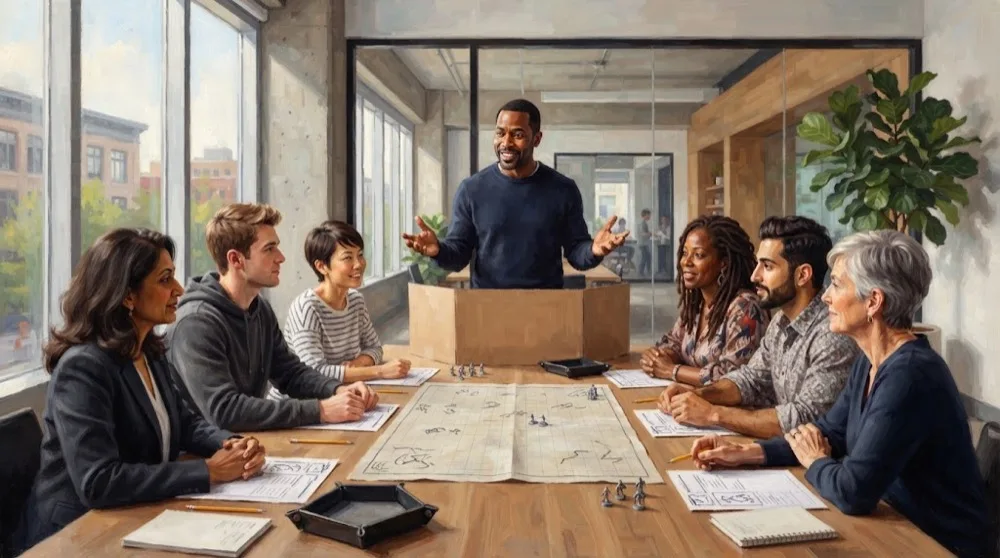
- One-shot adventures: A complete story in one sitting, such as a heist, a dungeon crawl or a haunted manor. It is also the best way to try a new GM before committing to more.
- Ongoing campaigns: A world that reacts to your choices across weeks or months, paid per session or on a recurring arrangement.
- Private events: Birthdays, bachelor and bachelorette parties, family gatherings and corporate team-building. The European tour GM gives a birthday guest of honor a few standout moments without handing them every win or sidelining the rest of the table.
- Learning sessions: An introduction for new players, or a refresher for someone returning after decades away.
- Parent-and-kid games: One of the booking types the StartPlaying co-founder lists. The European tour GM notes that kids' friend groups tend to land at five or six people, close to an ideal table size.
Hire a GM for Any System
D&D 5e is the most requested game, but hiring a GM covers far more than D&D. Paid GMs run all of these:
- D&D and d20 games: D&D 5e and older editions, Pathfinder 1e and 2e, and 5e variants such as Level Up: Advanced 5e. Pathfinder's tactical depth draws players who want crunch, so ask about rules fluency specifically.
- Horror and investigation: Call of Cthulhu, Delta Green and other GUMSHOE games. These need investigation pacing, dread without cheap scares, and a Sanity mechanic that feels meaningful rather than punitive. Look for GMs who list horror specifically.
- Narrative games: Blades in the Dark, Ironsworn, Ironsworn: Starforged and Powered by the Apocalypse games. The GM's job is more collaborative here, asking pointed questions and letting players answer them.
- World of Darkness: Vampire: The Masquerade, Werewolf: The Apocalypse and Hunter: The Reckoning, with political intrigue, personal horror and morally tangled characters. GMs of these games tend to have strong opinions about how they should feel, so check that those match yours.
- Science fiction: Mothership, Starfinder, Traveller and Eclipse Phase. Sci-fi GMs are rarer than fantasy ones.
- Old School Revival: Shadowdark, Old School Essentials, OSRIC and Dungeon Crawl Classics. Fast, lethal and focused on player ingenuity; find a GM who understands the design philosophy, not just the rules.
The StartPlaying co-founder describes D&D as the easy entry point that makes players willing to try lighter systems afterward, naming City of Mist, Monster of the Week and Blades in the Dark. If your group is D&D-only today, a one-shot in another system with a GM who knows it is a low-risk way to branch out.
Two GMs who both run 5e can deliver completely different tables. Match style, not just system: read how a GM describes their sessions (combat-heavy, narrative-focused, sandbox, rules-as-written) and compare that with what your group enjoys.
Game Master Online
Online play used to be the fallback when geography made a table impossible. For many groups it is now the first choice:
- No geography limit: the right GM for your group might live three time zones away.
- Production tools: virtual tabletops offer dynamic lighting, fog of war, animated maps and integrated audio that most home tables cannot match.
- Easier scheduling: nobody has to drive, so fewer sessions fall through.
- Scattered groups stay together: the European tour GM sees online play as what lets a friend group survive someone moving away, and what makes niche systems findable at all.
The Tools Online GMs Use
- Foundry VTT: self-hosted or cloud-hosted, with dynamic lighting, fog of war and a large library of system modules. The Facebook-group GM prefers it for online games partly because he can resize video feeds to see every player at once. Best for production-heavy campaigns.
- Roll20: browser-based, no install, with a large library of licensed modules and a long history with online players. He finds its video panels too small. Best for convenience and newer players.
- Owlbear Rodeo: lightweight and browser-based, focused on maps and tokens. Best for one-shots, OSR games and groups that want little overhead.
- Tabletop Simulator: a 3D physics sandbox where you pick up dice and move miniatures. Best for groups who miss the feel of a physical table.
- Discord and theater of the mind: voice only, no map. Best for narrative, horror and investigation games where a grid would get in the way.
How Online Sessions Differ From In-Person Play
Online GMing is its own skill set:
- Voice carries the table: Without body language, a clear and expressive voice does most of the work.
- Technical fluency: Maps, lighting, audio and connection problems handled without eating the session. A GM who fumbles setup for the first twenty minutes every week burns goodwill.
- Managing the visual layer: Revealing the map as players explore, moving NPC tokens and firing effects at the right moment.
- Turn-taking: Five or six people on a call talk over each other. The Facebook-group GM addresses players by name rather than asking the group, enforces one voice at a time, and sometimes names a "caller" to speak for the party. He also runs "popcorn initiative," where whoever just acted picks who goes next; he dislikes it, but his players love it and it cut the crosstalk.
- Chat as a record: Many online GMs use the text channel for descriptions, NPC lines and roll results.
- Screen fatigue: Energy drops on long video calls, so strong online GMs build in breaks and cut scenes before the table fades.
In-person play still has advantages online cannot copy: the physical table, the dice, the room. It is also more limited by who lives near you, and travel can change the price.
Finding the Right Online GM
- Platform expertise: Ask which virtual tabletops they actually run. Foundry and Roll20 are different skill sets.
- System depth: Make sure your system is one they run often, not one they have only heard of.
- Session length: Confirm what is standard for this GM and whether it fits your group's evenings.
- Time zone: Confirm where the GM is based and which hours they run.
- Video or audio only: Some GMs run on camera and some do not. Know your preference.
How to Evaluate a GM Before You Book
Game Master for Hire
When you compare listings for a game master for hire, look for evidence of the craft signals that separate a professional from someone who just likes D&D:
- Improvisation within structure: enough prep for direction, and the flexibility to adapt when the players do something unexpected.
- Calibration to the group: the same GM might run grim survival horror one Saturday and a comedic heist for a corporate group the next.
- Safety and table culture: Session Zero, lines and veils, the X-card and a plan for in-session conflict, used without making the table feel clinical.
- Pacing and scene economy: knowing when to cut, when to linger and when to hand a player the spotlight.
- Reading players: every group mixes tacticians, roleplayers, players who want a big moment every hour, and "spectators" who mostly enjoy watching. The Facebook-group GM and the European tour GM each name the spectator type independently, and the tour GM's test is simple: if someone keeps paying and keeps showing up, they are getting something out of it.
- Conflict handling: a plan for a disruptive player that does not derail the session or embarrass anyone. The European tour GM argues most friction is really a mismatch between the player and the scenario, which clear communication before the session prevents.
Read Reviews for Specifics
Star ratings without content are noise. A review that says "when our rogue went completely off-script in session three, the GM improvised a subplot that became the heart of the campaign" tells you more than "10/10 would recommend." Look for how the GM handled quiet players, off-script moments and campaign continuity. Be wary of reviews that all sound alike.
Check the Profile Depth
A strong profile describes a style in specific terms. "I run immersive campaigns" says little. "I specialize in political intrigue and character drama in low-magic settings" tells you whether this is your table.
Test Their Communication
Message the GM before you book. The speed and quality of the reply is a preview of how they will communicate during a campaign. Ask:
- "What does your Session Zero look like?"
- "How do you handle a player who is disruptive at the table?"
- "What do you do when the party goes completely off-script?"
A professional has thought about all three. Vague or evasive answers are your signal.
Start With a One-Shot
Before committing to a campaign, book a one-shot. In one sitting you see the GM's opening, NPCs, pacing, rules handling and ending, which is more information than any profile.
Find a Game Master
There are several places to find a game master, each with tradeoffs:
- TTRPG marketplaces: Listings, reviews and booking in one place. This is usually the fastest route because the information you need to compare GMs is structured for you.
- Reddit: Communities such as r/lfg carry real word-of-mouth signal, but nobody vets the posts and finding the right person takes time.
- Discord servers: System-specific and GM community servers often have looking-for-game or recommendation channels.
- Local game stores: Some stores run new-player nights or keep a list of local GMs. The European tour GM helps at his local shop's new gamers night in exchange for store credit.
- Organized play: Store and convention programs are cheaper and more structured, but you cannot customize the game.
If you are searching for a GM near you, a marketplace that shows format and location lets you choose between in-person tables close to home and online tables anywhere.
If you want to become a paid GM instead of hiring one, see the guide to becoming a professional game master, and for rate math, how to price your TTRPG sessions.
How Hiring Works on The Role Players Guild
The Role Players Guild's Game Finder lists tabletop games, including paid games run by GMs who set their own prices. Here is how booking works:
- Create a free account. You need one to message GMs and request a seat.
- Browse Find a Game. Filter by system, format (online, in person or play-by-post), session type (one-shot, campaign or open table), experience level, free or paid, price range, time zone, language, day, playstyle and session length.
- Read the GM profile. Profiles show the GM's bio, the systems they run, their rating and reviews, response rate and typical response time, and their upcoming and past games.
- Message the GM. Every game page has a message option. Use it for the questions above.
- Request a seat. Depending on the listing, the GM reviews and approves requests.
- Pay at checkout. For paid games, you pay the listed price once your request is accepted. The 10% platform fee comes out of the GM's payout, so the price you see is the price you pay.
- Play, then leave a review. Your review helps the next group find the right GM.

Ready to Find Your GM?
The best sessions are not accidents. They come from someone who prepared, who reads the table, and who has a backup plan for when the party goes off-script, because it will.
That is what you are hiring. Create your free account and start browsing game masters on The Role Players Guild.
Get the Free GM Session Kit
Session Zero template, recap format, and a pricing cheat sheet - everything you need to run a better table and, if you want, get paid for it.
No spam, unsubscribe anytime.


