
Introduction
This guide is part of the D&D 2024 Spell Guides hub.
The Wizard's advantage is not a fixed list of seven spells. It is a spellbook wide enough to prepare for the next problem. A daily list can cover one Concentration plan, one way to protect the Wizard's position, a reaction worth holding open, and the utility the rest of the party lacks.
That flexibility only works when the Wizard separates spells in the spellbook from spells prepared for the day. Rituals, copied spells, school features, and any current prepared-spell swap feature make it possible to specialize after the campaign provides information.
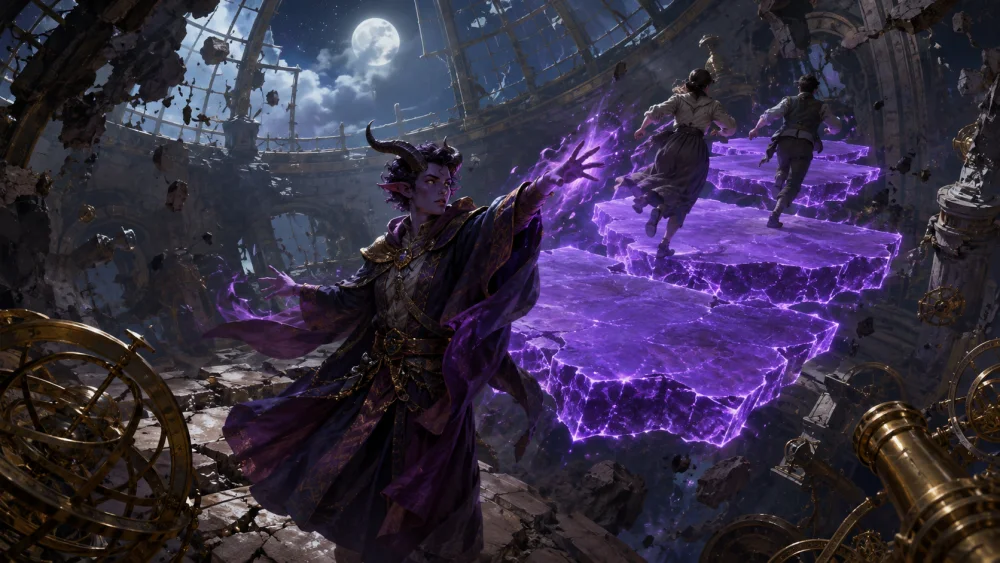
Wizard Preparation Priorities
Start with the next adventuring day. A dungeon with hostile casters makes Counterspell and Dispel Magic more valuable. A journey with vertical terrain may reward Fly or a ritual. A crowded combat map may reward control over damage. The prepared list should change when those assumptions change.
Next, reserve Concentration for one job. Hypnotic Pattern, Fly, Greater Invisibility, Polymorph, Hold Monster, a summon, and many other strong spells cannot coexist. Decide which result the party needs before initiative: stop a crowd, move beyond the map, protect an ally, or remove one priority target.
Finally, protect the Wizard's action economy. Misty Step can preserve an action when melee pressure arrives. Counterspell and Shield can use the reaction. If the reaction is held for counter-magic, an ordinary defensive trigger may not be worth spending it. Check the current class table and feature text for preparation limits, spellbook additions, Arcane Recovery, and any short-rest spell swap.
Cantrip Choices
| Cantrip | When It Helps | Notes |
|---|---|---|
| Fire Bolt | A ranged spell attack and fire damage fit the target. | Keep another option if fire resistance is common in the campaign. |
| Toll the Dead | A Wisdom-save damage option is preferable. | Its value depends on the current target and spell text. |
| Ray of Frost | Slowing a creature changes its ability to reach the party. | The speed reduction is the reason to choose it. |
| Shocking Grasp | Removing reactions or escaping melee is more useful than ranged damage. | It requires close positioning. |
| Mage Hand | The party needs to manipulate an object from a safer location. | Use the current limits for weight, distance, and control. |
| Minor Illusion | A plausible sound or image can create a distraction or concealment. | It relies on a workable plan and the GM's adjudication. |
| Prestidigitation | A minor sensory or environmental effect advances a social or travel scene. | It is utility, not a combat action. |
| Blade Ward | The current entry and the incoming damage make its defense worthwhile. | Compare the action cost with the turn the Wizard would otherwise take. |
Take damage cantrips that give different targeting options rather than assuming one is always better. A Wizard with a spell attack, a saving throw, and a useful utility cantrip has more answers than one with three versions of the same damage plan.
Hot Take: The best damage cantrip is often the one that targets the defense the enemy is not built to handle. Fire Bolt, Toll the Dead, and Ray of Frost create different choices. Treat the rider, range, and saving throw as part of the damage calculation.
Spells by Level
Level 1
| Spell | When to Prepare It | Tradeoff |
|---|---|---|
| Magic Missile | A reliable hit or a small amount of certain damage changes the turn. | It spends a slot for damage that may be unnecessary against a healthy target. |
| Shield | A triggering attack and the Wizard's current defenses make the reaction worthwhile. | It competes with every other reaction; check the current spell entry. |
| Identify | The party needs to understand an item or magical effect and has time for the casting. | Ritual or party access can remove the need for a daily preparation. |
| Sleep | Low-hit-point enemies can be removed before they act. | Its target and scaling rules can make it narrow outside early play. |
At first level, a Wizard should not carry every reaction spell by default. Choose the reaction most likely to matter in the campaign and leave room for the exploration, defense, or control spell the party actually needs.
Level 2
| Spell | When to Prepare It | Tradeoff |
|---|---|---|
| Misty Step | A grapple, hazard, blocked path, or lost firing line would waste the Wizard's action. | It uses the bonus action. |
| Mirror Image | Attacks are the main threat and the Wizard needs defense without Concentration. | It does not help against every kind of saving throw or area effect. |
| Invisibility | Infiltration, escape, or setup benefits from avoiding notice. | It uses Concentration and can end when the character acts. |
| Suggestion | The target and situation allow a plausible instruction to change the scene. | Its wording, target, and table interpretation matter. |
| Scorching Ray | Several attack rolls against one target are better than a control or utility spell. | It can miss and fire resistance is common. |
| Web | Terrain and a clustered group make area restraint more useful than direct damage. | It is Concentration and needs placement that does not hinder allies. |
Misty Step can turn a bad position into a useful action. Mirror Image leaves Concentration available. Those are different defensive jobs.
Level 3
| Spell | When to Prepare It | Tradeoff |
|---|---|---|
| Counterspell | Enemy spellcasting is likely to create a dangerous effect worth a reaction and slot. | Holding the reaction means giving up other reactions. |
| Fireball | Multiple enemies are clustered and allies can avoid the area. | Damage does not replace control when the enemy actions are the real problem. |
| Hypnotic Pattern | A group can be controlled and allies can avoid damaging affected creatures. | It is Concentration and depends on target type and saving throws. |
| Fly | Height, gaps, or flight changes the party's options. | It is Concentration and can create risk if it ends at the wrong time. |
| Slow | Several enemies depend on speed, reactions, or multiple attacks. | It needs favorable targeting and takes the Concentration slot. |
| Dispel Magic | Active magical effects are a recurring obstacle. | It may see no use on a day without magic to end. |
Level 4
| Spell | When to Prepare It | Tradeoff |
|---|---|---|
| Greater Invisibility | One ally can use repeated attacks or actions while remaining difficult to target. | It uses Concentration and needs the current spell text for its limits. |
| Banishment | One priority target is the reason the party cannot control the encounter. | It competes with the Wizard's other Concentration spells. |
| Polymorph | A willing ally needs a temporary form or an enemy can be made manageable. | It is Concentration and its available forms need review. |
| Dimension Door | The party needs long-range movement, access, or extraction. | It uses a significant slot outside the immediate fight. |
| Arcane Eye | Reliable scouting changes the party's route or plan. | It is an information spell; use it when the information will be acted on. |
Level 5
| Spell | When to Prepare It | Tradeoff |
|---|---|---|
| Wall of Force | Dividing the map, blocking reinforcements, or protecting allies changes the encounter. | It needs a map and target arrangement where a wall actually matters. |
| Hold Monster | One creature is the encounter's bottleneck and allies can exploit the condition. | It is a Concentration gamble against a saving throw. |
| Cone of Cold | A cone reaches more relevant targets than a sphere or another area shape. | It is immediate damage rather than control. |
| Scrying | Information about a creature, location, or object will change the next plan. | It is campaign utility and can fail. |
| Teleportation Circle | The campaign repeatedly uses established travel routes. | It rewards advance planning rather than an improvised fight. |
Levels 6-9
| Spell | When to Prepare It | Tradeoff |
|---|---|---|
| Globe of Invulnerability | Enemy spellcasters rely on effects within the current spell's threshold. | It is narrow against physical threats and needs the current entry. |
| True Seeing | Illusions, invisibility, or planar deception are expected. | It is expensive when those effects are absent. |
| Disintegrate | A high-damage single-target spell is the right answer and the target's save is favorable. | It can fail and does not replace broad control. |
| Forcecage | Isolating a target or section of the map wins the encounter. | It is a high-level resource; verify the target's escape options. |
| Simulacrum | The campaign supports a costly long-term project and the table is prepared to manage its consequences. | It has major time, material, and campaign-management costs. |
| Mind Blank | Psychic or mental influence is an expected threat over a long day. | It can be excessive on a day without that threat. |
| Maze | One dangerous creature must be removed while the party handles the rest. | It is a high-level single-target plan, not a response to a crowd. |
| Wish | Replicating an allowed lower-level spell or pursuing a GM-approved high-stakes result is the right use of a ninth-level resource. | The freeform use has real risks and needs table agreement. |
| Time Stop | The Wizard can use setup turns without ending the effect under the current text. | It is not a direct way to remove enemy turns without preparation. |
| Foresight | A predicted major encounter justifies a long-duration buff. | It is expensive if the target will not face meaningful danger. |
At high levels, prepare a spell for the fight or campaign problem you expect rather than chasing a generic ceiling. A wall, prison, scouting spell, defense, travel option, and ninth-level effect each solve different failures.
Build Your D&D 2024 Character
The D&D 2024 character builder is live - build a Beastkin, a Kobold, or whatever your table is missing, free, right now.
Start BuildingStrong Prepared Spells
These are common preparations when their conditions apply:
- Misty Step: A bonus-action answer when position would otherwise cost the Wizard's action.
- Counterspell: A reaction plan for campaigns with dangerous enemy casters.
- Dispel Magic: A response to recurring magical effects and obstacles.
- Hypnotic Pattern or Slow: A Concentration plan for a group of enemies.
- Fly or Greater Invisibility: A Concentration plan for movement or one ally's sustained contribution.
- Wall of Force: A map-control tool when division changes the encounter.
- Scrying or Arcane Eye: Information tools when scouting changes the party's next decision.
Rules and Feature Checks for 2024
Do not build a Wizard around a remembered version of a spell. Read the current entries for these rules before preparing them:
- Shield and reaction spells: Confirm trigger, duration, and whether the reaction will be needed for Counterspell or another effect.
- Memorize Spell and Arcane Recovery: Confirm the feature's timing, limits, and rest requirements before counting on an in-day adjustment.
- Control spells: Check target restrictions, Concentration, saving throws, and the condition-ending language for Hypnotic Pattern, Banishment, Polymorph, Hold Monster, and Forcecage.
- School features: Confirm how the current school feature interacts with a spell before treating a thematic spell as a mechanical default.
School-Specific Preparation
Abjuration
Prioritize defenses and counter-magic when the current school features reward them. Shield, Counterspell, Dispel Magic, and Globe of Invulnerability can each fit this plan, but their exact interaction with a ward or school feature requires the current class text.
Divination
Information spells become more important when the party will act on the information. Scrying, Arcane Eye, True Seeing, and Foresight can support a Divination Wizard, while the current feature wording decides which rolls or outcomes can be influenced.
Evocation
Area damage fits when the party needs enemies to lose hit points rather than actions. Fireball, Scorching Ray, Cone of Cold, and Disintegrate are candidates, but spell shape, target placement, and current school-feature wording should determine the choice.
Illusion
Illusions need a concrete scene goal: conceal movement, distract a guard, create a false threat, or protect an escape. Minor Illusion, Major Image, Invisibility, Greater Invisibility, and other illusion spells work best when the party has a follow-up rather than when they are cast for their own sake.
Conjuration
Movement, access, and summoned support are the usual reasons to prepare conjuration magic. Misty Step, Dimension Door, Teleportation Circle, Plane Shift, and summon spells should be chosen according to the campaign map and the party's capacity to protect a Concentration-based summon.
Narrow Spells That Can Still Be Right
Burning Hands: It can matter at very low levels or in close quarters, but the Wizard must safely use its short range.
Melf's Acid Arrow: It is an option for a target and damage profile where its current entry is useful, not a default second-level preparation.
Phantasmal Force: It depends on a creative, plausible illusion and a target that cannot easily expose it.
Grease: It rewards a choke point, a poor enemy save, and party members who can exploit the terrain.
Otto's Irresistible Dance: It needs a priority target and a fight where its control effect is worth a high-level slot. Compare it with other single-target options first.
Bottom Line
The Wizard benefits when the spellbook stays broad and the prepared list is narrow for a reason. Prepare for the map, enemy type, party gaps, and rest schedule. Assign Concentration and reaction use before combat, then use ritual and spellbook access to avoid carrying a permanent list of situational spells.
Arcana Unleashed Spell Access
The supplied Arcana Unleashed spell table gives Wizards thirty verified entries: Battle Familiar, Disruptive Tune, Dueling Ground, Uncertain Footing, and Wither and Bloom (2nd); Catnap and Inflict Doubt (3rd); Distorted Distance and Festering Blast (4th); Enervation, Grave Ground, Mordenkainen's Lucubration, Negative Energy Flood, Spirit Lantern, and Waves of Exhaustion (5th); Aura of Evasion, Fractured Awareness, Power Word Pain, Reweave Fate, and Transfix (7th); Entrancing Mirrors, Illusory Dragon, Iron Body, Lightning Ring, and Moment of Prescience (8th); and Detonate, Hindsight, Invulnerability, Vision of Elapsing Eons, and Wail of the Banshee (9th).
Breadth is not a preparation plan. A copied spell still needs a clear problem to solve and a place in the day's prepared list. Check the current source entry and your GM's source policy first, then use the D&D 2024 Spell Guides hub for the shared access map or the Arcana Unleashed overview for sourcebook context.
Heroes of Faerun Spell Access
Forgotten Realms: Heroes of Faerun adds fifteen verified Wizard entries to the supplied corpus: Wardaway and Spellfire Flare (1st); Death Armor, Deryan's Helpful Homunculi, and Elminster's Elusion (2nd); Cacophonic Shield, Conjure Constructs, Laeral's Silver Lance, and Sylune's Viper (3rd); Spellfire Storm (4th); Alustriel's Mooncloak and Songal's Elemental Suffusion (5th); Elminster's Effulgent Spheres (6th); Simbul's Synostodweomer (7th); Holy Star of Mystra (8th); and Blade of Disaster (9th).
Treat those as setting expansion options, not automatic replacements for the core list. A Wizard can use a copied spell only when it fills a defined daily job, and the campaign still needs the GM to allow the source.
Related D&D 2024 Class Guides
For the full Wizard class breakdown, including ability scores, subclasses, feat choices, and level-by-level features, see the Wizard Class Guide.
Want a GM who runs this system with deep rules knowledge? Find a professional game master who knows the rules cold.
Other D&D 2024 Spell Lists
Each 2024 class has its own defined spell list, so comparing lists is the fastest way to see what a multiclass dip actually buys you, or what you give up choosing one caster over another: Artificer, Bard, Cleric, Druid, Paladin, Ranger, Sorcerer, Warlock.
Start from the D&D 2024 Spell Guides hub for what changed across every list in 2024.


