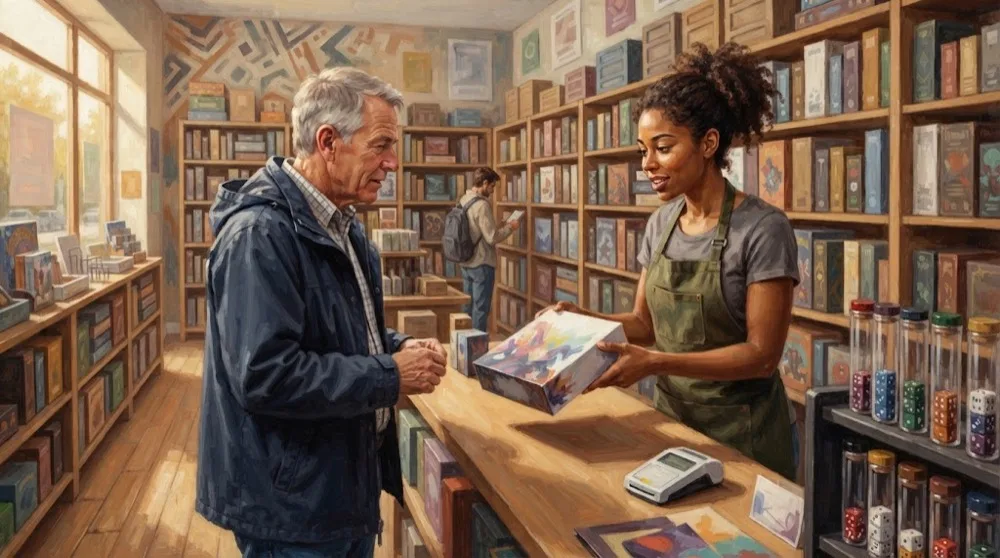
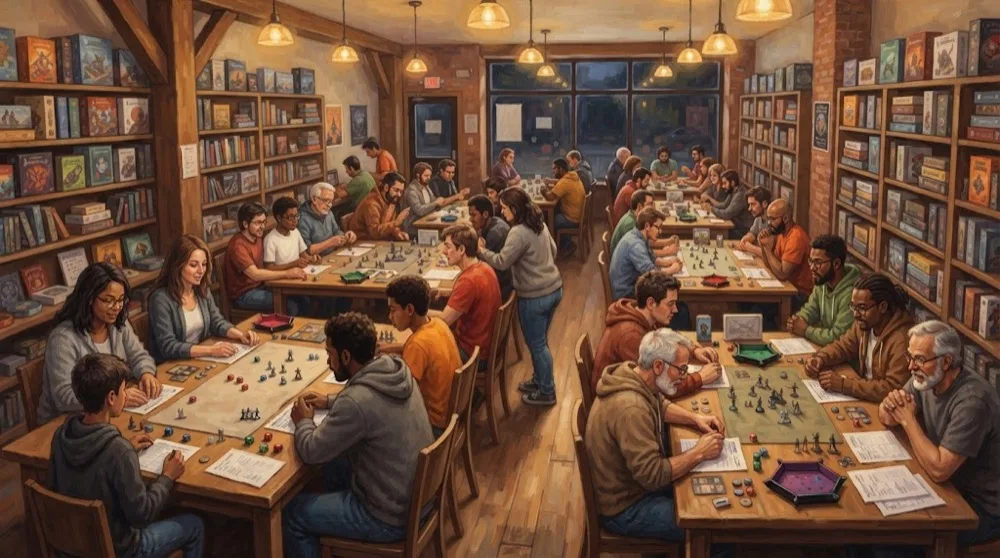
Spend time in any tabletop RPG community, whether that's Reddit, Discord, actual play podcasts or convention panels, and you'll run into the abbreviation FLGS. It stands for "friendly local game store," and what the term covers tells you a lot about how the tabletop community sees itself.
The label describes a cultural role as much as a type of shop. Knowing what an FLGS is, and what makes a good one good, helps you find the right community for your table.
The Definition: More Than a Store With Games
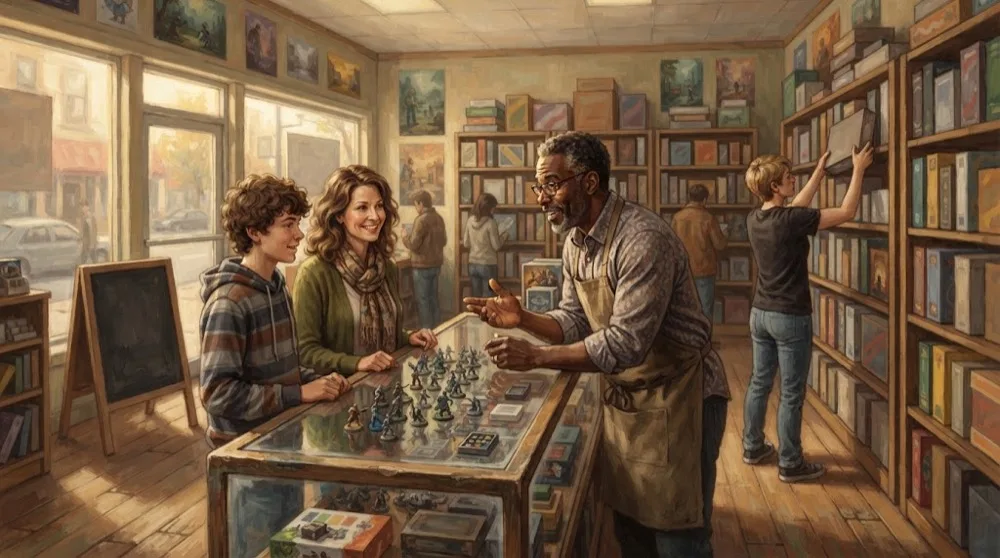
A friendly local game store is an independent, brick-and-mortar retailer specializing in hobby games: tabletop RPGs, miniature wargames, trading card games, board games and the accessories that go with them. The word "friendly" describes the culture of the space more than the staff (though it often fits them too). That culture means open tables, community events, demo nights and a shared understanding that the store is a meeting place as well as a shop.
Specialty stores usually carry a deeper catalog than toy stores, big-box retailers or online sellers, but selection isn't the main difference. What happens inside is. Events run. People play. Groups form. Regulars get to know staff who remember what they like. A new player can walk in knowing nothing and leave two hours later with a first character sheet.
That last part matters. Plenty of players first played in a store. One professional DM, who went on to co-found the paid-GM platform StartPlaying, told us in an interview that he found D&D in a comic book shop, where an employee ran a game for him and a friend. He started saving for the rulebook after that.
The Culture of the FLGS
It's a Third Place
The sociologist Ray Oldenburg coined the term "third place" in his 1989 book The Great Good Place: the informal gathering spots that sit outside home and work, such as cafes, bars and barbershops, where people meet regularly and by choice. For many tabletop players, the FLGS fills that role. It's where part of their social life happens, where they meet people they'd otherwise never cross paths with, argue about system design, borrow paint and mark the end of a campaign.
Not every game store gets there. The best ones do, for their regulars, and that's what the "friendly" in FLGS points at.
The Social Contract
Walk into a well-run FLGS and there's an unwritten set of rules that most people pick up within a few visits:
- You don't have to buy something to be welcome, but regulars who buy from the store keep it open for everyone
- You ask before touching miniatures that aren't yours
- You're patient with new players, even when they slow the game down
- You share rules knowledge and system recommendations freely
- You leave the table the way you found it
Nobody writes it down. The culture passes on through behavior, and people who've been in the hobby a while follow it without thinking.
The Hobby Is the Point
A good game store serves the hobby first. Staff who suggest you wait on a purchase that's out of your budget this week, or point you to a cheaper starter option, aren't unusual in a well-run FLGS. That's uncommon enough in retail to stand out.
Why the Community Values Local Stores Over Amazon
Players argue about this in the TTRPG community, so it deserves a straight answer.
The services Amazon doesn't provide
Amazon sells you the Player's Handbook. It doesn't run the Wednesday night session. It doesn't have a GM on staff who can explain why you might start with the Starter Set before buying the full rules. It doesn't have a table where you meet the three other players who become your regular group, or any physical space for the hobby at all.
The price gap is real but varies
Many FLGSs sell close to list price, while Amazon often discounts. The gap depends on the product and the week. For new players on a tight budget it matters, so the practical answer is to buy what you need to get started and, as you get more invested, move as much of your spending to the local store as you can afford.
What local purchasing pays for
When you buy from your FLGS, the money covers the event space, the staff who run game nights, the demo copies for newcomers and the upkeep that makes the store more than a shelf of products. The game night depends on the retail side paying the rent. Players who never buy anything at the store they play in are relying on the players who do.
Finding things you weren't looking for
A physical store does something a browser tab doesn't. You notice a box you've never heard of, the person behind the counter mentions that it plays a lot like a game you already love, and you end up with a game no recommendation algorithm would have shown you. It's hard to put a number on, and easy to undervalue until it has happened to you a few times.
What to Expect on Your First Visit to an FLGS
The Physical Space
Many FLGSs are smaller than people expect. Shelving is dense and the layout isn't always obvious at first. That's normal. Give it five minutes of browsing and the organization will make sense.
A separate gaming area, whether a back room, an upstairs space or a partitioned part of the floor, is a good sign. It means the store has set aside room for play as well as retail.
The Staff
Good game store staff know their inventory well and like helping you find the right game for your group. Pushy selling is considered bad form in most hobby stores.
Ask questions. "I've played D&D once and I want to know what else to try" is an ordinary thing to say, and you'll get a useful answer.
If There's a Session Running
Don't interrupt an active session. Watch from a respectful distance if you're curious, but give players their space. After the session wraps, introduce yourself, say you're new and looking for a table. It's one of the most common conversations in any FLGS, and it usually goes well.
How to Find Your FLGS
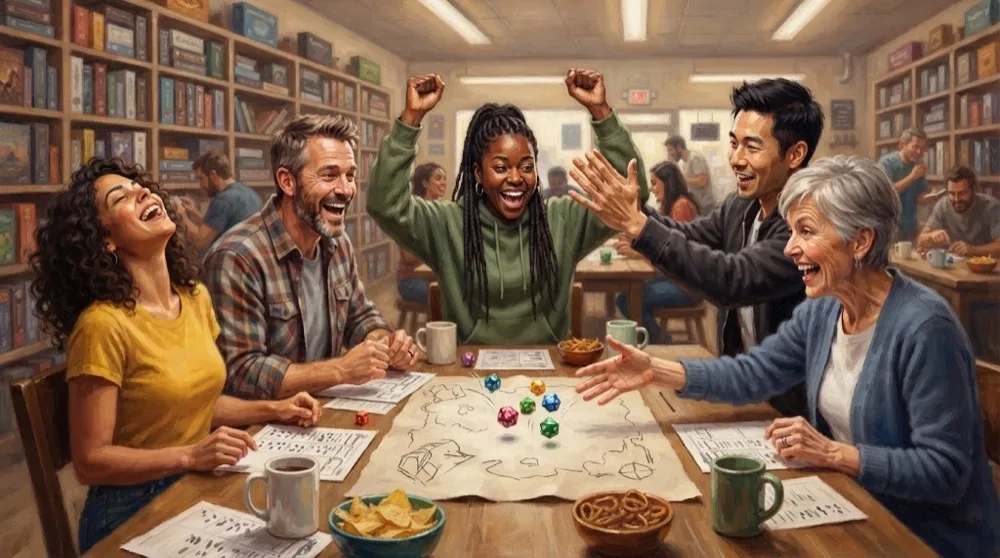
The quickest route is the Role Players Guild store finder. Search by location, turn on "Has upcoming events" to skip stores that only sell the books, and open a store's page to see what it has scheduled. Create a free account to save stores you want to keep an eye on.
If the store you play at isn't listed yet, anyone with an account can suggest it, and owners can claim an existing page to add their events.
List Your Game Store
Get your store in front of local players looking for a place to play. Free to list, takes a few minutes.
List Your StoreFor a fuller walkthrough of how to find, judge and visit a game store for the first time, see:
- RPG Stores Near Me - How to find and judge a store near you, with the questions to ask before you go
- Find a Game Store - The hub with the store finder and every store guide
The Short Version
An FLGS is a local game store that treats its role as a community space seriously. It's where the hobby happens in person: where you play, meet other players, get honest recommendations and build a routine that keeps you in the hobby for years.
You can buy all your games online. The game nights, the regular group and the GM who remembers your character's backstory only happen somewhere with tables, chairs and a store that chose to put them there.