Introduction
Dragonlance: Shadow of the Dragon Queen hands D&D 5e 2014 tables a continent at war: Ansalon, under siege from Takhisis's returning Dragon Armies, defended by two organized factions with centuries of history and their own internal politics. One new race, one new sorcerer subclass, two feat-granting backgrounds, and nine feats build a character with real ties to that conflict - and a campaign-wide bonus-feat system hands every character in the setting extra feats regardless of what else they picked.
The setting frame is straightforward even where the specifics run deep. Centuries ago the gods left Krynn after a catastrophic betrayal called the Cataclysm, and their return sets this book's War of the Lance in motion as Takhisis, the Dragon Queen, moves to conquer the continent through her armies of draconians and dragon-mounted knights. Standing against her are the Knights of Solamnia, a chivalric order bound by an Oath and an unamendable Measure, and the Mages of High Sorcery, three robed orders who answer to the three moons of Krynn. Every section below eventually connects back to that conflict.
Players start with character options, since the bonus-feat system changes the feat math for every character at the table. DMs start from the opposite end: decide whether the campaign centers on the Knights, the Mages, both, or neither, then work outward from there.

Character Options
Four options have their own dedicated guides for a deeper build breakdown: Kender and Lunar Sorcery as full character options, plus Squire of Solamnia and Initiate of High Sorcery as the two gateway feats. What follows is everything else: the bonus-feat subsystem, both backgrounds, and all nine feats compared.
The Bonus-Feat System: The Book's Biggest Change to Character Math
This is a subsystem with no equivalent anywhere else in this library, and it applies to every character regardless of background.
1st-level bonus feat. If you took the Knight of Solamnia or Mage of High Sorcery background, you get that background's named feat - Squire of Solamnia or Initiate of High Sorcery. Any other background instead grants a free choice of Skilled or Tough (both PHB feats).
4th-level bonus feat. Every character gets a second bonus feat here, chosen freely from the 1st-level list or from a longer list: Adept of the Black Robes, Adept of the Red Robes, Adept of the White Robes, Alert, Divinely Favored, Knight of the Crown, Knight of the Rose, Knight of the Sword, Mobile, Sentinel, or War Caster. This is granted regardless of background, including to a character who already took a feat-granting background at 1st level - all prerequisites for the chosen feat still apply.
The practical effect: a Fighter with a Soldier background who never touches a Dragonlance-specific option still ends up with a free Skilled or Tough at 1st level and a real feat choice at 4th, on top of every normal Ability Score Improvement their class already grants. Every character in this setting is running ahead of the standard feat curve.
The Two Backgrounds
| Background | Skills | Feature |
|---|---|---|
| Knight of Solamnia | Athletics, Survival | Grants Squire of Solamnia as your 1st-level bonus feat, plus free lodging at any Solamnic fortress |
| Mage of High Sorcery | Arcana, History | Grants Initiate of High Sorcery as your 1st-level bonus feat, plus free lodging at any occupied Tower |
Both backgrounds work through the bonus-feat system above rather than granting a separate feat on top of it - taking one of these backgrounds is what determines which feat your 1st-level bonus actually is. Each also replaces the standard PHB Trinkets roll with its own setting-flavored table.
Knight of Solamnia fits a character training with or sworn to the knighthood, with Athletics and Survival skewing toward a physically capable frontline character who can also live off the land during a campaign. For the full breakdown of Squire of Solamnia and which of the three Knight follow-ons it should point toward, see the dedicated guide.
Mage of High Sorcery fits a character trained by one of the three robed orders, with Arcana and History skewing toward a scholarly build. For the full breakdown of Initiate of High Sorcery and the three-moon choice, see the dedicated guide.
The Three Knight Feats, Compared
All three require 4th level and Squire of Solamnia, and all three grant an Ability Score Increase plus a bonus-action ally-support benefit - the only three feats in this book that grant an ASI at all.
Knight of the Crown - +1 Strength, Dexterity, or Constitution. Commanding Rally lets one ally within 30 feet make a free weapon attack as a reaction when you command them, with bonus damage on a hit. Uses equal your proficiency bonus per long rest. Best for a build that wants to boost a party member's damage output rather than its own.
Knight of the Rose - +1 Constitution, Wisdom, or Charisma. Bolstering Rally grants temporary hit points to a creature you choose (including yourself), scaled by proficiency bonus and the increased ability's modifier. The safest generalist pick for durability across a full adventuring day.
Knight of the Sword - +1 Intelligence, Wisdom, or Charisma. Demoralizing Strike forces a frightened save on a weapon hit, with a consolation disadvantage on the target's next attack even on a success. The strongest single-target control option of the three.
Order membership is fluid: a character belongs to only one order at a time, but keeps every Knight feat already acquired when they change orders, so picking Crown first and Sword later is entirely possible within the fiction.
The Three Adept Feats, Compared
All three require 4th level and Initiate of High Sorcery tied to the matching moon, and none grants an Ability Score Increase - unlike the Knight feats above, these trade the stat bump for spell access and a passive combat benefit.
Adept of the Black Robes (Nuitari) - Ambitious Magic grants one free 2nd-level enchantment or necromancy spell once per long rest. Life Channel lets you expend Hit Dice to add bonus damage when a target within 60 feet fails a save against your damaging spell. Best for a build willing to spend a limited resource for reliable extra damage.
Adept of the Red Robes (Lunitari) - Insightful Magic grants one free 2nd-level illusion or transmutation spell once per long rest. Magical Balance turns any d20 roll of 9 or lower into a 10 on an attack roll or ability check, uses equal to your proficiency bonus per long rest. Best for a build that wants a consistent floor on rolls rather than burst potential.
Adept of the White Robes (Solinari) - Protective Magic grants one free 2nd-level abjuration or divination spell once per long rest. Protective Ward is a reaction that expends a spell slot to reduce damage to you or a nearby creature by a die roll scaled to the slot's level plus your spellcasting modifier. Best for a build that wants active damage mitigation on demand.
Divinely Favored: The Alignment-Keyed Option
Requires 4th level and Dragonlance Campaign - no Initiate of High Sorcery prerequisite, so this one is open to any character. Grants one cleric cantrip, the augury spell, and one 1st-level spell keyed to your alignment: Good gets a cleric spell, Neutral gets a druid spell, Evil gets a warlock spell. The chosen 1st-level spell and augury are each castable free once per long rest. No Ability Score Increase.
This is a single-feat spellcasting option rather than a branch with its own follow-ons, closer in shape to Magic Initiate than to the Knight or Adept chains. It's the strongest pick for a non-spellcaster who wants a small toolkit of magic without committing to the Mages of High Sorcery path at all.
Build Your Dungeons & Dragons (5e, 2014) Character
The Dungeons & Dragons (5e, 2014) character builder is live - build a Beastkin, a Kobold, or whatever your table is missing, free, right now.
Start BuildingKnights of Solamnia
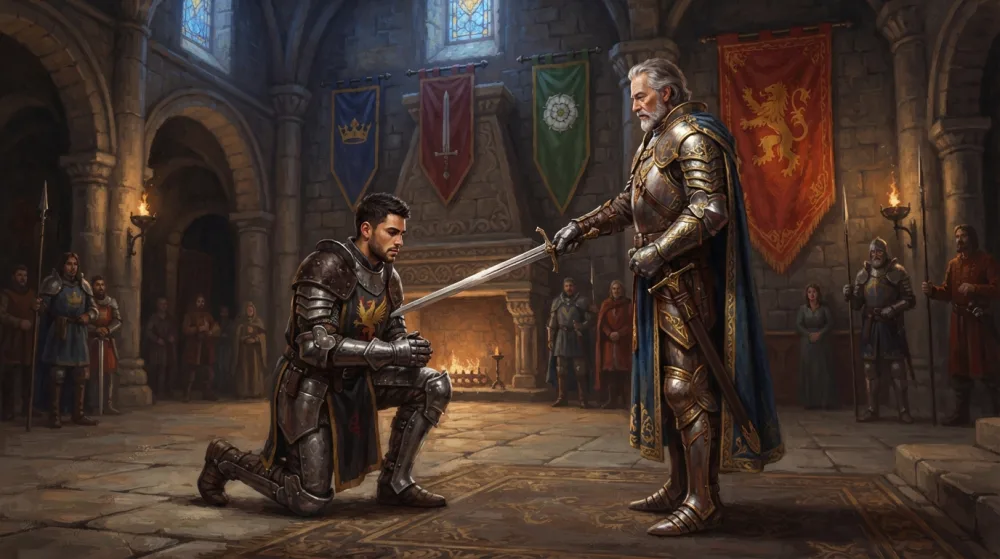
The Knights of Solamnia are the closest thing this book has to a default heroic faction: a chivalric order bound by an Oath and a rulebook nobody currently has the authority to change. That last detail isn't a footnote - the absence of a sitting Grand Master is the single fact that explains most of the knighthood's internal tension.
The Oath and the Measure
Founded by Vinas Solamnus and inspired by three gods of good, the knighthood is governed by two things: the Oath, a short vow ("Est Sularus oth Mithas" - "My Honor Is My Life"), and the Measure, thirty-seven volumes of specific conduct rules covering everything a knight might encounter. The Oath is a principle; the Measure is the rulebook that translates that principle into concrete behavior in situations both mundane and extraordinary.
No Grand Master currently sits. Without one, nobody holds the authority to overrule or update the Measure - which means every volume of that thirty-seven-volume code stays binding exactly as written, whether or not it still fits the war Ansalon is actually fighting. This is the source of the knighthood's central internal feud: traditionalists insist the Measure be followed to the letter regardless of circumstance, while reformers argue that a code frozen in place by an empty leadership seat is exactly the kind of rigidity that gets knights and the people they protect killed. Neither side has the standing to settle the argument, because settling it is precisely what a Grand Master would be for.
For a DM, this is a built-in campaign hook available at any table running the Knights of Solamnia: a party knight forced to choose between the letter of the Measure and the practical needs of a mission faces a dilemma the book itself leaves unresolved, not a contrived one.
The Three Orders
Each order is led by an elected High Knight and answers to its own patron god.
| Order | Patron God | Virtue |
|---|---|---|
| Knights of the Crown | Habbakuk | Loyalty and obedience. Where most knights begin their training. |
| Knights of the Sword | Kiri-Jolith | Heroic honor and courage, reverence for the true gods. Often requires completing a heroic quest. |
| Knights of the Rose | Paladine | Honor tempered by wisdom and justice - the order's highest ideal. Most members rise through the Sword first. |
Knights of the Crown is explicitly where most knights begin their training, emphasizing cooperation and obedience within the chain of command - the entry point for a new knight rather than a permanent identity for most members.
Knights of the Sword demands heroic honor and courage, and often requires the aspiring knight to complete a heroic quest before advancement - the order for a character whose story is built around proving themselves through action.
Knights of the Rose represents the knighthood's highest ideal: honor tempered by wisdom and justice rather than raw valor alone. Most members reach the Rose only after time in the Sword, making it the order for a character arc that starts with courage and matures into judgment.
A knight belongs to only one order at a time, but the book is explicit that changing orders doesn't cost you anything mechanically: you retain every Knight feat you've already acquired, no matter which order granted your training in the fiction.
How Order Membership Interacts With the Feat Chain
Squire of Solamnia is the single gateway feat for the entire knighthood - it doesn't require picking an order, and neither does the Knight of Solamnia background that usually grants it. The order choice happens later, and mechanically, at the moment you select one of the three 4th-level follow-on feats. Taking Knight of the Crown as your follow-on is what represents your character formally joining that order in the fiction, not a separate character-creation decision.
Because you keep every Knight feat you've taken even after switching orders, nothing stops a character from representing the traditional Crown-to-Sword-to-Rose career path mechanically: take Knight of the Crown at 4th level while training under the Crown, then later - through further Ability Score Improvements, since the book doesn't provide a mechanism to swap an already-taken feat - simply narrate a transfer to another order while keeping Commanding Rally active.
The Knights work best for a player who wants a character wrestling with institutional loyalty under real strain: an order bound by an unchangeable rulebook, with no authority currently empowered to fix what's broken in it.
Mages of High Sorcery
The Mages of High Sorcery organize every trained spellcaster on Krynn into three orders bound by one shared, lethal rite of passage. It's worth being direct about the Test's stakes first, because it's the strongest campaign hook this book offers and the detail most likely to get softened by a reader assuming "test" means something survivable by default.
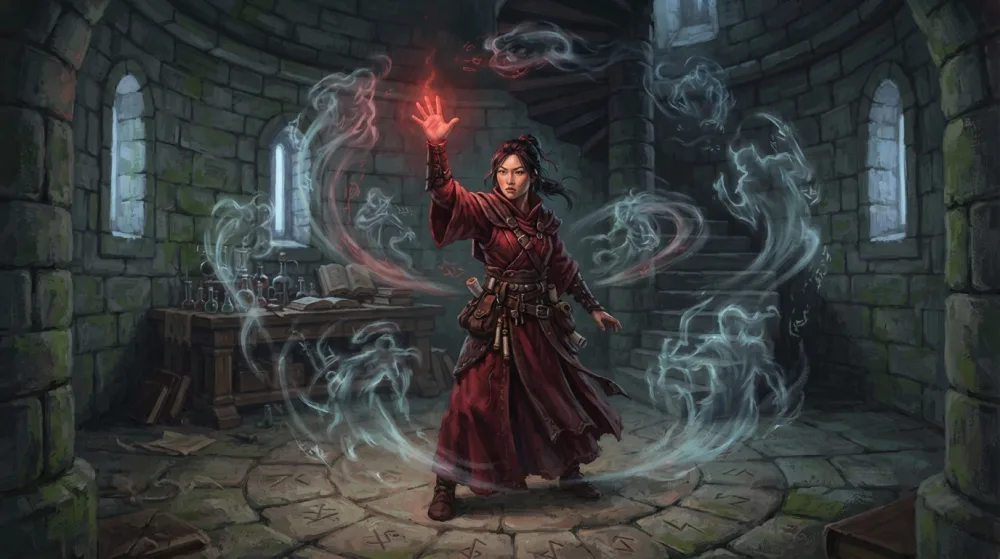
The Test of High Sorcery: Failure Means Death
Full membership requires passing the Test - and the book is explicit that this is not a graded exam with a passing threshold. There's no judge scoring performance, no partial credit for a strong showing, and no built-in second chance. The Test demands the applicant's most advanced magic in service of confronting them with real moral and emotional choices, and throughout it, illusion is indistinguishable from reality - meaning an applicant can't rely on recognizing what's fake to navigate it safely.
Failure means death. That's the entire consequence structure. A spellcaster who survives has passed; one who doesn't, hasn't, and there's no third outcome described. For a DM, this makes the Test one of the strongest set-piece moments the book offers - a character's Test can be run as a high-stakes scene with its own narrative weight, not a formality to skip past on the way to a robe color.
The Three Robed Orders
Each order is keyed to one of Krynn's three moons and its patron god, and each represents a distinct philosophy about why magic should be used at all - not a simple good/neutral/evil split.
| Order | God / Moon | Reason for Using Magic |
|---|---|---|
| White Robes | Solinari (white) | Only to make the world better. |
| Red Robes | Lunitari (red) | Balance - help others when it suits them, enrich themselves as they desire. |
| Black Robes | Nuitari (black) | Own ambitions first, then the order, then the Conclave. |
White Robes hold the narrowest mandate of the three: magic exists to improve the world, full stop. This is the closest thing to a purely altruistic order, and it fits a character whose spellcasting serves others rather than personal gain.
Red Robes occupy real moral middle ground rather than a watered-down version of White - the order's actual doctrine is that a mage should help others when it's convenient and pursue their own enrichment when it isn't, without treating either impulse as a betrayal of the order's principles. This is the order for a character who doesn't want their spellcasting locked into either an always-selfless or always-selfish frame.
Black Robes are not automatically villains, despite the framing a reader might expect from the color alone. Their stated priority order - self first, order second, Conclave last - describes an ambition-driven philosophy, not an evil one by definition. A Black Robe pursuing personal power while still nominally serving the order's interests is playing the philosophy straight, not defecting from it.
For which Adept feat each moon unlocks, see The Three Adept Feats above and the Initiate of High Sorcery guide.
The Conclave and the Towers
The Mages of High Sorcery are overseen by the Conclave, the body that governs all three orders jointly. Five Towers of High Sorcery were originally built across Krynn; three were destroyed in the Cataclysm, the Tower of Palanthas stands cursed and empty, and only the Tower of Wayreth still functions, now serving as the order's headquarters. That concentration matters for a campaign: with only one operating Tower left, nearly every major event in the order's institutional life - a Test, a Conclave ruling, a renegade trial - has a real reason to converge on the same location.
Renegades: Leaving Doesn't Mean Villainy
Any spellcaster who leaves the order, is expelled from it, or survives a failed Test becomes a renegade - forbidden to practice magic, and subject to being reported and opposed by order members who remain duty-bound to enforce that ban. The book doesn't frame every renegade as a villain by default: the label describes a legal and organizational status, not a moral judgment. A White Robe expelled over a bureaucratic dispute and a Black Robe who left after a personal crisis of conscience are both renegades under the exact same rules, which makes a renegade NPC a flexible tool for a DM rather than an automatic antagonist.
Hot Take: Don't let a character join the Mages of High Sorcery between sessions. Failing the Test means death, with no partial credit and no second attempt, which makes it the rare initiation the rules themselves treat as a set piece. Narrating it past in a sentence trades the strongest scene in the book for a line on a character sheet.
Gods of Krynn
Twenty-one gods across three pantheons watch over Krynn, and the good gods' framing is the detail worth understanding before anything else: their stated highest pursuit isn't defeating evil, it's preserving mortal choice - a philosophy distinct enough from most D&D pantheons to shape how a DM should run divine intervention here.
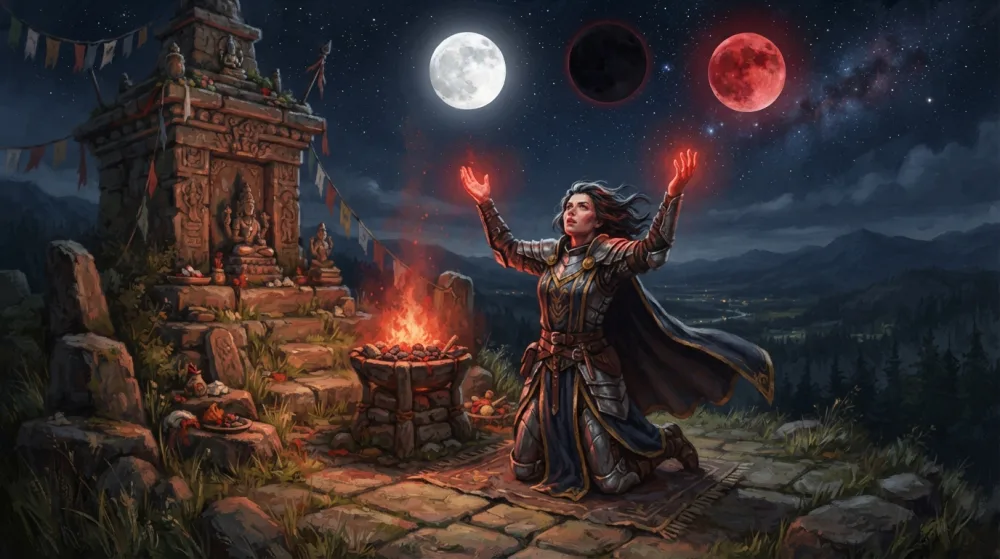
Preserving Mortal Choice: What Sets Krynn's Good Gods Apart
The gods of good oppose the evil gods' attempts to rule the world, but their goal is explicitly not the eradication of evil or its gods. Instead, their highest pursuit is preserving mortal choice - even carrying the sorrowful knowledge that mortals sometimes choose ruinous paths anyway. That's a meaningfully different divine mandate than "defeat evil," and it explains why Krynn's good gods don't simply intervene to erase every threat: doing so would remove the choice they're supposed to be protecting.
For a DM, this framing is a useful constraint on divine intervention. A good-aligned god on Krynn who could stop a disaster outright but doesn't isn't being negligent - they're honoring the same principle that defines their entire pantheon.
The Gods of Good
| Deity | Domain |
|---|---|
| Paladine | Father of Good, Master of Law - leads the good gods |
| Branchala | Music, poetry, the inner beauty of living things |
| Habbakuk | Animal life, the sea, balance of nature |
| Kiri-Jolith | Righteous war |
| Majere | Meditation and discipline |
| Mishakal | Compassion, healing, love |
| Solinari | Good magic - patron of the White Robes |
Paladine, leader of the good gods, is known as the Father of Good, the Master of Law, and the Platinum Dragon - and on other worlds of the multiverse, as Bahamut. He sometimes walks Krynn in the guise of Fizban, a befuddled old human mage in faded robes. Kiri-Jolith is particularly revered by the Knights of the Sword. Solinari patrons the White Robes through the white moon of Krynn.
The Gods of Neutrality
| Deity | Domain |
|---|---|
| Gilean | Knowledge - nominal leader of the neutral gods |
| Chislev | The rhythms of life, nature |
| Lunitari | Neutral magic and illusion - patron of the Red Robes |
| Reorx | Creation, inspiration, artisanship |
| Shinare | Wealth, industry, commerce |
| Sirrion | Alchemy, transformation, flame |
| Zivilyn | Wisdom across all times and places |
The neutral gods vary widely in how active they are: some, like Gilean, mostly observe and record; others, like Sirrion, embody passionate, impulsive change. Reorx, god of creation, is credited with forging the gnomes, dwarves, kender, and Krynn itself - kender are, in the setting's own cosmology, a transformed offshoot of that same creative act. Lunitari patrons the Red Robes through the red moon.
The Gods of Evil
| Deity | Domain |
|---|---|
| Takhisis | Dragon Queen, Queen of Darkness - leads the evil gods |
| Chemosh | Undeath and false redemption |
| Hiddukel | Greed, treachery, and ill-gotten wealth |
| Morgion | Disease and decay |
| Nuitari | Evil magic - patron of the Black Robes |
| Sargonnas | Flame, vengeance, and wrath |
| Zeboim | The sea's destructive aspect - storms and dangerous sea creatures |
Takhisis, leader of the evil gods, is known as the Dragon Queen and the Queen of Darkness - and on other worlds, as Tiamat. She rules as queen of chromatic dragons and tempts mortals with offers of dominance over others; her true form is a five-headed dragon, though she can appear as a powerful human warrior with gleaming armor and long black hair. She was barred from Krynn before the Cataclysm and found her chance to return in the centuries since - the same return this book's War of the Lance is fought over.
Chemosh tempts followers with a promise of immortality that turns out hollow: his worshipers may live forever, but their bodies still decay and putrefy regardless. Hiddukel accepts worship from criminals and unscrupulous traders who chase ill-gotten wealth, though his true goal is collecting souls rather than riches. Morgion is solitary even among the evil gods, brooding alone in his fortress and pursuing his own schemes without consulting the others - a useful god for a DM who wants an evil faction with no connection to Takhisis's war at all. Sargonnas, consort to Takhisis, schemes against her as often as he fights for her, and many minotaurs revere him under the name Sargas. Zeboim governs the ocean's destructive side; sailors typically pray to Habbakuk to keep her rage at bay. Nuitari patrons the Black Robes through the black moon.
Paladine and Takhisis: Confirmed as Bahamut and Tiamat
This isn't an inference from Fizban's Treasury of Dragons alone - Shadow of the Dragon Queen states both identities directly in its own text. Paladine is explicitly named as Bahamut "on other worlds of the multiverse," and Takhisis is explicitly named as Tiamat the same way. For a DM already running Bahamut or Tiamat in another campaign, a Krynn-set adventure can treat Paladine and Takhisis as that same divine figure's local identity rather than a separate deity entirely - useful for a multiverse-spanning campaign that visits more than one Material Plane world.
Ansalon
Ansalon is the continent the War of the Lance is fought over, and its geography carries the Cataclysm's scars as visibly as its politics carry the war itself. One detail belongs up front: any race can appear on Krynn, no reskinning required. The book explicitly permits it, with portals and pre-Cataclysm trade routes as the built-in explanation, which is the direct answer to "can I play a dragonborn, a tiefling, or a genasi in Dragonlance."
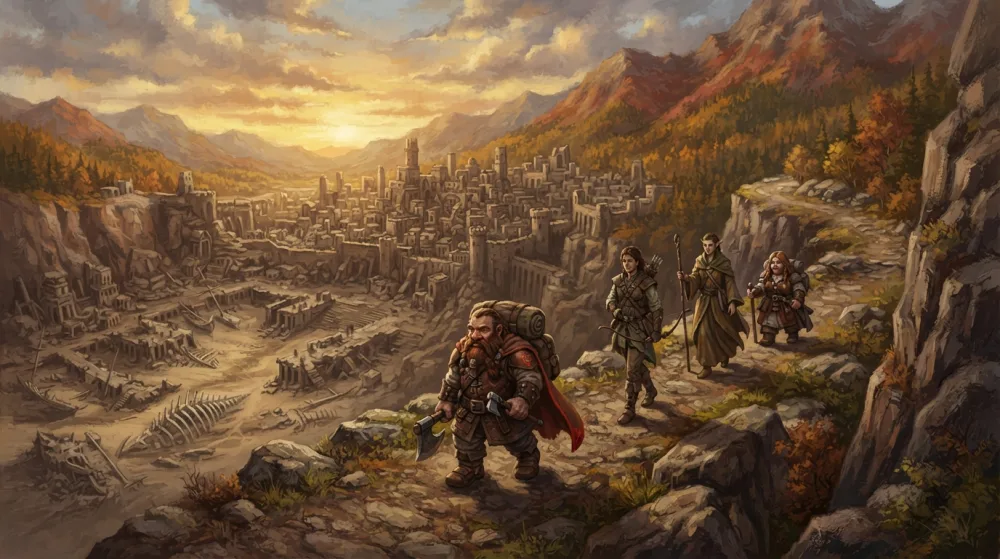
The Cataclysm's Physical Legacy
The Cataclysm reshaped Ansalon's geography as thoroughly as it reshaped its politics. Tarsis is the clearest single example: once a seaport, it now sits landlocked, its harbor gone along with the sea that fed it. The dwarves of Thorbardin sealed their mountain gates in the Cataclysm's aftermath, a decision whose consequences - the Dwarfgate War, and the permanent split between mountain and hill dwarves - are still shaping dwarven politics in the book's present day.
The Dwarves: Thorbardin, Kayolin, and the Dwarfgate War
Thorbardin is ruled by the aristocratic Hylar clan and sealed its gates after the Cataclysm, excluding the surface-dwelling dwarves who had allied with refugees during the crisis. Those excluded dwarves lost the resulting Dwarfgate War and are now known as the Neidar, or hill dwarves - a group with a real, book-supported grievance against Thorbardin's ruling clan. Kayolin is a second mountain-dwarf nation, isolated from Thorbardin by the New Sea. A dwarf character can draw on either side of this history: a Thorbardin loyalist defending the sealed gates' original logic, or a Neidar descendant carrying a grudge that's still current.
The Elves: Four Cultures, Four Very Different Situations
Krynn's elves aren't a single culture with regional flavor text - each of the four groups below is living through a distinct circumstance.
Silvanesti high elves, in the east, are a people without a home in the fullest sense: their homeland was twisted into a nightmare when Larae, Speaker of the Stars, attempted to use an orb of dragonkind to protect it during the Silvanesti campaign (349-350 AC), displacing the entire nation. Qualinesti high elves, in the west, are more egalitarian than their Silvanesti cousins and have remained withdrawn since the Cataclysm. Kagonesti wood elves are nomadic, based in Southern Ergoth, and are currently hosting Silvanesti refugees displaced from their ruined homeland - a real point of cultural friction worth playing out at the table. Dargonesti and Dimernesti sea elves round out the four; use the sea elf option from Monsters of the Multiverse for a sea elf character. Half-elves exist but are rare on Krynn.
The Gnomes, and the Human Regions
Tinker gnomes (mechanically rock gnomes) inhabit Mount Nevermind, a hollow volcano on Sancrist, and pursue science over magic as a matter of cultural identity. Forest gnomes live in Sancrist and Kendermore alongside the setting's kender population.
Ansalon's human cultures span several named regions, each with its own character. Abanasinia is home to Solace, a town built in the branches of vallenwood trees, and to Haven, where the anti-magic Seekers hold sway; nomadic Plainsfolk also range this region. Northern and Southern Ergoth, Solamnia (home of the Knights), Tarsis (the landlocked former seaport), Estwilde, Goodlund, Icereach, Khur, and Nordmaar round out the major named regions a DM can use as a character's human origin.
Note that none of these peoples are new playable races. Every one is a cultural framing of an existing Player's Handbook race - play your dwarf, elf, gnome, or human normally and choose a regional origin for flavor.
Running the War of the Lance
Running a Dragonlance campaign means running a war already in progress: five Dragon Armies under Takhisis's command, pressing an invasion that began before the characters ever picked up a sword.
A scope note: this section draws only from the book's front matter and appendices, not from its adventure chapters. Shadow of the Dragon Queen's included adventure is protected module content this library doesn't reproduce or summarize - if you're running that specific adventure, read it directly rather than relying on any secondhand summary, here or elsewhere.
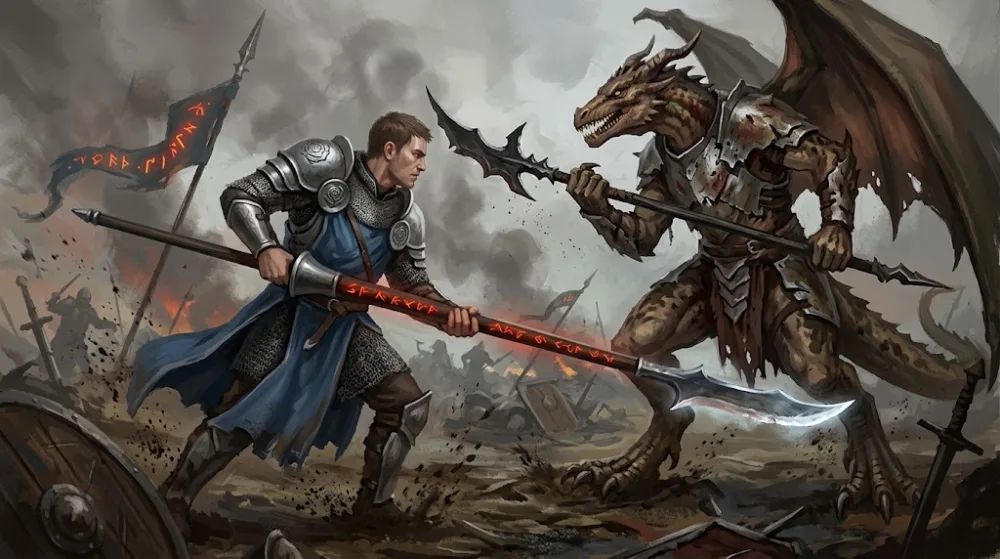
The Five Dragon Armies
Takhisis's forces are organized into five armies, each commanded by one of her most cunning and devout followers, elevated to the rank of dragon highlord. All five highlords report to Takhisis's champion, Duulket Ariakas - though the Dragon Queen actively encourages rivalry and treachery between them, trusting the resulting competition to surface her most capable commanders.
| Army | Highlord | Notes |
|---|---|---|
| Red | Verminaard | The first, largest, and most powerful army. Fanatical. Has temporarily ceded control of much of his force to his acolyte, Dragon Highmaster Kansaldi Fire-Eyes, for an attack on Solamnia. |
| Blue | Kitiara Uth Matar | Second in power. Preparing to join the Red Dragon Army's invasion of Solamnia. |
| Green | Salah-Khan | A Khur leader who defeated the Green Army's original highlord in single combat, then accepted command in exchange for control over Khur - many Khur view him as a traitor. |
| Black | Lucien of Takar | A half-ogre. Focused force that supports the other armies and occupies conquered lands, including Nordmaar and Goodlund. |
| White | Feal-Thas | A Silvanesti elf and Black Robe mage of High Sorcery. The smallest of the five armies. |
Every Dragon Army fields draconians in its ranks alongside humans, goblins, hobgoblins, ogres, and other opportunists chasing wealth or a return to pre-Cataclysm power, and each is supported by chromatic dragons and their smaller kin - dragonnels and wyverns - which the book describes as providing a battlefield advantage not seen in over a thousand years.
The War of the Lance: A Timeline
The Dragon Armies emerged from their stronghold at Neraka to set the War of the Lance in motion. Dates are given in the era after the Cataclysm (AC).
- 348 AC - Nordmaar Falls. The Red and Green Dragon Armies invade the unprepared nation of Nordmaar, their first true military test. The victory convinces many neutral hobgoblin and ogre bands to align with the Dragon Armies.
- Early 349 AC - Khur joins. The Green Dragon Army is sent to subdue the Khur steppes. Rather than fight a protracted campaign, Ariakas lets Salah-Khan defeat the original Green highlord personally, then offers him command in exchange for Khur's allegiance.
- Mid 349 AC - Balifor and Goodlund absorbed. Both fall to the Black and White Dragon Armies with little resistance, though the kender of Kendermore lead an ongoing guerrilla resistance against the occupation.
- Late 349-350 AC - The Silvanesti campaign. The Red and Blue Dragon Armies besiege the elven nation of Silvanesti. After a year of brutal resistance, the Silvanesti evacuate for Southern Ergoth; their leader, Larae, Speaker of the Stars, attempts to use an orb of dragonkind to protect the homeland and instead transforms it into a land of nightmares, useless to either side.
- 351 AC - The armies regroup. With eastern Ansalon largely under Dragon Army control, the Blue and Red armies prepare in Taman Busuk to invade Solamnia, the White Army moves south to conquer Icereach, and the Green and Black armies consolidate their occupied territories.
This timeline gives a DM a ready-made backdrop for a campaign set anywhere in Ansalon during this period - a party doesn't need to be at the war's center to feel its pressure.
Draconians: Corrupted, Not Born
Draconians exist because of a broken promise. Chromatic dragons, acting on Takhisis's orders, stole the eggs of good metallic dragons, and the metallic dragons reluctantly agreed not to interfere with the coming war in exchange for their broods' safety. The Dragon Queen's servants broke that promise: Takhisis taught her followers to corrupt the stolen eggs into draconians, the monstrous warriors who now fill every Dragon Army's ranks. Presenting draconians this way - as a betrayal made flesh, not a race that simply exists - gives a DM a concrete atrocity to reference whenever a metallic dragon NPC's motivations come up.
Lord Soth and Nightlund
For generations, the Soths of Dargaard Keep ruled the Solamnic province once called Knightlund. Before the Cataclysm, the gods of good warned Knightlund's leader, Lord Loren Soth, of the coming destruction and offered him a chance to prevent it - a chance he failed to take. Since then, the province has carried a cursed reputation, and people know it now as Nightlund, its frequent storms blamed on the old gods' lingering disfavor. That failure and its consequences are the seed of Lord Soth's legend as one of Dragonlance's most infamous villains - a Knight of Solamnia turned death knight by his own defiance of the gods, which makes him a natural rival for any party built around the Knights specifically.
Flying Citadels
A flying citadel is exactly what it sounds like: a structure large enough to house a temple or fortress, kept aloft and steered by a Flying Citadel Helm - a very rare wondrous item that lets an attuned spellcaster propel the citadel up to 80 feet per round (about 8 miles per hour) and see and hear from its highest point while concentrating. Losing the helm doesn't just ground the citadel - it crumbles, descending at 30 feet per round and threatening anyone caught underneath or aboard with a serious fall. For a DM, a flying citadel is a self-contained set piece: an entire dungeon or stronghold that's also a moving target, vulnerable at exactly one point.
Gear and Magic Items
This is the canonical detailed writeup for all nine items - the magic items guide and armor and weapons guide only cross-link here rather than duplicating the full text.
Hoopak (martial melee weapon, 1 gp, 2 lb.) - the kender signature weapon: 1d6 piercing in melee, or 1d4 bludgeoning used as a martial ranged weapon with sling bullets (finesse, two-handed, ammunition 40/160). Full build context in the Kender guide.
Fargab (adventuring gear) - paired backpack radios that send a 25-word message to their matched partner within 18 miles.
Narycrash (adventuring gear) - a backpack parachute. As a reaction, descend 60 feet per round and take no falling damage - but roll a d20 at 10 feet up, and a result of 5 or lower means it fails and you fall normally.
Dragonlance (legendary weapon, lance or pike, attunement) - +3 to attack and damage rolls. On a hit against a Dragon, deal an extra 3d6 force damage, and one Dragon of your choice within 30 feet may immediately react with a melee attack of its own.
Flying Citadel Helm (very rare wondrous item, attunement by a spellcaster) - steers a flying citadel at 80 feet per round while you concentrate; see and hear from the citadel's highest point at will.
Kagonesti Forest Shroud (rare wondrous item, attunement) - advantage on Stealth checks, plus a bonus action to teleport 30 feet and gain advantage on your next attack roll that turn. Usable once per dawn.
Mirror of Reflected Pasts (very rare wondrous item, attunement) - activated, it hovers and paralyzes creatures that see their reflection within 30 feet (DC 15 Wisdom save, repeated each turn) while showing them idealized false memories. Usable once per dawn.
Boilerdrak (gnome siege weapon, Large object) - a dragon-shaped flamethrower. On a firing roll of 2 or higher, it deals 5d10 fire damage in a 60-foot cone (DC 15 Dexterity save); on a natural 1, it explodes in a 30-foot radius and is destroyed.
Gnomeflinger (gnome siege weapon, Large object) - a catapult for people, paired with the narycrash above. Flings one Medium or smaller creature 60, 150, or 300 feet horizontally, always peaking at 60 feet of altitude regardless of distance.
On death dragons and other Appendix B creatures: the book's bestiary appendix details several other draconic threats fielded by the Dragon Armies beyond what's covered here. This guide doesn't reproduce their lore, since the material that explains where they come from and how they're used lives inside the protected adventure chapters rather than the book's general front matter.
Six Pre-Built Sidekicks
The book provides six named sidekick NPCs with level 2-to-11 advancement tables, ready to drop into a small-party campaign. It explicitly defers the underlying sidekick rules to Tasha's Cauldron of Everything rather than introducing a new system - for how the sidekick system itself works, see Sidekicks in the DM's Toolbox. This book's contribution is six ready-made characters, not a new ruleset.
Common Mistakes
Forgetting every character gets bonus feats, not just ones with a Dragonlance background. A standard PHB background still yields a free Skilled or Tough at 1st level and a full feat choice at 4th.
Assuming any Adept feat grants an Ability Score Increase. None of the three does. Only Knight of the Crown, Knight of the Rose, and Knight of the Sword carry an ASI in this entire book.
Assuming a Grand Master exists to arbitrate Measure disputes. No one currently holds the position, which is exactly why the traditionalist-versus-reformer tension has no clean resolution in the setting as written.
Assuming switching knightly orders costs you your existing Knight feats. It doesn't - the book explicitly preserves them.
Treating the Test of High Sorcery as survivable by default. It isn't. Failure means death, with no partial outcome.
Assuming White Robes are good, Red are neutral, and Black are evil in the simple alignment sense. Each order's actual doctrine is more specific than that shorthand suggests, and every renegade is not automatically a villain either - the label describes legal standing within the order, not moral character.
Assuming the good gods actively hunt down and destroy every evil threat. Their stated priority is preserving mortal choice, not eliminating evil outright.
Assuming a non-Krynn race needs an invented justification to appear in the setting. The book already provides one: portals and pre-Cataclysm trade routes.
Treating draconians as a race that simply exists rather than a specific atrocity. The book frames them as corrupted metallic dragon eggs - a betrayal with a traceable origin.
Pulling adventure-specific plot details into a homebrew campaign. This guide deliberately stops at the book's front matter and appendices; the included adventure's own villains, locations, and twists belong to that adventure.